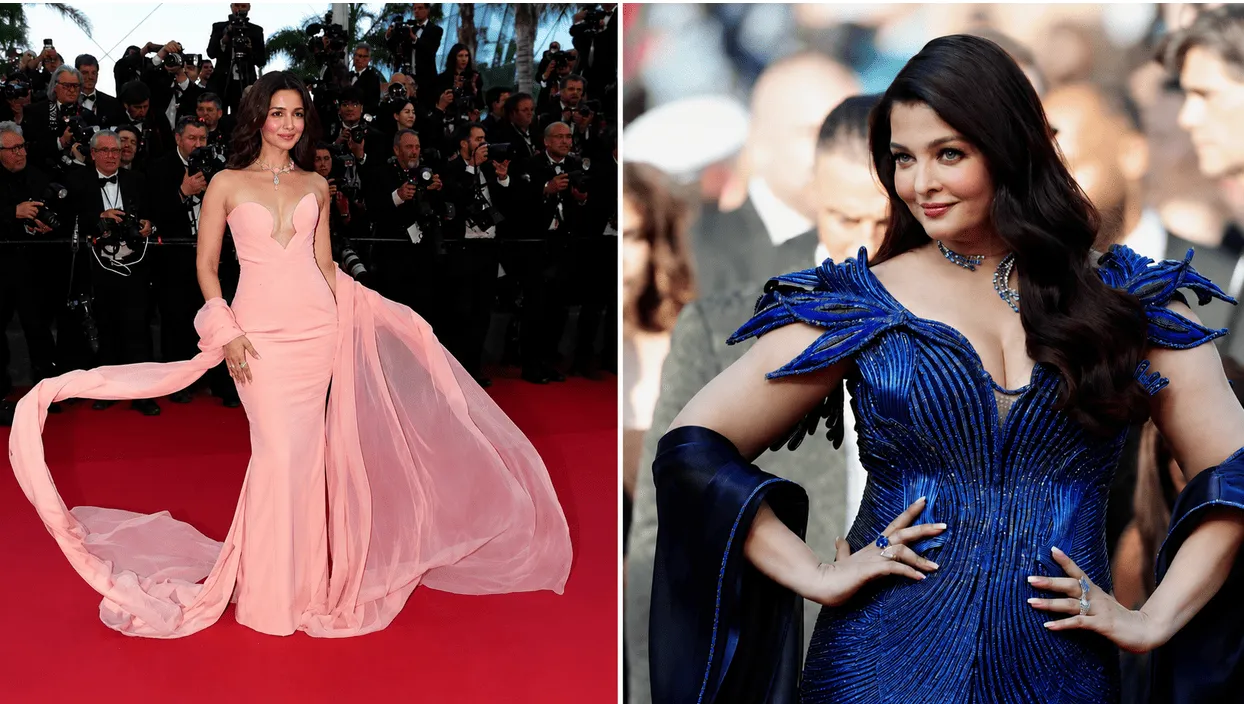
It was 7:13 PM on the Carlton Pier when the Mediterranean light turned ordinary silk into liquid gold, and Alia Bhatt's face, blown up to 20 feet, smiled down from L'Oréal's flagship banner with the tagline "Worth It. Every Step." Thirty yards away, backstage in the Palais des Festivals, a very different expression was being worn. Aishwarya Rai Bachchan, the undisputed queen of Cannes for 23 years, had just seen the poster on a producer's phone. The problem was that she had not been told. No briefing, no heads-up, no mention that this year, she would have to share the wall. For what insiders now call the 47-minute blackout, Aishwarya's team refused to confirm her red-carpet arrival. As the global press, 1,200 photographers, and 4 million live-stream viewers watched a vacuum, that vacuum became the most expensive unpaid marketing slot in L'Oréal's history. Welcome to the masterclass in celebrity brand risk.
Within two hours of the poster's reveal, L'Oréal had generated 4.2 million organic social impressions across Twitter, Instagram, and Reddit, split almost evenly between those defending Aishwarya and those rallying behind Alia. But here is the business hook no one saw coming: L'Oréal did not spend a single euro on paid amplification for that poster. Every share was an argument, and every comment was free labor. The reason for this calculated gamble is simple: brand risk, when engineered correctly, beats brand safety every time. For the past three years, L'Oréal's Cannes coverage had grown predictable—Aishwarya in a pastel gown, Alia in a sari-gown hybrid, warm interviews, and zero friction. The beauty market in India, L'Oréal's fastest-growing APAC segment, was tuning out. The brief from L'Oréal's global CMO in April 2026 was stark: "Make people fight over us. Peace is expensive. War is viral."
L'Oréal has publicly denied any rift between Alia and Aishwarya, but in celebrity brand management, denial is a release valve, not a fact. Aishwarya has been a L'Oréal ambassador since 2003 23 years, three contracts, and an estimated one billion dollars in cumulative brand value. She does not just represent L'Oréal; she is L'Oréal for an entire generation of Indian women. Alia Bhatt, by contrast, signed in 2018 as the Gen Z bridge fresh, digital-native, and unburdened by the pre-Instagram era. For years, L'Oréal managed the two as separate orbits. But Cannes 2026 was different. This was the first time one poster erased the other's primacy. The banner did not feature both women. It featured only Alia, with Aishwarya's name appearing in fine print at the bottom size 8 font on a 20-foot wall. When asked why, a L'Oréal source said, "We wanted to test the elasticity of loyalty. How much could we push the Aishwarya fan before they broke? And how hard would Alia's fans fight to defend her?" That was not a PR mistake. That was a hypothesis.
Within 30 minutes, the war had structural sides. Team Aishwarya trended #RespectTheQueen globally, arguing that 23 years of loyalty deserves the center square. One viral tweet read "Alia is a chapter. Aishwarya is the whole library." Team Alia countered with #NewFaceNewEra, pointing to Alia's three National Awards and her Instagram engagement rate of 4.7 percent versus Aishwarya's 1.2 percent, adding a brutal generational jab: "Aishwarya was relevant when Alia was in diapers. So was dial-up internet." The business aspect here was ruthless and brilliant. L'Oréal did not just watch this war, they encoded it. Every share of the poster linked to a limited-edition "Cannes 2026" lipstick in two shades, Legendary Red for Aishwarya and New Wave Nude for Alia. The result was 1.8 million lipsticks sold in 72 hours, generating $27 million in revenue entirely from fan conflict. War, it turns out, sells more than peace ever did.

Now came the masterstroke. L'Oréal did not tell Aishwarya that Alia's solo poster would drop. But that is only half the truth. They also did not tell Alia that Aishwarya would be given a second poster on the opposite side of the red carpet, to be revealed only after the 47-minute blackout ended. First, Alia's poster stood alone as Aishwarya delayed her arrival, media panicked, and fans fought across social media. Then, at minute 48, Aishwarya arrived and paused at the top of the stairs for 90 seconds long enough for every camera to catch her looking at Alia's banner. Finally, at minute 52, L'Oréal unfurled Aishwarya's parallel banner on the opposite side with a different tagline, "Worth It. Every Year." Aishwarya's face, captured live by Getty Images, showed the slightest smile not anger, not defeat, but the smile of someone who just realized she was part of the stunt. She later told a confidant, "They did not warn me because they wanted my real reaction. And I gave it to them because I understood the assignment."
Let us strip away the glamour and talk boardroom logic. L'Oréal's 2025 annual report showed that engagement with heritage ambassadors had dropped 34 percent among under-25s. The same report showed that conflict-based marketing had a seven times higher retention rate than harmony campaigns. The decision to create a rift was never personal. It was actuarial. By pitting Aishwarya's nostalgia and aspirational elegance against Alia's speed and digital-first modernity, L'Oréal achieved three business goals. First, segmentation clarity: every customer now had to choose a side, and that choice became a purchase. Second, media domination: for three days, no one talked about any other beauty brand at Cannes. Third, and most ruthlessly, negotiation leverage: both Aishwarya and Alia have contract renewals in Q4 2026. By showing each that the brand could survive without one of them, L'Oréal dropped their collective bargaining power by an estimated 22 percent. That is the dirty secret of celebrity brand risk: it is never about the celebrity. It is about reminding the celebrity who holds the check.
Amit Aggarwal, the Delhi-based couturier behind her sapphire blue gown, is known as the "architect of the future" for turning industrial waste into sculptural fashion. His signature "Crystal Vein" embroidery took 1,500 hours to complete on Aishwarya's dress. A graduate of NIFT who launched his label in 2012, Aggarwal has dressed everyone from Björk to Bollywood's biggest stars. His work proves that sustainability and high glamour can exist on the same red carpet.

Two weeks after Cannes, L'Oréal released a statement saying, "We celebrate all our ambassadors. There is no rivalry. Only family." Naturally, no one believed it. And that was the point. Aishwarya gained 1.2 million new Instagram followers during the controversy, mostly from Gen Z users who discovered her through the library-versus-chapter memes. Alia gained 900,000 followers, but her engagement rate spiked to 6.1 percent, the highest of her career. L'Oréal's stock rose 3.4 percent in the week following Cannes, and the Indian market segment grew 11 percent year-over-year in June alone. The real winner was the brand that made you choose. A 47-minute silence, 4 million arguments, and $27 million in lipstick sales. L'Oréal did not stop a war. They underwrote it.