
The NEET Controversy May Have Become A Turning Point For India’s Education System
For millions of students and families across India, examinations often represent much more than academic assessments. Competitive tests influence educational pathways, career opportunities and years of preparation built around a single outcome. In many households, exams such as NEET are not viewed as ordinary milestones but as defining moments capable of shaping future trajectories. This is precisely why the recent NEET controversy generated a reaction that extended far beyond administrative concerns. Allegations involving question paper leaks, irregularities and operational lapses quickly transformed into something larger: a debate surrounding public trust in one of India’s most significant educational systems.
The scale of the issue itself explains why the response became so intense. NEET remains among India’s largest entrance examinations, with more than twenty-two lakh students appearing for the exam every year. Conducting a system of this magnitude already involves extraordinary logistical complexity. When controversies emerge at such scale, the consequences extend beyond procedural questions and begin affecting confidence itself. Students, parents and institutions increasingly found themselves asking whether large examination systems built around traditional structures could continue operating effectively within rapidly changing environments. What initially appeared to be an examination controversy gradually evolved into a broader conversation around infrastructure, accountability and modernization. Reports surrounding the crisis intensified calls for structural reforms and strengthened pressure on policymakers to rethink how India’s largest examinations should function going forward.
Against this backdrop, discussions around transforming NEET into a computer-based examination system have gained significant momentum. Education Minister Dharmendra Pradhan recently indicated that the government intends to move toward a Computer-Based Test format as part of broader reform measures designed to reduce vulnerabilities and strengthen examination processes. While the announcement itself focused on security and efficiency, the implications increasingly appear much larger. What is now being discussed may represent one of India’s most ambitious educational technology transitions in recent years.
The Crisis May Have Accelerated Changes That Were Already Under Consideration
Conversations around digital examination systems did not suddenly emerge after the controversy. Discussions involving computer-based testing and examination modernization had surfaced earlier through multiple policy recommendations and expert committees. Previous reviews involving educational and scientific leaders suggested that digital examination systems could reduce risks associated with physical paper distribution and strengthen examination integrity through technological safeguards.
However, large systems frequently move slowly until broader events create urgency. Institutional reform often follows a familiar pattern where recommendations remain under discussion for years before specific events accelerate action. The recent NEET controversy increasingly appears to have created exactly such a moment.
Historically, transforming educational systems at national scale involves enormous complexity. Examinations affecting millions of students operate through highly interconnected structures involving administration, logistics, infrastructure and local implementation environments. Even relatively small procedural changes frequently require extensive preparation and coordination. Transitioning a system such as NEET toward digital environments therefore extends far beyond introducing computers into examination halls. It involves redesigning one of the largest testing ecosystems in the world.
The urgency surrounding the controversy appears to have shifted the nature of the discussion itself. Earlier debates often focused on whether computer-based systems represented a desirable long-term objective. Increasingly, the conversation now centers around implementation timelines and operational readiness. The larger question no longer appears to involve whether change should happen. Instead, it increasingly concerns how transformation can occur while preserving fairness and accessibility.
The Examination Crisis Exposed Larger Structural Questions
One reason the controversy resonated so strongly across India involved broader concerns that had already emerged around examination systems in previous years. Multiple recruitment tests and competitive examinations across different categories experienced allegations involving irregularities, paper leaks and administrative challenges. Collectively, these events gradually contributed to growing anxiety surrounding institutional reliability.
Paper-based examination systems introduce logistical requirements at extraordinary scale. Physical question papers require printing, secure transportation, distribution networks and coordinated handling across thousands of centers simultaneously. Every stage introduces operational vulnerabilities because systems depend heavily on physical movement and layered administrative processes.
Supporters of computer-based testing increasingly argue that digital systems can reduce some of these risks through encrypted delivery structures, randomized question sequencing and stronger access management protocols. Digital environments theoretically create opportunities for tighter security mechanisms and reduced exposure during transportation processes. While these systems cannot entirely eliminate risk, many experts increasingly view them as capable of addressing vulnerabilities inherent within traditional paper structures.
At the same time, discussions around examination reform increasingly reveal that the broader challenge extends beyond question papers alone. Trust itself appears central to the debate. Educational systems function effectively only when participants possess confidence in process integrity. The recent controversy therefore created pressure not simply for operational fixes but for larger reforms capable of restoring confidence.
India Could Be Preparing For One Of Its Largest Educational Infrastructure Transitions
While conversations surrounding examination reform often focus heavily on technology, infrastructure may ultimately determine whether transformation succeeds. NEET is not a limited testing environment involving relatively small populations. Conducting examinations for more than twenty-two lakh candidates annually creates requirements unlike most educational systems globally.
Transitioning such a structure toward computer-based environments would require extensive infrastructure preparation involving examination centers, secure hardware systems, networking environments and standardized operating conditions. The challenge becomes even more complex when considering India’s geographical diversity and uneven digital access environments.
Urban regions frequently possess stronger technological infrastructure and higher digital familiarity. Students from metropolitan environments often interact with computers regularly through schools, coaching centers and everyday activities. Conditions may differ substantially across rural environments where access to technology can remain more limited. Educational reform therefore increasingly raises important questions regarding equity and accessibility.
Policymakers may need to ensure that technological modernization strengthens fairness rather than unintentionally creating new forms of disadvantage. Because large-scale digital systems succeed not merely through technological deployment but through widespread usability. Infrastructure alone rarely creates transformation. Successful transitions frequently depend on ensuring people can comfortably participate within evolving environments.
Students May Need To Prepare For More Than A Different Testing Format
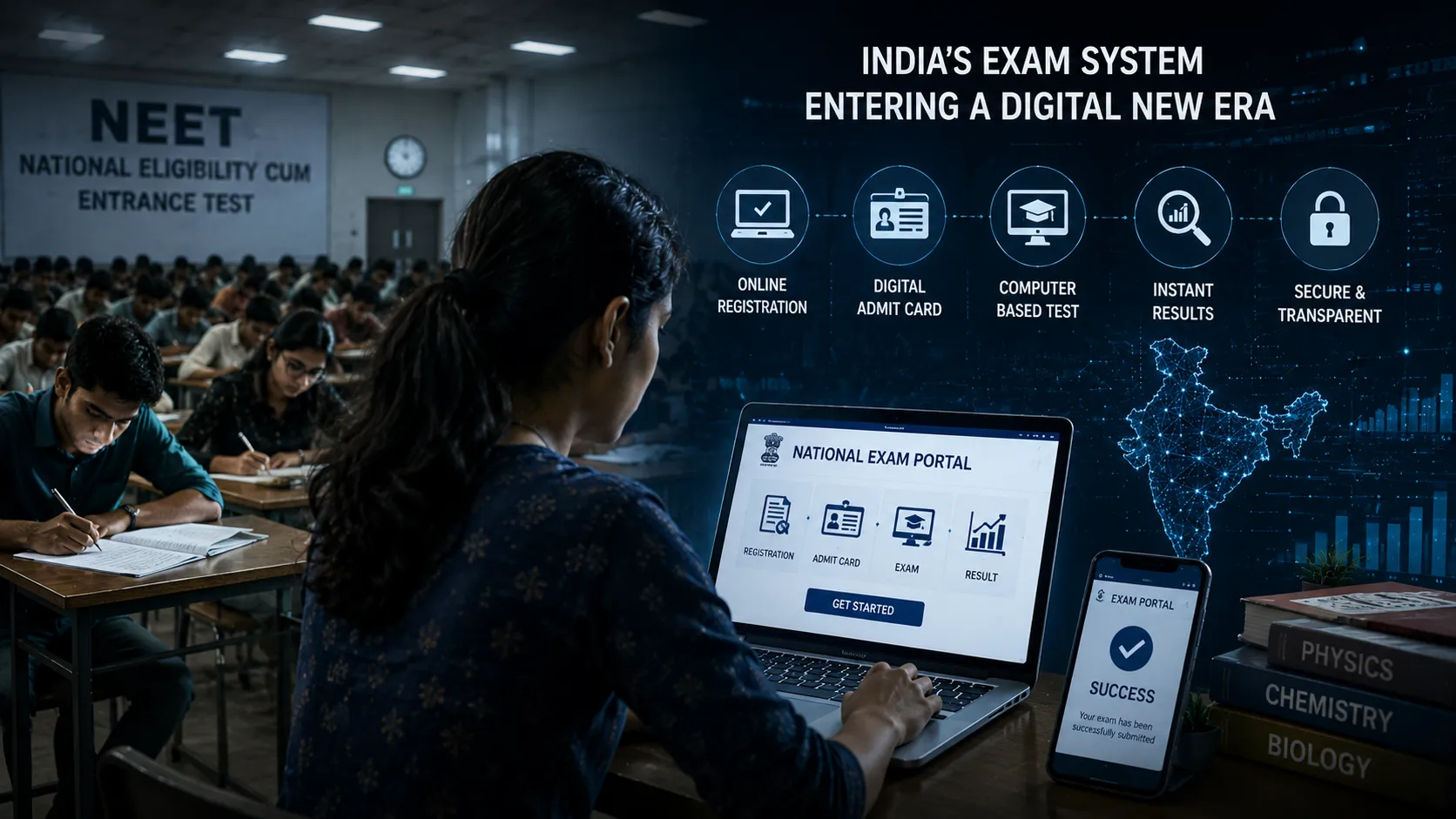
The transition toward digital examinations may eventually reshape preparation cultures themselves. For years, NEET preparation evolved around written practice patterns involving paper simulations and OMR-based exercises. Coaching institutions, learning environments and student routines gradually adapted around those formats.
Computer-based examinations may introduce subtle but meaningful changes involving navigation styles, time management and interface familiarity. International studies frequently suggest that digital environments can influence reading patterns, concentration and examination behavior in ways not always immediately visible.
For students already operating under considerable pressure, adapting to entirely different examination structures could introduce additional psychological adjustments. Preparation may increasingly involve technological familiarity alongside academic readiness. Educational systems often underestimate how deeply formats influence experiences.
This reality matters because technological reform rarely succeeds through infrastructure alone. Human adaptation frequently determines outcomes.
Technology Alone May Not Automatically Solve Questions Around Trust
Supporters frequently describe computer-based systems as stronger alternatives because of their security potential. However, technological systems introduce entirely different categories of challenges. Cybersecurity threats continue evolving globally. Technical failures, system disruptions and infrastructure inconsistencies remain important considerations.
Parliamentary discussions surrounding examination modernization previously highlighted concerns involving technological reliability and system stability. Experts repeatedly argued that digital environments require rigorous testing because failures at national scale can create substantial consequences. Technological systems often reduce some risks while introducing others.
This creates a more nuanced reality surrounding educational modernization. Digital systems may strengthen security but still require extensive preparation involving operational resilience, infrastructure quality and contingency planning.
Viewed through this lens, examination reform increasingly appears less like replacing paper with screens and more like redesigning educational systems around entirely new operating environments.
Why The Larger Story Extends Beyond NEET Alone
The broader significance of current developments may ultimately extend beyond one examination. Large educational systems frequently shape policy directions affecting multiple categories simultaneously. Changes involving NEET could eventually influence recruitment examinations, university testing structures and broader educational ecosystems.
If computer-based systems become normalized successfully at this scale, wider transformations may follow involving biometric systems, encrypted testing environments and more advanced digital assessment structures.
The implications therefore reach far beyond examination halls themselves.Because educational systems increasingly appear to be entering a period where trust, technology and infrastructure may become deeply interconnected.
And the future of assessments may involve much more than changing examination formats.It may involve redesigning how large public systems themselves function.