ImpactSustainability13 MIN READ

Adani Group Pitches ₹1.5 Lakh Crore Nuclear And Clean Energy Plan For Odisha

Adani Group has proposed investing ₹1.5 lakh crore in Odisha for nuclear power plants, thermal capacity and pumped storage, potentially creating over 22,000 jobs.

By Aravind Kumar · Author5 August 2026
Adani Group Pitches ₹1.5 Lakh Crore Nuclear And Clean Energy Plan For Odisha

SEO Title: Adani Group Proposes ₹1.5 Lakh Crore Odisha Nuclear Power Investment: Full Details

Meta Description: Adani Group has proposed investing ₹1.5 lakh crore in Odisha for nuclear power plants, thermal capacity and pumped storage, potentially creating over 22,000 jobs.

---

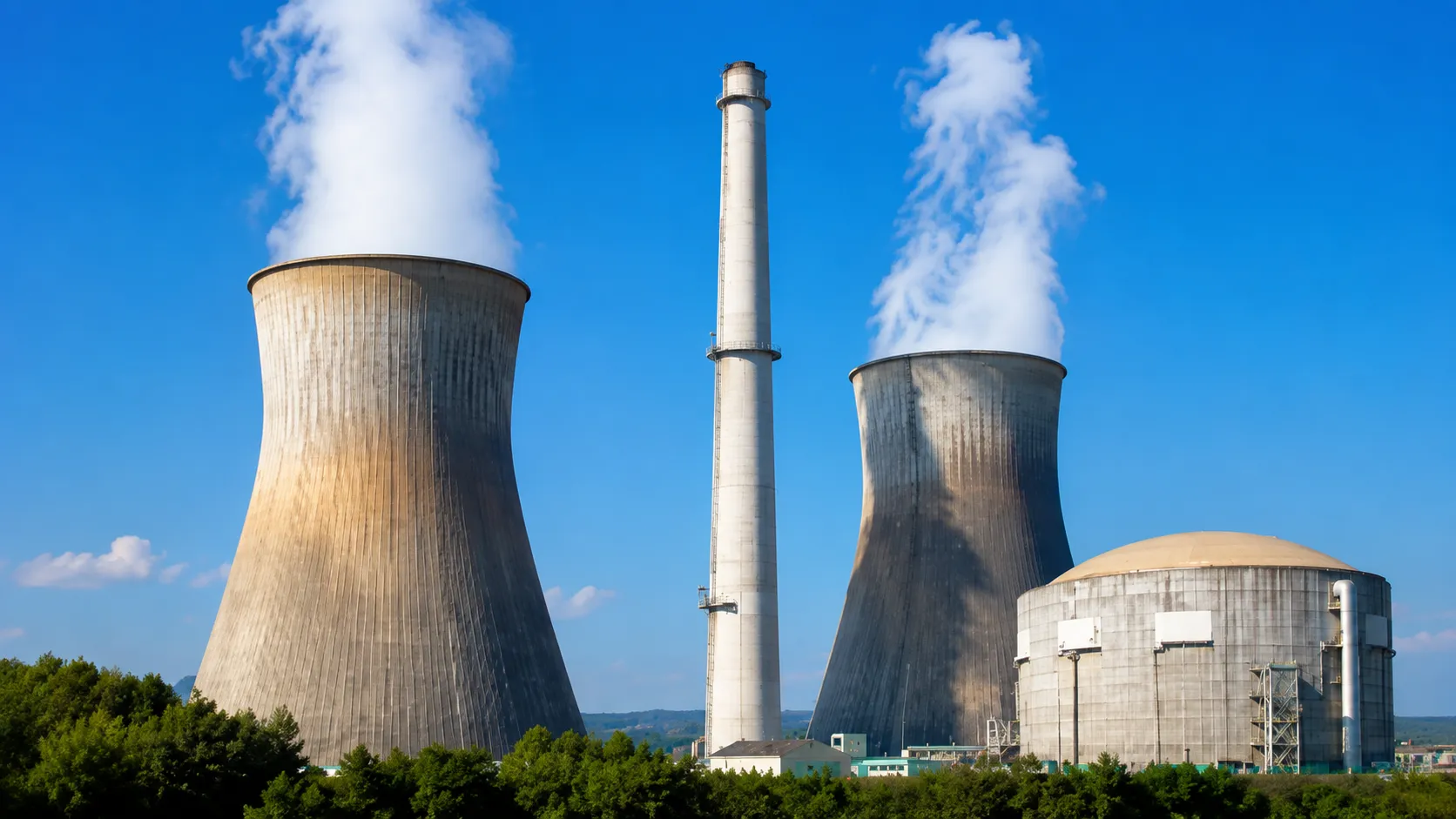
For most of India's post-independence history, building a nuclear power plant has been the exclusive domain of the state, executed through public-sector giants like NPCIL under a legal framework that kept private capital firmly at arm's length from the country's atomic energy programme. That era is now visibly ending, and one of the clearest signals of the shift arrived in Bhubaneswar, where an Adani Group delegation presented the Odisha government with a proposal to invest approximately ₹1.5 lakh crore — roughly $18 billion — in the state's energy infrastructure, anchored by two large nuclear power plants.

An Adani delegation led by Subrat Tripathy, President (Business Development) at Adani Ports and SEZ, presented the proposal to Kanak Vardhan Singh Deo, Odisha's Deputy Chief Minister and Energy Minister, at a meeting in Bhubaneswar. The centrepiece of the plan is two nuclear power plants, each with a capacity of 2,800 megawatts, according to Business Standard's reporting on the proposal — though subsequent state government communications have described the plants' combined capacity variously as being built around two 3,000 MW facilities, a discrepancy likely reflecting the early, pre-feasibility-study stage of the proposal rather than any finalised technical specification. Alongside the nuclear plants, Adani has proposed an ultra-supercritical thermal power plant and a series of pumped storage projects designed to provide grid stability and low-emission baseload power.

The Law That Made This Possible

The proposal's significance is inseparable from a specific piece of recent legislation: the SHANTI Act, 2025, which created — for the first time in India's history — a regulatory framework permitting private-sector participation in the country's civil nuclear power programme. Prior to this legislation, India's Atomic Energy Act effectively reserved nuclear power generation for government entities, a restriction that had long been cited by industry and policy analysts as a structural constraint on India's ability to scale nuclear capacity fast enough to meaningfully contribute to the country's decarbonisation and energy security goals.

With that legal barrier now removed, Adani's Odisha proposal represents one of the earliest major tests of how quickly and at what scale private capital will actually move into nuclear generation once permitted to do so. Notably, Adani is not alone in responding to this opening: Tata Power has separately proposed a nuclear power plant in Odisha's Malkangiri district, and state-run NTPC has also expressed interest in investing in nuclear energy within the state — meaning Odisha finds itself, within a remarkably short window after the SHANTI Act's enactment, fielding competing private and public-sector nuclear investment proposals simultaneously, a level of interest that suggests genuine confidence among India's largest energy conglomerates that private nuclear power is now a viable, investable category rather than a purely aspirational policy goal.

Why Odisha, Specifically
image.png


Odisha's emergence as a focal point for this new wave of nuclear investment interest is not coincidental. The state has been positioning itself aggressively as an industrial and energy hub, with growing investment in steel, aluminium, green hydrogen and data centre infrastructure — all sectors with substantial, continuous electricity demand that benefits from the kind of stable, round-the-clock baseload power that nuclear generation is uniquely well suited to provide, in contrast to the intermittent output characteristic of solar and wind generation. As Odisha's industrial base continues to expand across these energy-intensive sectors, the state's demand for reliable, low-emission electricity has grown correspondingly, creating the underlying commercial logic that likely attracted Adani's interest in the state specifically, beyond any purely opportunistic first-mover consideration.

Adani is not entering Odisha's energy sector for the first time with this proposal — the group is already executing a 1.8 GW pumped storage project in the state's Nayagarh district, giving it existing operational relationships with state authorities and on-the-ground project execution experience that likely strengthens its credibility as it now pitches considerably larger-scale nuclear investment.

The Jobs And Economic Case

According to the company's own estimates, the combined proposed investment could create more than 22,000 direct and indirect jobs, while substantially augmenting Odisha's overall power-generation capacity. Job creation estimates accompanying large infrastructure investment proposals should generally be read with some scepticism, given the obvious incentive for companies to present the most favourable possible framing when seeking government cooperation and regulatory support — but nuclear power plant construction and operation genuinely does require substantial, sustained skilled and semi-skilled labour across a multi-year construction period, followed by long-term operational staffing needs that persist for decades once a plant becomes operational, lending at least directional credibility to the scale of employment impact being claimed, even if the precise figure warrants independent verification as the project, if approved, moves toward implementation.

A Careful, Multi-Stage Approval Process Ahead

It is important to be precise about what this proposal actually represents at this stage: a presentation of interest and intent, not an approved, funded, or even feasibility-confirmed project. According to officials familiar with the discussions, the proposal will undergo detailed examination covering project feasibility, land availability, regulatory clearances, environmental approvals and implementation schedules before any final decision is taken — a process that, for a project of this scale and technical complexity, typically extends across multiple years even under favourable circumstances, and could extend considerably longer given the additional layers of nuclear-specific safety and regulatory review that will apply beyond the standard environmental and land-use approvals required for conventional power infrastructure.

Officials have also noted this represents the second private-sector nuclear power proposal Odisha has received, following Tata Power's Malkangiri proposal — meaning the state government now faces the genuinely novel task of evaluating and potentially sequencing multiple competing large-scale private nuclear investment proposals simultaneously, a policy and administrative challenge with no close historical precedent in India's energy sector, given that this entire category of investment simply did not exist as an option prior to the SHANTI Act's enactment.

The proposal from Adani will undergo detailed discussions on project feasibility, land availability, regulatory clearances, environmental approvals and implementation schedules before any final decision is taken.
Senior official, Odisha Energy Department

Aligning With India's Net Zero Commitments

Adani has explicitly positioned the proposed investments as supporting India's Net Zero 2070 target, the long-term decarbonisation commitment the country has made as part of its broader climate policy framework. Nuclear power's role in that decarbonisation pathway has become an increasingly prominent talking point among Indian energy policymakers and industry executives over the past several years, driven by nuclear's ability to provide substantial, reliable, low-carbon baseload generation — a category of power supply that renewable sources like solar and wind, despite their own rapidly falling costs and expanding capacity, cannot fully replicate given their inherent intermittency and current battery storage cost constraints at grid scale.

Whether nuclear power can scale fast enough in India to meaningfully move the needle on the country's 2070 target — given the multi-year, often multi-decade timelines historically associated with nuclear plant construction globally — remains a genuinely open question that this specific Odisha proposal, even if eventually approved and executed on an optimistic timeline, will not resolve on its own. But the scale of private capital now visibly mobilising toward nuclear investment, illustrated by Adani's ₹1.5 lakh crore Odisha pitch alongside Tata Power's and NTPC's parallel interest, suggests India's energy conglomerates are treating nuclear power's private-sector opening as a genuinely significant, multi-decade opportunity rather than a marginal or speculative bet.

What This Means For Adani's Broader Energy Strategy

This Odisha proposal also fits within Adani's broader, separately reported ambitions in nuclear energy, including the group's newly incorporated entity, Adani Atomic Energy Limited, and reported interest in both small modular reactor technology and considerably larger-scale nuclear capacity — with one report suggesting Adani Power is eyeing as much as 30 gigawatts of eventual nuclear capacity as it looks to gradually replace its existing thermal generation fleet over the coming years. Read against that broader ambition, the Odisha proposal represents not an isolated bet but one specific, geographically anchored component of what appears to be a considerably larger, group-wide strategic pivot toward nuclear power as a core future pillar of Adani's energy generation portfolio.

The Small Modular Reactor Angle

Separately from this Odisha large-plant proposal, Adani has also signalled interest in small modular reactor (SMR) technology, reportedly exploring a configuration of eight SMRs of 200 MW each, which would give the group a total nuclear capacity of roughly 1,600 MW through that specific pathway alone. SMRs represent a meaningfully different technology and deployment strategy than the large, multi-thousand-megawatt plants proposed for Odisha — designed to be manufactured in more standardised, factory-built configurations that can theoretically be deployed faster and at lower individual project risk than giant, bespoke nuclear facilities, though the technology remains less proven at commercial scale globally than conventional large reactor designs. Adani Power has reportedly identified tentative sites for such projects across states including Gujarat, Madhya Pradesh, Odisha, Andhra Pradesh, Uttar Pradesh, Jharkhand and Chhattisgarh, with an emphasis on brownfield sites suitable for repurposing retiring fossil fuel power plants — a strategy that could allow faster development by leveraging existing grid connections and land use approvals at sites where coal or gas plants are being phased out.

image.png

The Financing Challenge Behind Any Nuclear Ambition

However enthusiastic the private-sector response to India's nuclear liberalisation has been at the proposal stage, financing a project of this scale represents a genuinely formidable challenge distinct from the regulatory and land-acquisition hurdles already discussed. Nuclear power plants globally have a well-documented history of cost overruns and construction delays, even in countries with decades of established nuclear construction expertise, meaning any lender or equity investor evaluating a ₹1.5 lakh crore private nuclear proposal must price in meaningfully more execution risk than would apply to more conventional power generation technologies with more predictable construction timelines and cost profiles. How Adani structures the financing for this proposal — the mix of internal group capital, project debt, and potentially government or multilateral development finance support — will be a critical, closely watched detail as this proposal moves from the current conceptual presentation stage toward any eventual binding investment commitment.

Public Perception And Nuclear Safety Communication

Any large-scale private nuclear proposal in India will also need to navigate the genuine public sensitivity that nuclear power projects have historically encountered domestically, even under exclusively state-run development. Community concerns around safety, land acquisition, and the long-term handling of nuclear waste have previously slowed or complicated nuclear project development in other Indian states, and Odisha's own communities are likely to raise comparable questions as this proposal moves from boardroom presentation toward the public consultation and environmental clearance stages that any project of this scale will eventually require. How effectively Adani and the state government communicate the safety case for these specific facilities, and how transparently they handle the inevitable public consultation process, will likely shape the pace at which this proposal can progress regardless of how favourably the underlying commercial and technical case may otherwise appear.

What Comes Next

For Odisha, the coming months will bring detailed inter-departmental review of Adani's proposal alongside the competing Tata Power and NTPC nuclear interest, a process that will test the state government's capacity to evaluate genuinely novel, large-scale private nuclear investment proposals without established institutional precedent to draw upon. For Adani, securing state government buy-in represents only the first of many approval gates — land acquisition, environmental clearance, and the nuclear-specific regulatory approvals that will govern private nuclear projects under the still-maturing SHANTI Act framework all remain ahead. For India's broader energy sector, this proposal, regardless of its own eventual fate, offers an early, concrete test case for how quickly and at what scale the country's decade-old ambition to open nuclear power to private capital will actually translate into steel, concrete and generating capacity on the ground.

TagsAdaniGroupNuclearPowerIndiaOdishaEnergyCleanEnergyIndiaSHANTIActNetZero2070PrivateNuclearPowerEnergyInvestmentIndianInfrastructurePowerSectorIndia

Reader reviews

Sign in to rate and review this article.
Loading reviews…