The AI Ultimatum
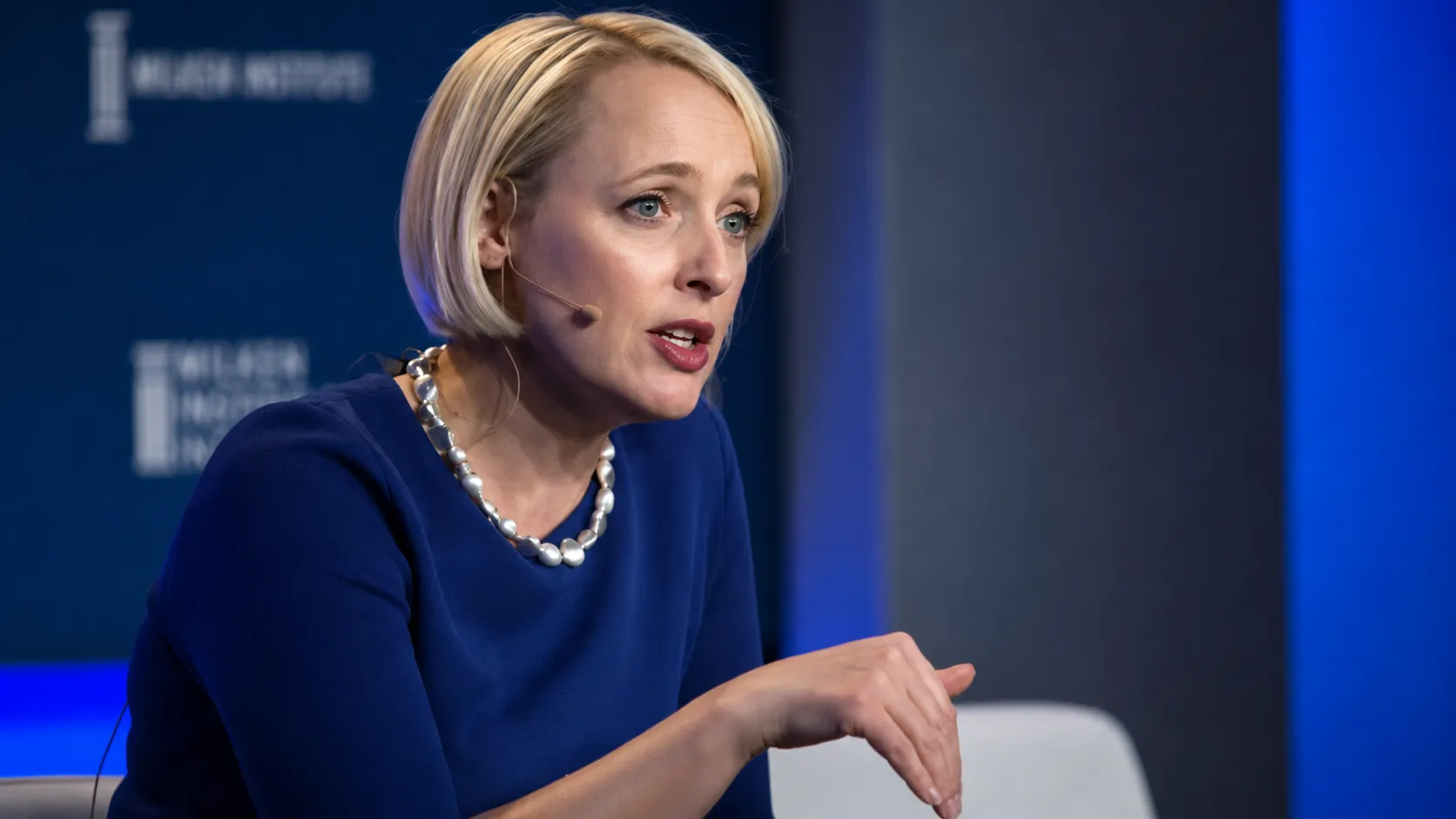
On a Thursday afternoon in June 2026, Accenture CEO Julie Sweet appeared on CNBC with a message that reverberated through corporate America. Shares of the consulting giant had just fallen nearly 20 per cent after fiscal third-quarter results missed expectations, extending a year-long decline of about 50 per cent . But Sweet wasn't there to defend the stock price. She was there to defend a long-term strategy—one that has profound implications for women in the workforce.
"The investors, I think, are missing the AI tailwind and how we're positioning ourselves for the long-term," Sweet said . She pointed to $9 billion in managed services revenue and rising consulting sales as evidence of momentum. "We're doing more consulting now because clients are doing more reinvention" .
But the most significant part of Sweet's message was not about Accenture's financial performance. It was about who gets to advance in the AI era. As of early 2026, regular adoption of AI is a formal requirement for promotion at Accenture—a policy Sweet frames not as punitive but as a natural evolution of work .
"If you want to get promoted, you've got to do the things that we do to operate Accenture," Sweet told the Rapid Response podcast. "These are the new tools to operate a company. We didn't go from zero to 'you won't get promoted' in a month. It's over a three-year period of getting used to the technology, making sure it's user-friendly, making sure we have the right workbench for people to use, and then saying, 'Hey, this is Accenture and how we operate'" .
For anyone tracking gender equity in the workplace, this is both an opportunity and a warning.
The Data Behind the Fear
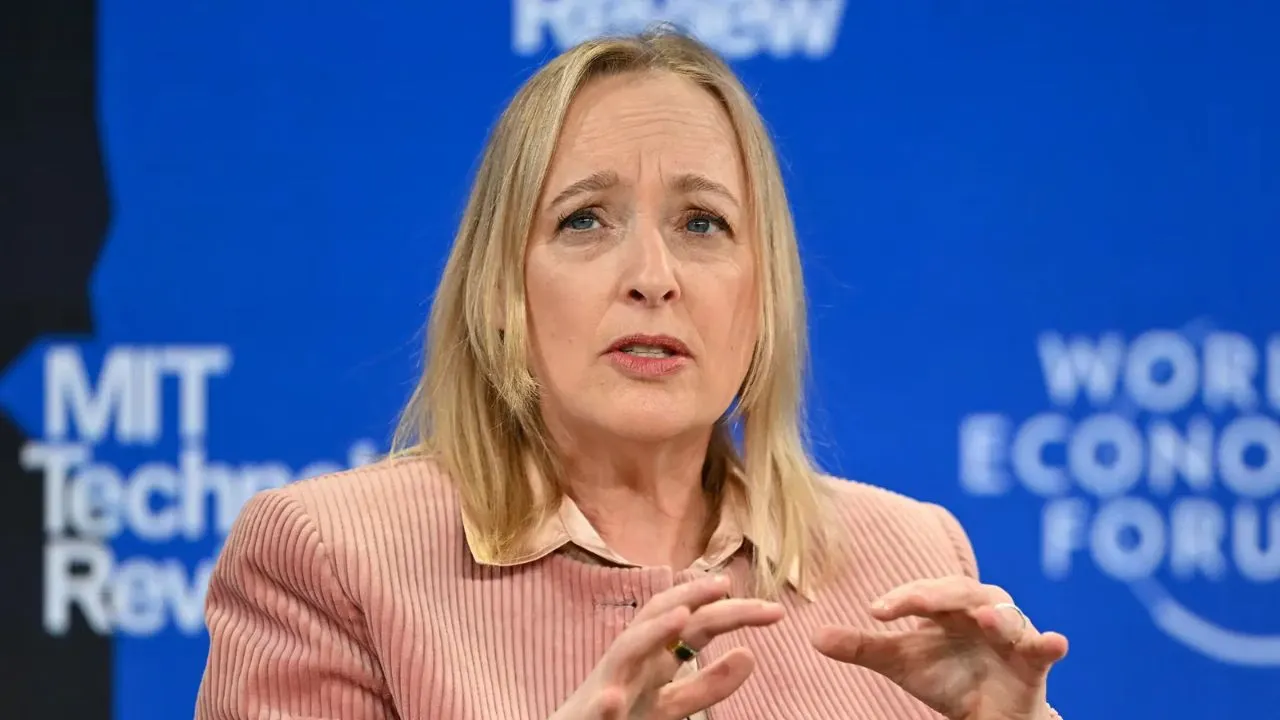
The concern that women may be left behind in the AI revolution is not hypothetical. Research highlights a double-edged sword for women's employment in the AI era . On one hand, AI is creating new job opportunities in technology, data science, and automation, helping women access high-paying and knowledge-based careers . It is also enabling greater flexibility in work arrangements and reducing biases in hiring and promotion processes .
On the other hand, AI-driven automation is displacing low-skilled jobs predominantly held by women, reinforcing existing gender inequalities in certain sectors . Algorithmic bias and unequal access to AI-related training and education further exacerbate these challenges .
The same research proposes six recommendations to address these challenges: promoting STEM education for women, developing gender-sensitive AI policies, upskilling and reskilling, supporting flexible work models, incentivizing female entrepreneurship, and monitoring algorithmic bias .
Sweet's mandate—learn AI or risk being left behind—aligns with the upskilling recommendation but assumes equal access to the tools and training required to meet that mandate. That assumption is not always valid.
Sweet's Blueprint for Reinvention
Sweet is not merely issuing warnings from a distance. She has led Accenture through one of the most significant restructurings in its history—a $923 million reorganisation that collapsed five decades of organisational structure into a single integrated unit called Reinvention Services . The goal was to deliver AI-powered solutions faster and at greater scale .
She has invested more than $1 billion annually in training, and every Accenture employee completes an average of 40 hours of learning per year . The company has expanded its data and AI team to 77,000 professionals . And when generative AI first emerged in 2022, only a few dozen of Accenture's 40,000 AI professionals were experimenting with it. Less than three years later, the company had delivered 6,000 AI-related projects and generated $3 billion in revenue .
"We changed what the ship looked like. We really have completely changed ourselves, multiple times," Sweet told HR leaders in May 2026 .
But she also acknowledged the human cost. "There are jobs that are not going to exist. There are tasks that are not going to exist. And so we do have to, as companies, provide upskilling and, as individuals, recognize that it's a continuous learning" .
The Structural Reality
The challenge for women is not simply about motivation. It is about access, time, and structural barriers. Women already face a persistent leadership gap in the technology sector. According to the India Justice Report, only 13 per cent of investing partners at venture capital firms are women, and two-thirds of VC firms have no female partners at all. The pattern is not accidental. It is structural.
If AI fluency becomes a requirement for promotion, women who already face barriers to technical training—whether due to caregiving responsibilities, lack of mentorship, or bias in AI itself—may find the ladder even harder to climb.
Research on bias in AI decision-making highlights a critical challenge. "Successfully integrating AI into labor markets requires a gender-sensitive approach that addresses these risks while promoting inclusive growth and equitable opportunities for women," the study concludes . The same study recommends independent oversight bodies to audit AI algorithms for gender bias and legal frameworks that mandate transparency and fairness in AI-driven recruitment processes .
AI itself can be part of the solution. AI-driven learning platforms can provide women with new skills to transition into AI-related fields . AI-based recruitment systems can eliminate gender biases by focusing on skills and qualifications rather than assumptions . But these tools require deliberate design and consistent monitoring to achieve their potential.
The Optimist's Case
Sweet herself is proof that women can succeed in the AI era. She grew up in a middle-class family in Tustin, California, studied international relations, and earned her law degree from Columbia . She joined Accenture as general counsel with no technology background and spent months learning the fundamentals—an experience she credits with preparing her for the CEO role .

"The moment that you look at your career and you say you haven't done something different in the way you're working, that you're probably not learning enough because the world around us is moving very, very fast," she told Columbia Business School students .
She has been recognised on Fortune's Most Powerful Women list and was the highest-paid woman CEO in 2023 . But even Sweet acknowledges the system needs work. Helping others grow, she notes, is now a core leadership skill. Leaders can't simply manage performance; they must guide their teams through transformation .
The Bottom Line
Julie Sweet's warning to investors about the AI tailwind is also a warning to every woman in the workforce: the rules are changing. The question is whether the change will create new opportunities or reinforce old barriers.
The research is clear: AI is a double-edged sword for women's employment . It creates new opportunities in high-paying, knowledge-based careers while displacing women in low-skilled roles. The difference between outcomes depends on policy, access, and intentional design.
Sweet's mandate that employees must demonstrate AI proficiency to earn promotions is not just a policy. It is a signal that the companies that thrive in the AI era will be those that embed these skills across their entire workforce—not just their technology teams. But companies must also address the structural barriers that have historically excluded women from such opportunities. As the research on AI and women's employment concludes, "Addressing these challenges requires targeted efforts to increase women's participation in AI-related fields, reduce algorithmic bias, and provide reskilling and career development opportunities" .
The warning is real. But so is the opportunity. Whether AI becomes a ladder or a ceiling depends on how leaders—and systems—choose to respond.


