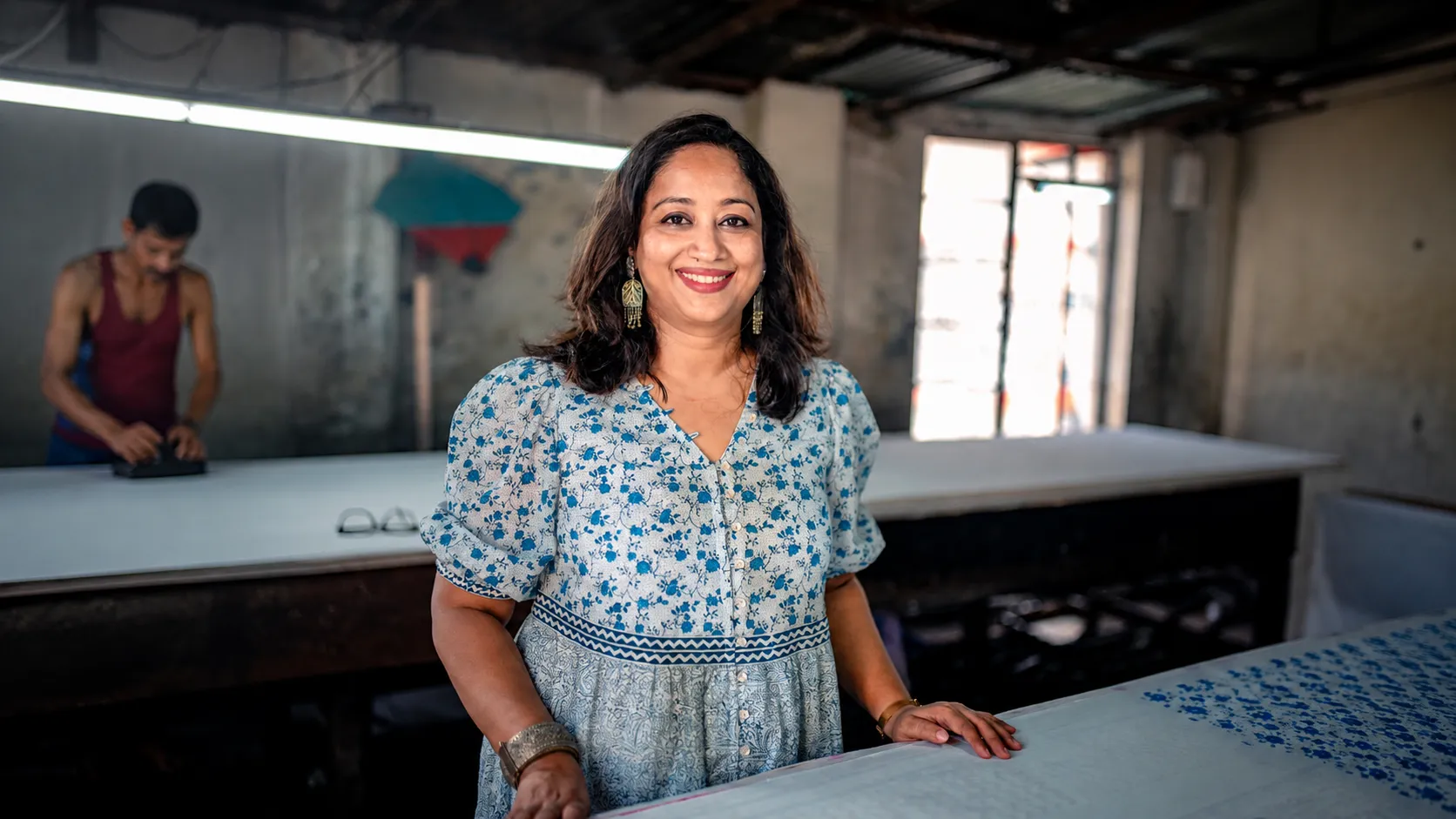
Two Decades On The Other Side Of The Table
For nearly two decades, Dhanya Sugathan sat on the other side of the table — the side that sources. As co-founder of a supply company moving clothing and home textiles out of India for international retailers, and before that four years spent inside UK's own sourcing operation across India and Bangladesh, she watched, again and again, the same frustrating pattern play out: the world wanted what Indian hands could make, but the world rarely got to fall in love with it the way it deserved.
"Everybody admired it," she says of the textiles and crafts she spent her career moving through global supply chains. "However, it was missing the market for multiple reasons. One being that it was a highly complicated supply chain to work with. Maybe the design was not relevant for the markets in the global space. And again, the time and the costs that went into it."
Why She Walked Away To Build Her Own Brand
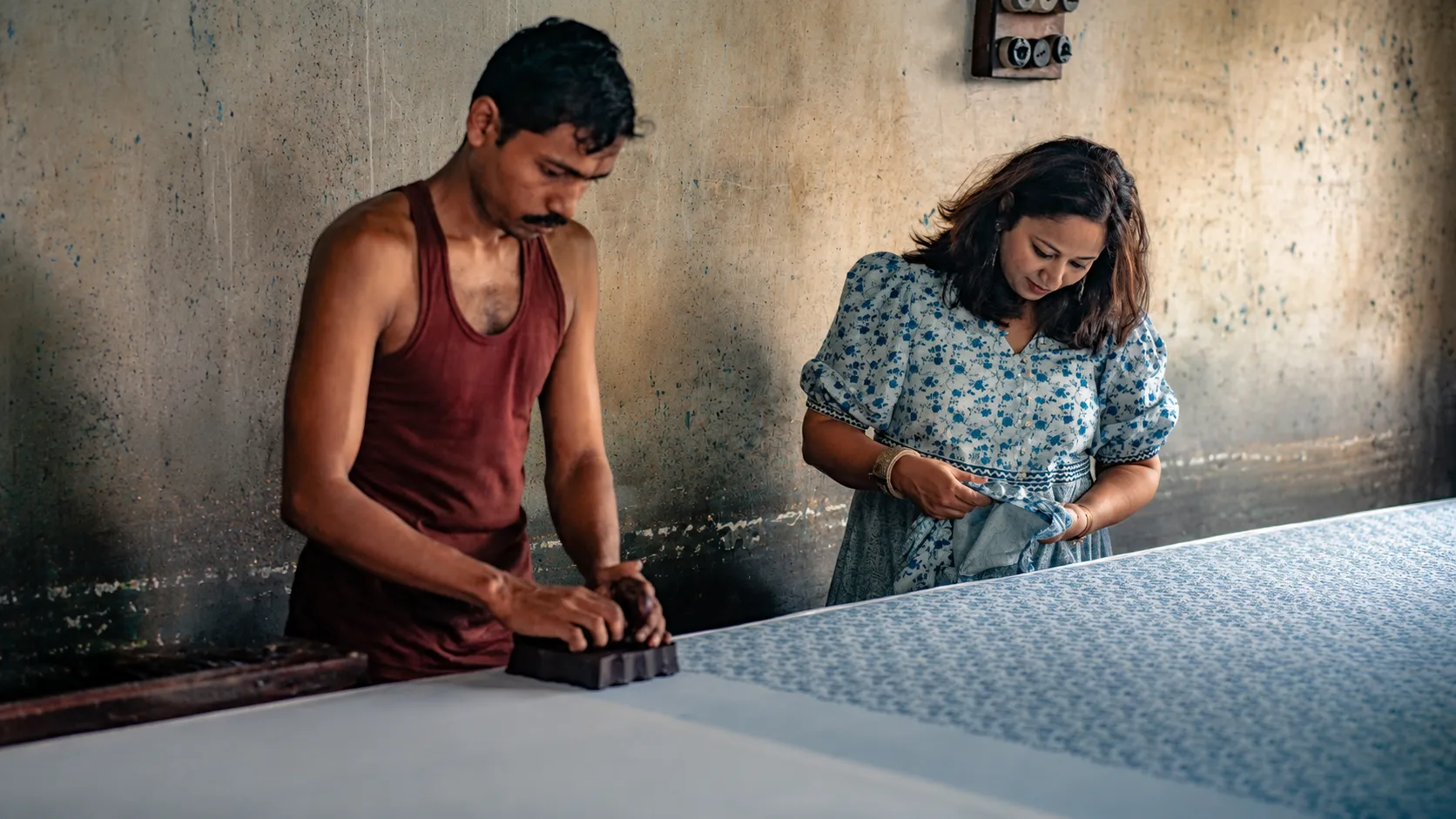
That gap — between admiration and actual adoption, between craft and commerce — became the itch that eventually pulled Dhanya out of sourcing altogether and into building something of her own. Today she is the founder and designer behind Origin and Objects, a contemporary slow-fashion studio based in Bangalore that works directly with India's artisanal crafts and fabrics, five years into a brand she describes simply as a long-held passion finally given room to breathe.
Her path there was never accidental. A fashion design graduate of NIFT, Dhanya spent her first four working years in R&D and merchandising with an exporter, before Tesco UK pulled her into sourcing proper. What followed was almost twenty years running her own sourcing company alongside a business partner, supplying clothing and home textiles from India into international markets — a career spent, in effect, translating Indian manufacturing capability into language global retail could buy. "I wanted to take Indian fabrics and crafts and the whole supply chain behind it to the world in an inspiring way, which is relevant for today," she says of the decision to finally build that translation herself, on her own terms, rather than on a retailer's.
A World Of Inspiring, Handmade Objects
Ask her what she wants someone to feel when they encounter Origin and Objects, and the answer has nothing to do with product categories. "I envision Origin and Objects to be a space where people feel comfortable and people feel connected," she says. "A world of inspiring objects, which are handmade, which includes clothing and everything else which touches our life. We're starting with clothing." The ambition, notably, isn't confined to apparel at all — clothing is simply the entry point into what she describes as a broader universe of handmade, considered objects. "We are today a global world. We are local, but still global. I find that Origin and Objects is a space where you feel at home in any part of the world."
Kerala In Every Stitch
That sense of home traces directly back to where Dhanya herself is from: Kurumali, a quiet corner of Kerala — "God's own country," as she puts it, a place of subdued colour palettes and unhurried living. "I think the local story which carries forth is influences of my upbringing, influences of my travels, how we've interacted with the world," she explains. "A quiet backwater tropical influence. You will see that in the silhouettes. You will see that in the colours used." The intended effect is deliberately understated: not spectacle, but warmth. "When people look at it, I want them to feel the warmth. I want them to feel relaxed. I want them to feel quietly confident. And I feel that is not just a local essence — it's a feeling that everybody in the world wants to hold on to."
Confidence Over Consensus
Five years of building a brand from scratch, in a category with no clear playbook, has not been short on difficult moments. Dhanya doesn't dress up the uncertainty. "A lot of times when you are not sure you're in the right market, you're in the right space, you look to other people," she admits, recalling conversations with collaborators who questioned her design choices and motives along the way. But the lesson that stuck wasn't about listening harder to outside opinion — it was almost the opposite. "It's what it has taught me all the time is to have confidence in yourself. Because if you keep looking towards outside for people's thought process, everybody comes from a different way of thinking and everybody wants to influence. It keeps on shaking what you are. So it's very important to hold on to what you want and fight for it and get it out there."
There Are No Failures, Only Lessons
That same instinct shapes how she talks about setbacks more broadly — she simply refuses to file anything under the heading of failure. "I don't look at anything as failures. Everything is a lesson. So we learn from the lessons and move forward," she says. One recurring lesson has been about pace: the gap between what you plan and what actually unfolds. "Sometimes what you want and what actually happens may be at different levels. So you don't give up. You keep trying." Building something genuinely new, she points out, comes with no map to follow — which is precisely what makes it both harder and more interesting. "There is no really a map that you can follow, and that makes it interesting too. That also makes it highly prone to errors, highly prone to learning from it."
Design Like An Architect, Not Just An Artist
For anyone eyeing their own apparel label, Dhanya's advice skips straight past inspiration and lands on infrastructure. "Entrepreneurship is very important and there's space for everybody. At the same time, it is a journey and it takes time. And you need to have skilled yourself before that," she says. Her analogy is architectural: you wouldn't trust a house built by someone who doesn't understand how a structure stands. Clothing, in her view, demands the same rigour. "When making a garment, you should know the technicalities of it. How do you make it last? How do you make it fit? Design is one part of it — aesthetics — but again, the functionality. If you're going to call yourself a designer and entrepreneur, you need to have your foundation strong."
No Compromises, Just A Different Kind Of Journey
On the specific question of what it costs to build a company as a woman, Dhanya pushes back on the framing entirely. "Honestly, I do not think I had to compromise anywhere being a woman. I did not think myself any different from male entrepreneurs, and my family has been very supportive," she says. "I never felt that I was on any different journey from what a male entrepreneur would be." She credits part of that experience to a close, supportive network of fellow women founders she counts as friends — a community, she suggests, that has made the road feel less solitary rather than more constrained.
Redefining What Success Looks Like
Pressed on what success actually looks like beyond a sales figure, Dhanya answer turns almost immediately outward, toward the people she works with rather than the brand itself. "We're a small business. It's an ocean out there — like the galaxy, it's not that everything rotates around us. We're just part of it," she says. "The impact that you're making is: how do you make the whole working-together journey with the people you work with interesting? Most of us, even artisans, spend a maximum of our lifetime doing work — so how do you ensure you work with people who you like, who you trust, they trust you, you're able to talk through your differences, you make sure the payments happen on time?" For her, the milestone worth chasing isn't a number on a spreadsheet but the health of an entire ecosystem — one built on knowledge-sharing, on raising standards together, and on partnership. "I'm glad to have some great partners I work with," she adds.
The One Non-Negotiable
Asked, finally, for the one non-negotiable she'd hand to anyone entering the apparel business, Dhanya doesn't hesitate. "What is non-negotiable, according to me, is the work that goes into it. You get into it fully, 100%. There is no 99%," she says. "You need to have a clear picture of the goals ahead, and make sure that you're taking your team with you and everybody moves forward."
Five years in, Origin and Objects still carries the fingerprints of the industry Dhanya spent two decades studying from the inside — the complicated supply chains, the design gaps, the costs that never quite worked out for the artisans who mattered most. The difference now is that she's the one deciding what gets fixed, and how quietly confident the final product gets to feel.


