ImpactSustainability6 MIN READ

20 Gigawatts and Counting: How Adani Green Became India's First Renewable Energy Company to Cross the Milestone — Almost Entirely From Scratch

Adani Green Energy Limited has crossed a threshold no other Indian renewable energy company has yet reached: 20 gigawatts of operational capacity, achieved predominantly through greenfield project...

28 July 2026
20 Gigawatts and Counting: How Adani Green Became India's First Renewable Energy Company to Cross the Milestone — Almost Entirely From Scratch

Adani Green Energy Limited has crossed a threshold no other Indian renewable energy company has yet reached: 20 gigawatts of operational capacity, achieved predominantly through greenfield project development rather than acquisitions — a distinction the company and independent industry observers alike have flagged as particularly significant, given how much of the sector's capacity growth elsewhere has relied on consolidating existing assets rather than building genuinely new generation capacity from the ground up.

The scale of what this milestone represents in practical terms is considerable. AGEL's operational portfolio now generates more than 52 billion units of clean electricity annually, an output representing nearly 3 per cent of India's total electricity consumption. To put that figure in more tangible terms, the company notes that this generation volume is enough to power New York City for an entire year, or to meet almost the combined annual electricity demand of Mumbai and New Delhi — two of India's largest and most power-hungry metropolitan economies. Separately, AGEL has stated that its 20 GW milestone is equivalent to powering more than 9 million households, while the associated carbon emissions offset exceeds 37 million tonnes annually — a figure the company likens to the carbon sequestration capacity of approximately 1.77 billion trees, or the equivalent of removing around 8.1 million passenger vehicles from the road.

Perhaps the most striking aspect of the milestone is the timeline over which it was achieved. AGEL commissioned its first renewable energy project at Kamuthi, Tamil Nadu, in 2016 — meaning the company has gone from its very first project to 20 GW of operational capacity within a single decade, a pace of expansion the company describes as India's largest and fastest greenfield renewable energy capacity addition to date. Underscoring the acceleration in that growth trajectory, AGEL added 5,051 megawatts of new capacity in financial year 2026 alone — the highest annual renewable capacity addition recorded by any company anywhere in the world outside China, according to the company's own disclosures, a claim that, if accurate, positions AGEL among the very fastest-growing renewable energy developers globally, not merely within the Indian market.
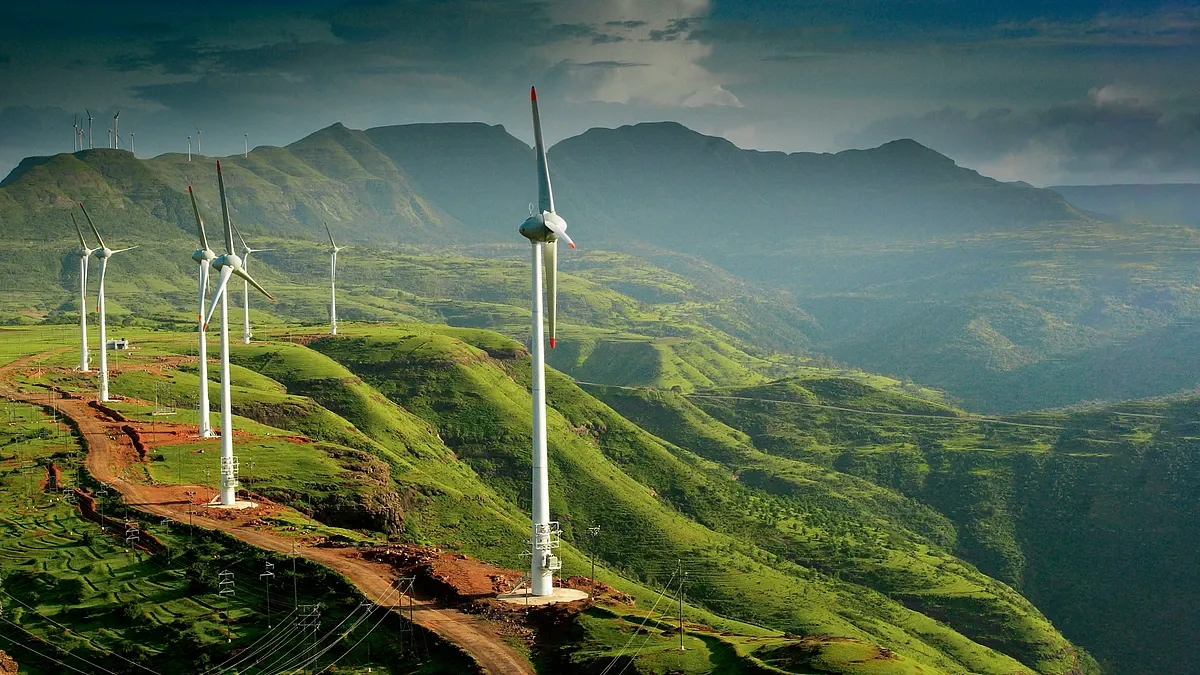
image.png

Commenting on the achievement, Sagar Adani, Executive Director of AGEL, framed the milestone as a validation of the company's underlying execution capabilities. "Surpassing 20 GW demonstrates what disciplined execution and long-term vision can achieve," he said. "Today, AGEL, along with our efficient team and longstanding partners, delivers renewable electricity almost equivalent to annual power requirement of Mumbai and New Delhi combined, reinforcing the country's energy security while accelerating its clean energy transition." His remarks followed closely on the heels of an earlier address at the inaugural Adani Green Energy Dialogue, held on June 26 during London Climate Action Week at The Science Museum in London, where he had highlighted the importance of accelerating electrification through renewable energy integrated with large-scale storage infrastructure — a theme that speaks directly to one of the more technically sophisticated aspects of AGEL's recent capacity expansion.

Breaking down the composition of AGEL's 20 GW portfolio reveals a company with a deliberately diversified generation mix rather than a narrow reliance on any single renewable technology. The operational portfolio comprises approximately 14.2 GW of solar capacity, 2.7 GW of wind capacity, and a further 3.3 GW of combined wind-solar hybrid capacity — a hybrid approach that allows the company to smooth out generation variability by pairing complementary generation profiles at shared sites, since wind and solar resources often peak at different times of day and across different seasons. Collectively, this portfolio represents approximately 14 per cent of India's total utility-scale solar installations and roughly 12 per cent of the country's combined utility-scale solar and wind capacity, based on national data as of May 31, 2026 — figures that underscore just how significant a share of India's overall renewable energy build-out AGEL alone now accounts for.

Surpassing 20 GW demonstrates what disciplined execution and long-term vision can achieve," said Sagar Adani, Executive Director of AGEL, calling the company's output "almost equivalent to annual power requirement of Mumbai and New Delhi combined.

Beyond pure generation capacity, AGEL has also been building out substantial battery storage infrastructure to support round-the-clock delivery of clean power — a capability increasingly recognised as essential for renewable energy to genuinely displace fossil fuel generation, given the inherently intermittent nature of both solar and wind resources. The company has commissioned 3.55 gigawatt-hours of Battery Energy Storage Systems, which it describes as the largest such deployment outside China. This storage capacity was recently expanded further through the commissioning of a 185 megawatt-hour BESS project at Khavda, Gujarat, through subsidiary Adani Renewable Energy Forty Three Limited, alongside a 156 megawatt wind energy project at the same site, commissioned through subsidiary Adani Green Energy Twenty Six A Limited — additions that, according to a regulatory filing, took AGEL's total operational renewable generation capacity to precisely 20,141.80 megawatts and its total operational BESS capacity to 3,551 megawatt-hours.

The Khavda site deserves particular attention within AGEL's broader growth story, as the location of what the company describes as the world's largest renewable energy plant under development — a 30 GW facility being built in Gujarat's Kutch district, in a stretch of land bordering the Rann of Kutch that has emerged as a focal point for large-scale renewable energy development in India given its combination of abundant land availability, strong and consistent solar irradiance, and favourable wind resource characteristics. The continued build-out at Khavda is expected to remain a primary driver of AGEL's capacity growth over the coming years, as the company works toward its publicly stated target of reaching 50 GW of total renewable energy capacity by 2030 — meaning the 20 GW milestone just achieved represents, by the company's own roadmap, less than half of the capacity it aims to have operational within the next four years.

image.png

Achieving that 50 GW target will require AGEL to essentially maintain, or even accelerate, the record pace of capacity addition it demonstrated in FY26, a challenge that will test the company's execution capabilities, its ability to continue securing the necessary land, transmission infrastructure, and regulatory approvals at scale, and its capacity to raise the substantial capital required to fund continued expansion at this magnitude. The company has stated that its broader technology focus includes efforts to reduce the Levelized Cost of Energy, or LCOE — a standard industry metric representing the average cost of generating electricity over an asset's operating lifetime — reflecting an understanding that sustained competitiveness in India's renewable energy sector will depend not merely on adding capacity, but on continuing to drive down the underlying cost structure of that capacity relative to both conventional fossil fuel generation and increasingly competitive rival renewable energy developers.

For India's broader energy transition, AGEL's milestone carries significance well beyond the specific corporate achievement it represents. As the country continues to pursue ambitious national decarbonisation targets alongside rapidly growing electricity demand driven by economic growth, urbanisation, and the increasing electrification of transport and industry, the pace at which individual developers like AGEL can bring genuinely new, greenfield renewable generation capacity online — rather than simply acquiring and consolidating existing assets — will play a disproportionately important role in determining whether India's broader clean energy transition can keep pace with the country's underlying energy demand growth. On that specific measure, AGEL's decade-long journey from its first project at Kamuthi to 20 GW of predominantly self-built capacity offers one of the clearer proof points yet that India's renewable energy sector has developed the execution capabilities needed to build at genuinely global scale.

TagsAdani Green EnergyRenewable Energy IndiaClean EnergySagar AdaniSolar Energy IndiaGreen Energy TransitionKhavdaSustainable IndiaClimate ActionBusiness News India

Reader reviews

Sign in to rate and review this article.
Loading reviews…