A New Chapter in the World's Most Important Bilateral Economic Relationship
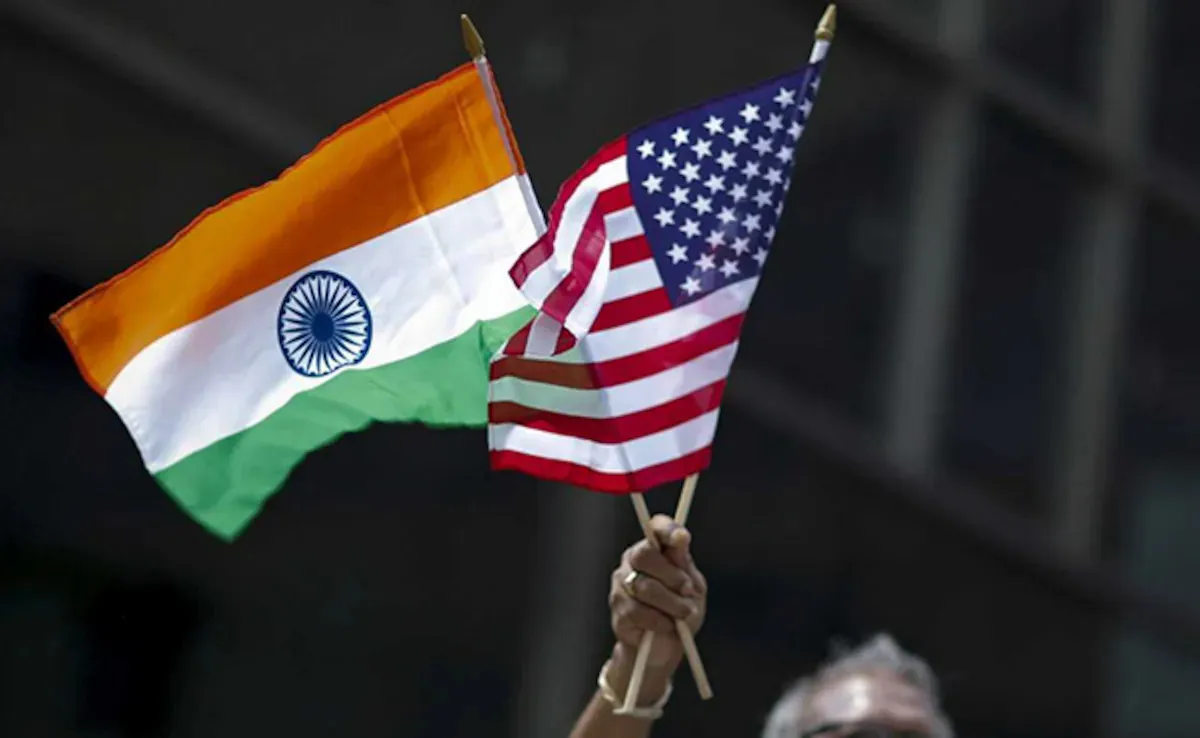
The United States Trade Representative (USTR) confirmed on June 25, 2026 that the United States and India are actively negotiating a bilateral trade agreement — with artificial intelligence, semiconductors, and future technology forming the central pillar of the discussions. The announcement, though light on timelines, signals a profound strategic realignment of two economies that have been gradually decoupling from China and moving toward deeper mutual integration.
For India, this is a moment that validates years of diplomatic positioning. For the United States, trade with India — already the world's most populous nation and fifth-largest economy — represents a key component of its Indo-Pacific strategy and supply chain diversification agenda. For the global Indian community, this development carries both personal and professional significance: closer economic ties between the world's oldest and largest democracies will reshape opportunities in technology, manufacturing, healthcare, and education for Indians on both sides of the equation.
The USTR's statement did not provide a specific timeline for concluding the negotiations, reflecting the complexity of a deal that must reconcile differences on agriculture, intellectual property, digital trade rules, and tariffs. However, the explicit mention of AI and future technology collaboration points to a deal architecture that goes well beyond goods trade — one that envisions deep R&D partnerships, talent mobility, and co-development of the technologies that will define the 21st century.
AI Collaboration: The Transformative Core of the Deal
The inclusion of AI and future technology in the US-India trade framework marks a historic departure from traditional trade agreement architecture. Most trade deals focus on tariff reductions, market access for goods, and investment protections. A deal that explicitly frames technology co-creation as a core objective represents a new generation of economic diplomacy.
India's AI ambitions are formidable. The government has committed ₹10,371.9 crore to the India AI Mission, aimed at building public AI compute capacity, developing indigenous large language models, and creating AI application ecosystems in agriculture, healthcare, and education. Indian IT giants including TCS, Infosys, Wipro, HCL, and Tech Mahindra are already generating significant revenue from AI-related services for US clients.
Meanwhile, US AI companies — from OpenAI and Google to Microsoft and Anthropic — are deeply invested in India's talent pool and market. A formal trade framework that enables easier cross-border data flows, joint research on frontier AI, and co-investment in AI infrastructure would provide the institutional foundation for what is already an organic and growing AI alliance.
The semiconductor dimension is equally significant. India's semiconductor mission, launched in 2021 and gaining momentum through the Tata Electronics Micro-semiconductor facility in Dholera and the Micron assembly and testing plant in Sanand, has been building the physical infrastructure for a domestic chip industry. US expertise, equipment access, and technology licensing under a trade framework would dramatically accelerate this ambition.
What the Deal Means for Indian Businesses and Professionals
The implications of a US-India trade deal are far-reaching for Indian businesses and professionals operating in both countries. On the goods side, a deal could reduce tariffs on Indian pharmaceutical exports, textiles, and engineering products, making Indian manufacturers more competitive in the US market. On the services side — where India is already the dominant player — formalised commitments on digital trade, data localisation, and professional services mobility could benefit millions of Indian software engineers, consultants, and healthcare workers.
For Indian start-ups looking to scale globally, a closer US-India economic framework means easier access to US venture capital, simplified compliance regimes, and potentially streamlined visa pathways for Indian entrepreneurs. The start-up ecosystem — which already has 112 unicorns and over 207,000 recognised start-ups as of June 2026 — stands to benefit enormously from deeper institutional ties with Silicon Valley and America's broader innovation economy.
For NRI professionals in the United States, the deal signals a strengthening of the bilateral relationship that has shaped their professional lives. Many Indian-Americans work at the intersection of both economies — in technology, finance, medicine, and academia. A formal trade architecture that reflects the depth of the US-India relationship would provide additional stability and opportunity in their careers.
Challenges Ahead: The Road to a Signed Deal
Despite the positive signals, the path to a finalised US-India trade deal is strewn with well-documented obstacles. Agricultural market access remains a perennial sticking point — the US wants greater access for its farm products, while India is deeply protective of its agricultural sector and the livelihoods of over 600 million rural citizens who depend on it. Data localisation requirements, intellectual property protections for US pharma companies, and digital tax policies have also been sources of friction in past negotiations.
The USTR's decision not to announce a timeline suggests that both sides are managing expectations carefully. A comprehensive deal could take years to finalise. However, the very fact that AI and future technology are now explicitly on the table suggests that the negotiating framework has evolved beyond traditional transactional trade politics into something more aligned with the strategic imperatives of both nations in the era of great power competition.
India's engagement with the US also occurs in a multipolar context. India simultaneously maintains strategic relationships with Russia, deepening ties with the European Union, and a complex but commercially vital relationship with China. Any bilateral trade deal with the US will need to navigate these geopolitical realities — which is why process, patience, and political capital will all be required in equal measure.
The announcement is, for now, a statement of intent. But in the lexicon of international trade diplomacy, a clear statement of intent from the USTR — backed by active negotiating rounds — is a meaningful signal of the direction of travel. For the global Indian community, this is a direction worth watching closely and with great optimism.