Most People Still Think About Their Health the Wrong Way. Ultrahuman Is Building the Thing That Changes That.
Here is how most people relate to their health: they feel fine until they don't, they see a doctor when something hurts, they get a result that tells them something is wrong, and then they try to fix it. The entire system — the doctor's office, the diagnostic lab, the prescription pad — is oriented around responding to illness that has already arrived.
Ultrahuman was built on the premise that this is backwards.
The data that would predict the illness — in blood glucose trends, in heart rate variability patterns, in sleep architecture, in skin temperature fluctuations, in inflammatory biomarkers — exists inside the body before the symptom exists. The question was never whether the data was there. The question was whether you could build devices that could continuously read it, algorithms that could interpret it, and a platform that could translate it into something a person could actually act on.
In 2019, Mohit Kumar and Vatsal Singhal — who had previously co-founded Runnr, a food delivery startup later acquired by Zomato, where Kumar ran delivery operations — started building the answer to that question from Bengaluru.
Six years later, Ultrahuman has $64 million in FY25 revenue, is targeting $120 million by FY26, is the world's second-largest smart ring company by volume, holds the World Economic Forum's Technology Pioneer designation, was named one of TIME's World's Top HealthTech Companies in 2025, and has shipped its products to customers across 150-plus countries.
The body is the new battleground of consumer technology. Ultrahuman is one of the companies that understood that earliest.
What Ultrahuman Actually Built — Platform by Platform
The most important thing to understand about Ultrahuman's product strategy is that none of its individual products make complete sense in isolation. Each one is a sensor layer feeding into a single platform — and the platform is what makes the data meaningful.
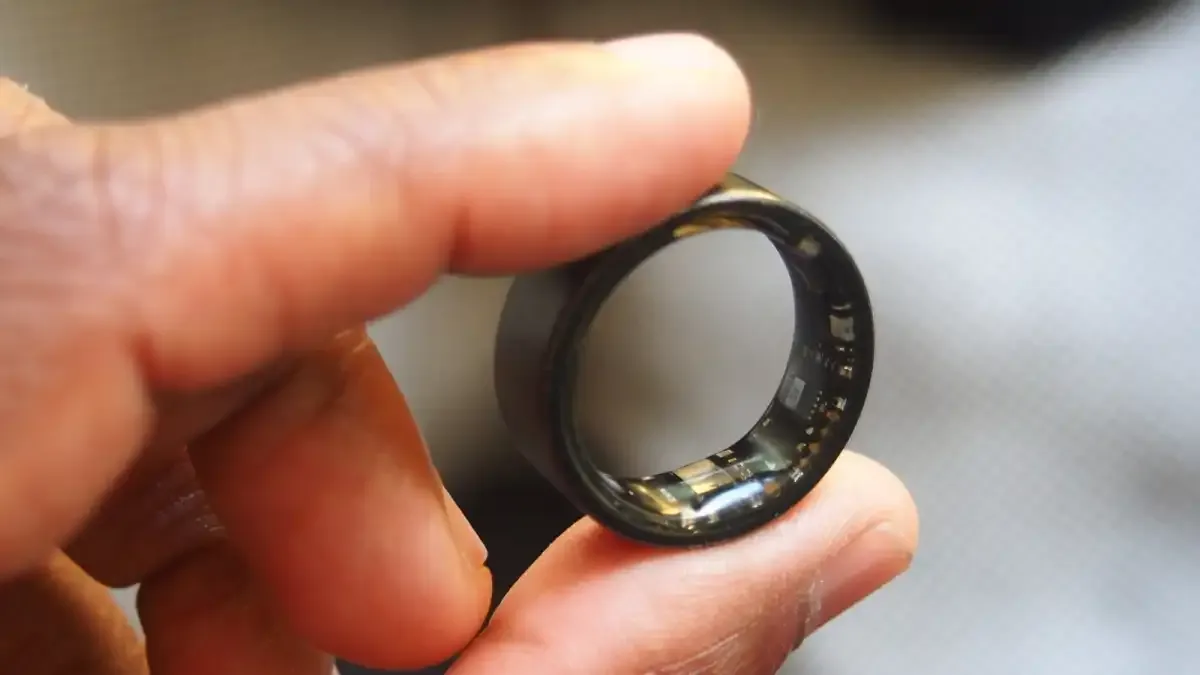
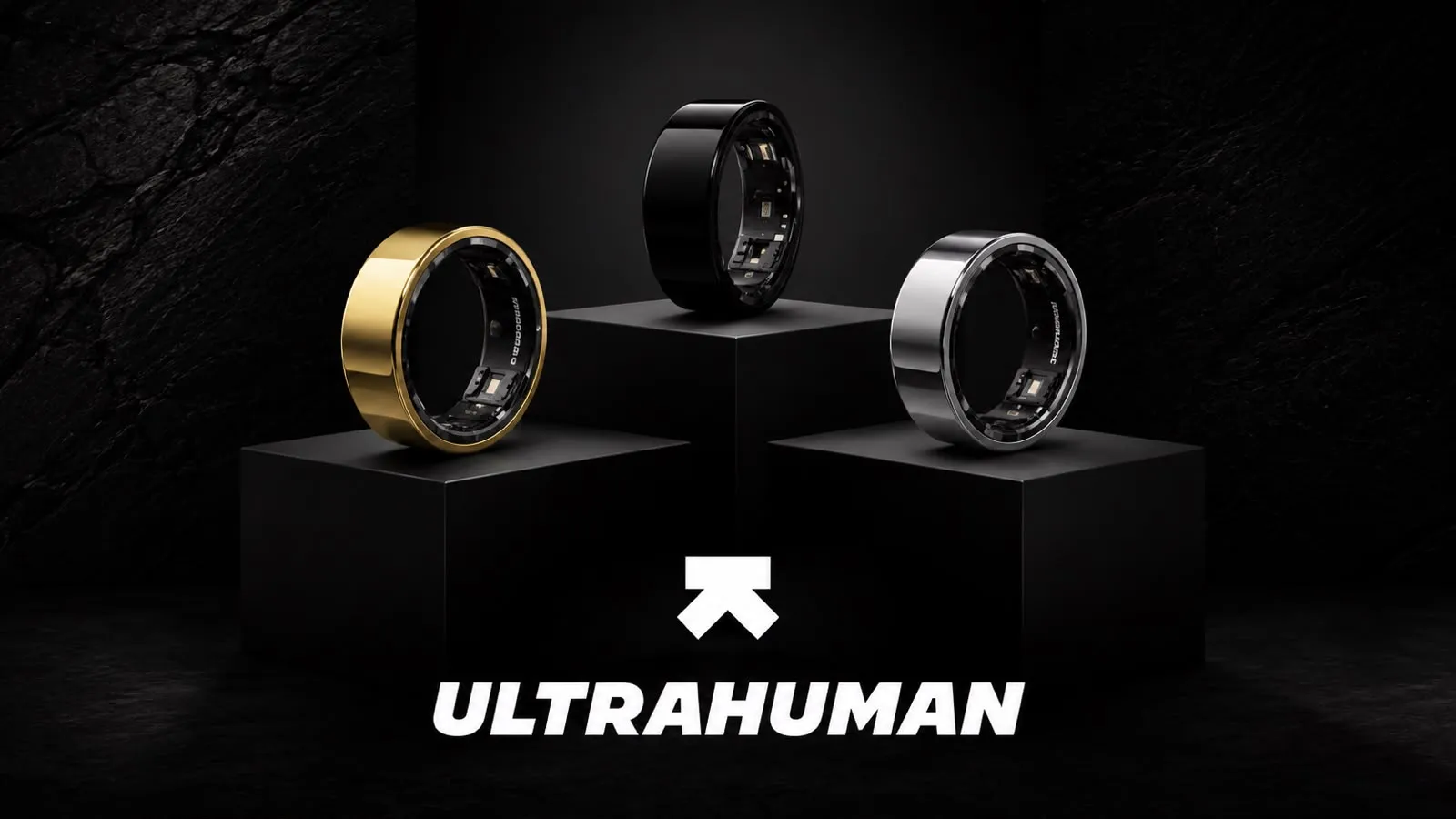
Ring AIR is the foundation. A titanium smart ring that tracks heart rate, heart rate variability (HRV), sleep stages, skin temperature, and movement. It won the Red Dot Design Award in Berlin in 2023. It has no mandatory subscription — a deliberate commercial decision that makes it eligible for Health Savings Account and Flexible Spending Account purchases in the United States, meaningfully expanding the addressable market. Optional PowerPlug apps add AFib detection (via FibriCheck), snoring detection, respiratory health tracking, and cycle tracking. The ring is the always-on, low-friction data source that makes everything else in the platform more accurate.
Ring Pro, launched globally in February 2026, is the third-generation device with up to 15 days of battery life — extendable to 45 days with the Pro Charging Case — a dual-core processor with on-device machine learning, up to 250 days of data stored on the ring itself, and ProRelease Technology that allows the ring to be cut off in a medical emergency. US pre-orders opened in March 2026 following customs clearance — which came after the company had navigated a significant patent dispute with Oura. The International Trade Commission ruled in Oura's favour in August 2025, blocking Ring AIR imports into the US. The Ring Pro's redesigned architecture resolved the patent conflict, enabling the US return.
Ultrahuman M1 CGM is a continuous glucose monitor that tracks blood glucose levels in real time. It is the metabolic health layer — the product that made Ultrahuman's original name in the Indian market, positioned around the insight that glucose variability is one of the most actionable signals for energy, cognitive performance, and long-term metabolic health, and that most people, not just diabetics, benefit from understanding theirs.
Blood Vision, launched in July 2025, tests more than 100 blood biomarkers and integrates results with wearable data from the ring and CGM — creating correlations that no isolated lab report can provide. When a user's ring shows elevated resting heart rate and disrupted sleep, and their blood results show elevated cortisol and inflammatory markers, Blood Vision synthesises those signals into a picture that a GP visit with three separate referrals might eventually piece together. Blood Vision initially rolled out across 48 US states and currently accounts for approximately 5 per cent of revenue — but is the company's second-fastest growing category and is expected to reach 20 per cent of revenue in coming quarters.
Ultrahuman Home, launched in June 2025, monitors indoor air quality, temperature, humidity, noise, and light. This is the ambient environment layer — the recognition that the body's recovery and metabolic signals do not occur in isolation from the environment they are exposed to, and that poor air quality, excessive noise, or disrupted light cycles all show up as degraded ring data if you know where to look.
Cycle and Ovulation Pro extended the platform into women's health in a specific and scientifically substantive way. In August 2025, Ultrahuman acquired viO HealthTech, developer of the OvuCore vaginal temperature sensor and the OvuSense fertility algorithm. The acquisition ported the OvuSense algorithm — which has a clinical evidence base for cycle prediction — to the Ring AIR's temperature sensing, producing fertility tracking that goes beyond the standard basal temperature methods and approaches clinical-grade accuracy.
Jade is the AI layer binding all of these together. The biointelligence platform combines ring data with 120-plus Blood Vision biomarkers, M1 CGM glucose trends, and Ultrahuman Home environmental data, allowing users to ask natural language questions — "why am I tired today?" — and receive recommendations grounded in the full stack of data the platform has collected about their specific physiology over time.
The Founders — and Why Their Background Explains the Strategy
Mohit Kumar's background is worth understanding because it explains decisions that might otherwise seem counterintuitive for a health-tech founder.
Kumar and Vatsal Singhal built Runnr — a food delivery company — and sold it to Zomato. Kumar then ran delivery operations at Zomato until 2019. That is not the typical CV of a health-tech founder. Most wearable health companies are founded by doctors, biologists, or device engineers. Kumar is an operator who scaled a logistics and consumer services business to national reach.
That operational DNA shows up in Ultrahuman's approach in specific ways. The no-subscription model for core Ring features is a consumer acquisition decision as much as a product one. The HSA/FSA eligibility in the US is a market access decision that a healthcare-native founder might not have prioritised. The manufacturing facility — UltraFactory in Bengaluru, capable of supporting $200 million in annual revenue — was built early, before the revenue justified it, because someone who has run logistics at scale understands that manufacturing capacity constraints kill growth faster than product quality problems do.
The "cost-disciplined" framing is consistent across every funding announcement. Ultrahuman has raised approximately $145 million across nine rounds — from Rainmatter Capital, Nexus Venture Partners, Blume Ventures, Alpha Wave Incubation, Steadview Capital, and angel investor Deepinder Goyal — and has done so without the kind of capital intensity that characterises most hardware consumer companies at its scale.
The Global Expansion — and the Patent Battle That Almost Stopped It
Ultrahuman's US story is one of the more dramatic in recent Indian consumer tech history.
The Ring AIR was gaining significant traction in the American market when, in August 2025, the US International Trade Commission ruled in favour of Oura — the Finnish smart ring company — in a patent dispute involving Ultrahuman and RingConn. Exclusion and cease-and-desist orders took effect October 21, 2025, blocking Ring AIR imports and sales tied to the existing design.
Most companies hit with an ITC exclusion order while in the middle of US market expansion face an existential crisis. Ultrahuman's response was to accelerate the Ring Pro development timeline — producing a redesigned device with a new architecture that resolved the patent conflict — and to use the period of US market absence to deepen its presence in other geographies: Canada, Mexico, Australia, the UAE, and India.
The Ring Pro launched globally in February 2026. US pre-orders opened in March following CBP clearance. The US return is underway, on the company's own terms, with a product that is technically superior to the one it replaced.
The ₹400 crore Series C, raised in early 2026, will fund the US return alongside new geography expansion and new product categories — including a wristband-form-factor device and new home product lines that suggest Ultrahuman is building toward a multi-device health stack rather than a single-product company.
The Market — Why the Timing Is Right
The consumer health monitoring category that Ultrahuman operates in was a niche two years ago. It is becoming mainstream.
The North American wearable technology market is projected to grow from $34.1 billion in 2025 to $69.1 billion by 2030, a 15.2 per cent compound annual growth rate. Smart rings are still a small slice of that total, but they sit inside the fastest-moving part of it: passive, always-on, low-friction continuous monitoring that consumers have increasingly accepted as normal. Oura has sold more than 2.5 million rings — proof that consumer demand for the form factor is real rather than experimental.
What Ultrahuman is betting on — and what the $120 million revenue target for FY26 implicitly assumes — is that the smart ring category will expand beyond the early-adopter cohort (athletes, biohackers, longevity enthusiasts) into mainstream health-conscious consumers who want the data that a wearable generates but whose primary motivation is feeling better rather than optimising performance.
Blood Vision is the clearest expression of that bet. Blood testing for 100-plus biomarkers, integrated with continuous wearable data, sold as a consumer health product directly through the Ultrahuman platform, is not a product for a niche. It is a product for anyone who has ever wanted to understand why they feel the way they feel — which, depending on how the value proposition is communicated, is most people.
What the Global Story Actually Is
Ultrahuman is not simply an Indian company going global. It is a company that was built global from its founding — whose products were designed for a standard of quality and scientific credibility that the international market demands, whose manufacturing facility was built at a scale that international distribution requires, and whose platform is now integrating clinical-grade data sources (blood biomarkers, fertility algorithms) that signal a movement toward the healthcare system, not just the wellness market.
The Indian origin is not incidental to that ambition. Manufacturing in Bengaluru gives Ultrahuman cost structures that Western competitors cannot match at equivalent quality. Engineering talent in India gives it R&D depth at a fraction of what the same capability costs in San Francisco or Helsinki. The Runnr-to-Zomato operational heritage gives its founder a specific understanding of how to scale consumer platforms to millions of users without losing operational discipline.
That combination — world-class product ambition, Indian cost structures, operator-grade execution discipline — is the formula that Mohit Kumar is running. The body as the new battleground of consumer technology. Bengaluru as the place where the weapons are being built.