Three Empires, Three Models, One Nation
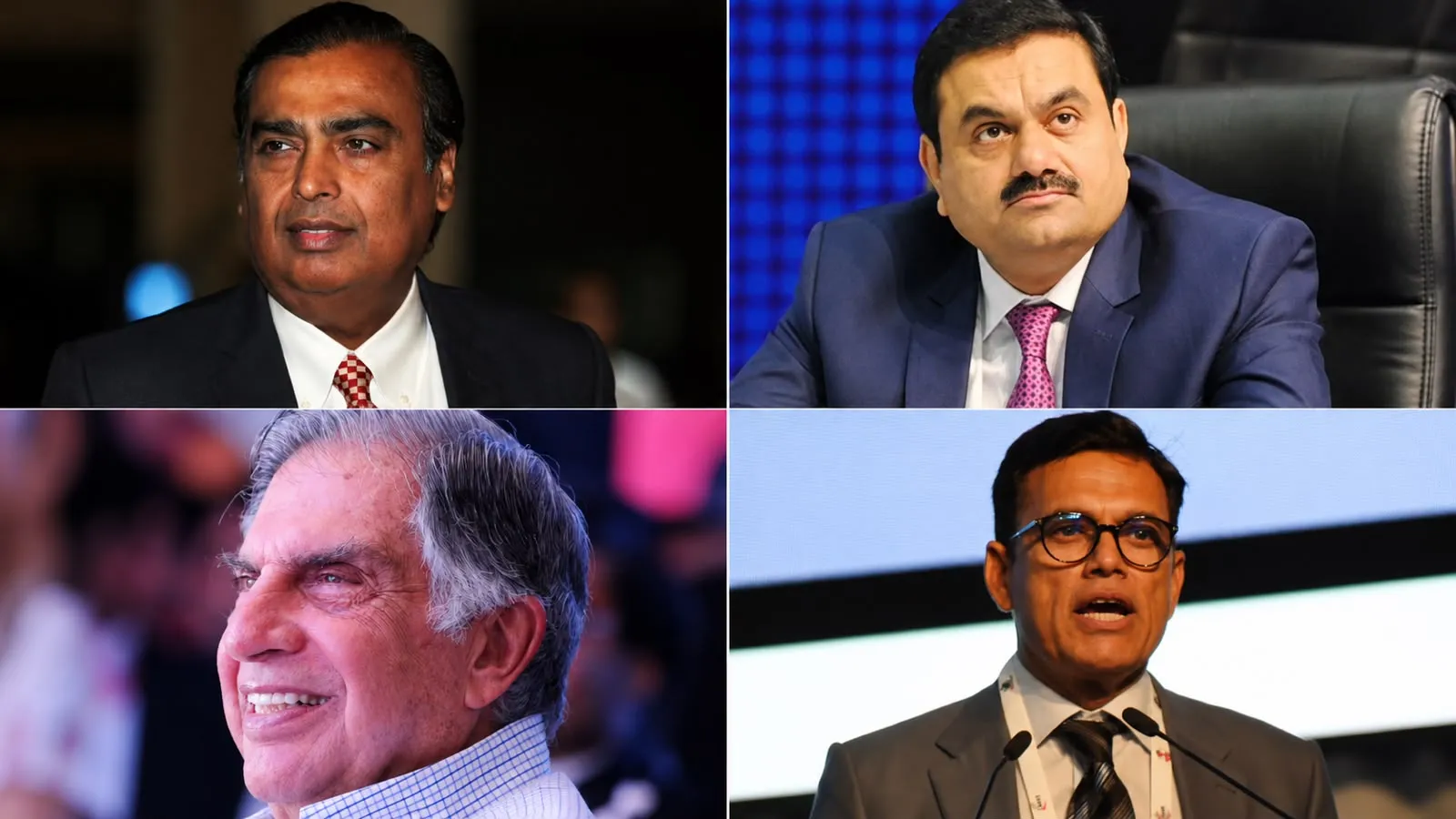
India's corporate landscape in 2026 is increasingly defined by three conglomerates whose reach, resources, and ambitions dwarf those of all others. The Burgundy Private Hurun India 500 Report, released on June 25, 2026, crystallises what market observers have long suspected: the battle for India's economic future is being fought — and largely won — by Tata Group, Reliance Industries, and the Adani Group.
Together, these three groups account for a significant share of India's total listed corporate value, exert influence across every major sector of the economy, employ millions of people, and shape the strategic thinking of policymakers, global investors, and competitors alike. Yet each is utterly distinct in its philosophy, its origin story, and its model of value creation.
The Hurun report identifies three clear archetypes: Tata represents diversified and balanced growth across a broad portfolio; Reliance showcases the power of a dominant flagship company supported by consumer-facing and technology-driven businesses; and Adani reflects infrastructure-led growth focused on sectors critical to India's long-term development. Understanding each archetype is essential for any serious observer of the Indian economy.
Tata Group: India's Most Valuable Business House
The Tata Group retains its position as India's most valuable business house by aggregate valuation. With 14 companies featured in the Hurun India 500 rankings and a combined value of approximately ₹34 lakh crore, Tata represents the gold standard of Indian conglomerate building — built over 158 years, across industries, and with a governance framework that remains the envy of Corporate India.
The Group's strength lies in its extraordinary diversification. Tata Consultancy Services (TCS) remains India's most valuable IT company and one of the world's largest by market capitalisation. Titan Company has grown from a humble watch maker into India's most admired consumer brand, crossing ₹75,000 crore in revenue in FY26 alone. Tata Motors — led by the resurgent Jaguar Land Rover and a growing domestic EV portfolio — is staging one of India's most dramatic corporate turnarounds. Trent, the retail arm, is expanding at breathtaking speed, challenging fast-fashion global players in their own territory. Tata Consumer Products and the Indian Hotels Company (Taj) complete a portfolio that spans digital, physical, luxury, and everyday India.
The Tata Group is also at a pivotal moment of leadership transition. Noel Tata, who assumed the chairmanship of Tata Trusts following Ratan Tata's passing in October 2024, has focused on strengthening governance and maintaining the Group's ethical standards — the values that have made the Tata name synonymous with trust in India and increasingly, globally.
Reliance: The Unstoppable Flagship
Reliance Industries remains India's most valuable single company — a position it has held for several consecutive years. Under Mukesh Ambani, Reliance has reinvented itself not once but repeatedly: from a petrochemicals and refining giant to a telecoms disruptor through Jio, then to a retail behemoth through Reliance Retail, and now into an AI and green energy powerhouse.
The numbers are staggering. Reliance's consolidated EBITDA is guided to more than double over the next five years. Jio alone serves 524.4 million subscribers. Reliance Retail, India's largest retailer, operates thousands of stores nationwide. And Reliance's commitment to AI infrastructure — 120 MW by end-2026, supporting over 200,000 H100-equivalent GPUs — positions it as India's de facto private AI infrastructure provider.
Mukesh Ambani's model is unique in India: rather than building a diversified portfolio of separate companies, he has created a single, integrated conglomerate where each business reinforces the others. Jio's data pipes feed Reliance Retail's digital commerce. Reliance's green energy ambitions are powered by its own solar manufacturing. The ecosystem effect is deliberate, deeply thought through, and extraordinarily difficult for competitors to replicate.
Adani: Infrastructure at Warp Speed
Gautam Adani's group represents the third model: infrastructure-led, policy-aligned, sector-defining growth at a pace that has few parallels in Indian corporate history. From ports to airports, from coal to solar, from data centres to defence, the Adani Group has placed itself at the intersection of every major infrastructure theme driving India's development agenda.
The AGM announcements of a ₹2 trillion investment in power over five years, a 45 GW capacity target for Adani Power, a 10 GW nuclear energy ambition by 2035, and the rapid scaling of Mundra Airport as a new aviation hub collectively paint a picture of a conglomerate that is not merely participating in India's growth but actively building the infrastructure through which that growth will flow.
The Adani Group's recovery from the Hindenburg Research short-seller report of early 2023 has been remarkable. Having seen its market capitalisation temporarily crater, the Group has rebuilt through operational execution, new project wins, and now institutional validation from the likes of Morgan Stanley. The group is approaching ₹20 lakh crore in total market capitalisation, having added ₹5 lakh crore in 2026 alone.
The Adani story remains controversial in some quarters — critics point to governance concerns, high leverage, and the sheer speed of the group's diversification. But the financial markets, led today by Morgan Stanley's double 'Overweight' upgrade, have rendered a clear verdict: the Adani Group is here to stay, and its bets on India's infrastructure future are being vindicated by the numbers.
As the Hurun report makes clear, India in 2026 is a nation where corporate power is concentrated but dynamic. Tata, Reliance, and Adani are not just companies — they are institutions, each shaping millions of lives and hundreds of millions of decisions every single day. For the global Indian community, they are also a source of enormous pride: proof that Indian capitalism, on Indian terms, can compete with the best in the world.