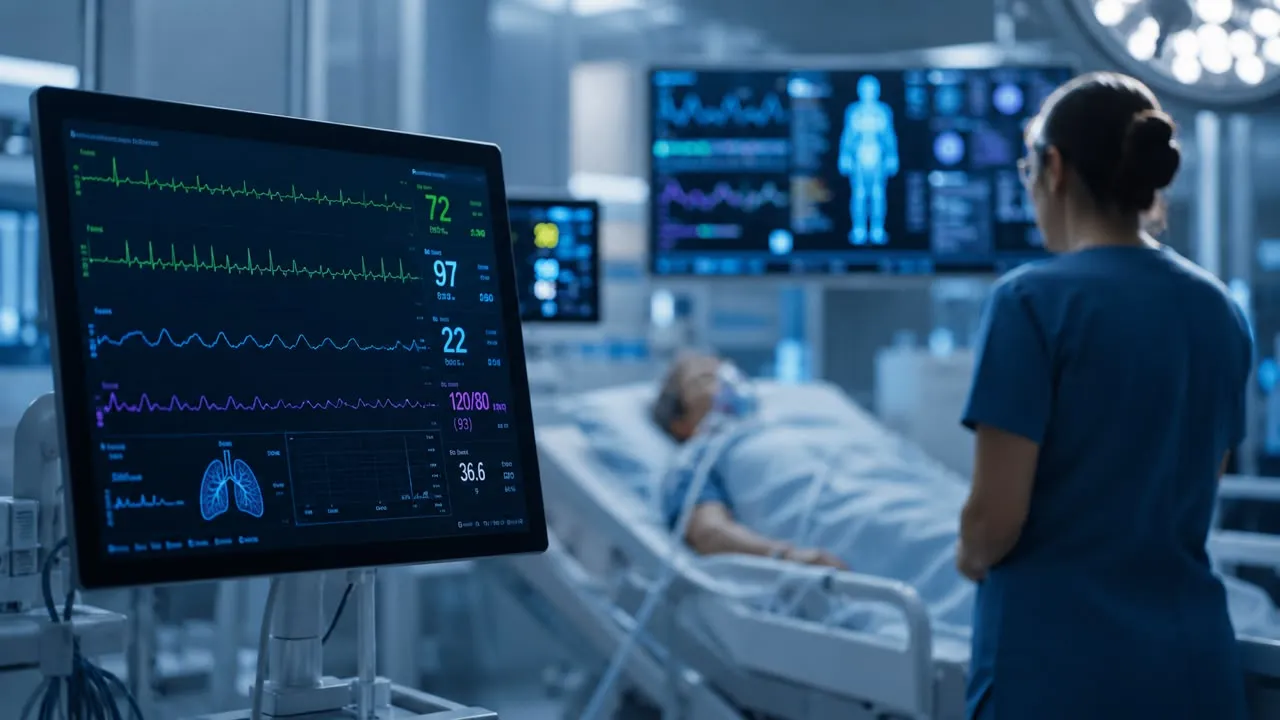
Most hospitals are designed to react.
A patient develops complications, a nurse notices changes in vital signs, a doctor is alerted and treatment begins. The system works remarkably well under difficult circumstances, but it relies heavily on something that healthcare professionals know all too well: problems are often identified only after they become visible. By the time a patient's condition begins showing obvious signs of deterioration, valuable time may already have been lost. In critical-care environments where outcomes can change rapidly, those lost minutes can have enormous consequences.
This challenge exists in hospitals across the world.
Healthcare workers manage dozens of patients simultaneously while monitoring thousands of data points every day. Heart rate, respiratory rate, oxygen saturation, temperature and blood pressure constantly fluctuate. Hidden within these streams of information are early warning signals that a patient's condition may be worsening. The difficulty is that human beings can only process so much information at once. Even the most experienced medical professionals face limitations when trying to identify subtle patterns across hundreds of variables in real time.
That is the problem LifeSigns is trying to solve.
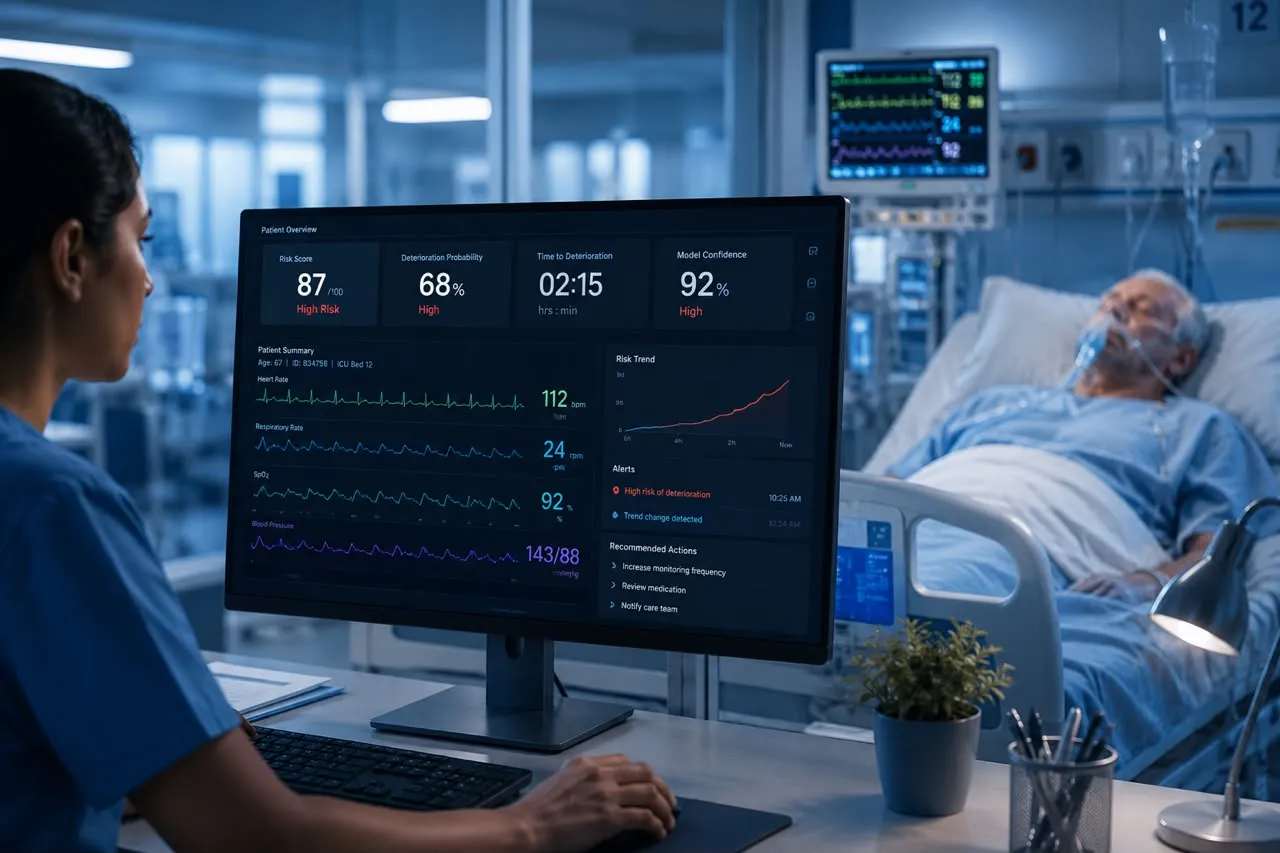
The Indian healthcare technology company has developed an AI-powered remote patient-monitoring platform designed to continuously track vital signs and identify signs of deterioration before they become clinically obvious. Instead of waiting for a crisis to emerge, the system aims to provide healthcare teams with advance warning, helping them intervene earlier and potentially improve outcomes. The vision is simple but powerful: move hospital care from reactive treatment to proactive intervention.
The opportunity is enormous.
Hospitals worldwide are under pressure to improve patient outcomes while managing growing workloads and staffing challenges. Technologies that help clinicians identify risks earlier could reduce complications, improve efficiency and save lives. Investors clearly see potential in this approach. HealthQuad recently selected LifeSigns as the first investment from its new healthcare-focused fund, highlighting growing confidence in the future of AI-enabled healthcare infrastructure.
Why Hospitals Need More Than Human Monitoring
Modern hospitals generate extraordinary amounts of patient data.
Every monitored bed continuously produces information about a patient's condition. Intensive-care units generate even larger volumes of data, creating a constant stream of measurements that must be reviewed and interpreted. While clinicians are highly skilled at evaluating patient health, the sheer volume of information makes comprehensive monitoring increasingly difficult.
The challenge is not a lack of expertise.
It is information overload. A nurse caring for multiple patients must divide attention across numerous responsibilities. Physicians often oversee dozens of cases while making complex clinical decisions. Under these circumstances, subtle warning signs can be difficult to detect until they become more pronounced. This is not a reflection of medical capability but rather the limitations of human attention within highly demanding environments.
Artificial intelligence changes that equation.
Unlike people, AI systems can continuously monitor thousands of variables simultaneously without fatigue or distraction. They can identify correlations, patterns and deviations that might otherwise go unnoticed. Rather than replacing clinicians, these systems function as an additional layer of intelligence, helping healthcare professionals prioritize attention where it may be needed most.
This is where LifeSigns sees its greatest opportunity.The company is not attempting to automate medical decision-making.It is attempting to make human decision-making more informed.
From Reactive Care To Predictive Healthcare
Healthcare has historically been built around treating illness after symptoms appear.
While preventive medicine has gained importance over time, hospital environments often remain focused on responding to problems as they emerge. LifeSigns represents part of a broader movement attempting to shift healthcare toward prediction and prevention. Instead of waiting for visible deterioration, healthcare providers increasingly want systems capable of identifying risks before they escalate.
This transition is being enabled by technology.
Advances in sensors, connectivity and machine learning allow patient information to be collected and analyzed continuously. These capabilities create opportunities to identify subtle changes that may indicate future complications. The earlier those changes are recognized, the greater the likelihood that healthcare teams can intervene effectively.
The implications extend beyond critical care.
Predictive monitoring can potentially improve outcomes across multiple hospital departments by helping clinicians prioritize resources and respond more quickly to emerging risks. Hospitals benefit through improved efficiency, while patients benefit through earlier interventions and potentially better outcomes.
This is one of the reasons investors are paying attention.
Predictive healthcare represents one of the most promising applications of artificial intelligence.
Why Investors Are Betting On Healthcare Infrastructure
The healthcare sector is attracting increasing investor interest.
While consumer health applications often receive significant publicity, some of the most important innovations are occurring behind the scenes. Infrastructure platforms that improve clinical workflows, data management and patient monitoring can create substantial value because they become deeply integrated into healthcare operations. Once adopted, these systems often become essential parts of how hospitals function.
LifeSigns operates within this category.
Its technology addresses a practical problem affecting healthcare systems globally. Rather than focusing on consumer engagement or wellness trends, the company is attempting to improve core hospital operations. This approach appeals to investors because it targets a challenge with clear economic and clinical implications.
HealthQuad's investment reflects this logic.
The healthcare-focused venture firm recently selected LifeSigns as the first investment from its new fund, signaling confidence in both the company and the broader category. The decision highlights growing investor belief that digital infrastructure will play a central role in the future of healthcare delivery.
The opportunity extends far beyond India.
Hospitals everywhere face similar pressures involving efficiency, staffing and patient outcomes.
Building Healthcare Technology From India
LifeSigns also represents a broader trend within India's startup ecosystem.
For years, healthcare innovation was concentrated primarily in developed markets with large research budgets and advanced healthcare infrastructure. India is increasingly producing startups capable of addressing global healthcare challenges while operating from one of the world's most dynamic technology ecosystems.
This shift is significant.
The country combines deep engineering talent with firsthand exposure to large-scale healthcare challenges. Entrepreneurs are increasingly building solutions designed not only for local markets but also for healthcare systems around the world. As digital-health adoption accelerates globally, Indian startups are becoming important contributors to innovation across the sector.
LifeSigns fits squarely within this narrative.
The company is leveraging artificial intelligence, data analytics and connected devices to solve a problem faced by hospitals regardless of geography. Its success would reinforce the idea that globally relevant healthcare technologies can emerge from India and compete internationally.
That possibility excites both founders and investors.
Because healthcare is one of the largest markets in the world.
The Bigger Story
Viewed narrowly, LifeSigns is a remote patient-monitoring company.
Viewed more broadly, it represents a shift in how healthcare may operate in the future. Hospitals are increasingly moving toward systems capable of predicting problems rather than merely responding to them. Artificial intelligence is enabling clinicians to process information more effectively, identify risks earlier and intervene before conditions worsen. These capabilities have the potential to improve outcomes while reducing strain on healthcare systems.
The company's mission highlights one of the most compelling applications of AI.
Many discussions about artificial intelligence focus on productivity, automation or consumer technology. Healthcare presents a different opportunity. Here, the goal is not simply efficiency. It is helping people receive better care at the moments when they need it most. Technologies capable of providing clinicians with earlier warning signs can have meaningful real-world impact.That is why investors are paying attention.Because the future of healthcare may not be defined only by new treatments.It may also be defined by knowing who needs help before the crisis begins.