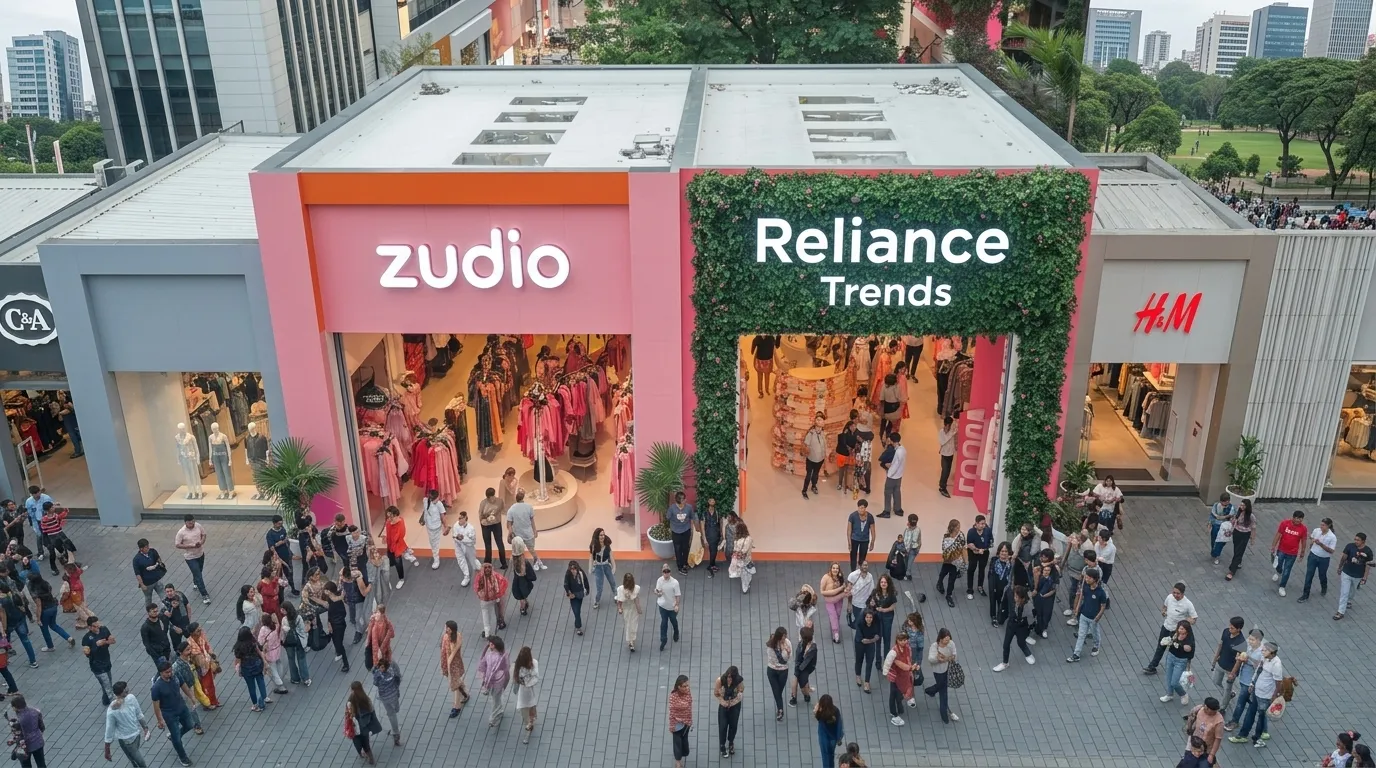
In the bustling corridors of Indian retail, a fascinating battle is unfolding. On one side stands the formidable Reliance Retail, backed by the deep pockets and vast ecosystem of India's largest conglomerate. On the other is Zudio, the fast-growing value fashion brand from the Tata Group's Trent Ltd. Both are locked in a fierce war to win the hearts, minds, and wallets of India's burgeoning middle class with one simple promise: stylish clothing at affordable prices.
The Contenders: Two Titans, One Goal
Reliance Retail is an absolute behemoth. As India's largest retailer, it operates over 18,000 stores across 7,000 cities and towns. Its fashion portfolio includes brands like Trends, Reliance Footprint, and various international partnerships. With a strategic focus on "New Commerce" and digital integration through platforms like JioMart and Ajio, Reliance is leveraging technology to bridge the gap between online and offline retail.
Zudio, on the other hand, is the rising star of value fashion. Launched by Trent Ltd in 2016, Zudio has grown at a breathtaking pace, operating over 400 stores across 150 cities. With an annual revenue growth of 44% in FY23, it's clear that Zudio has struck a chord with Indian consumers. The brand's success lies in its laser-focused approach: trendy, no-frills fashion at unbeatable prices.
The Pricing Strategy: Who's Cheaper?
Both brands are vying for the same customer: the budget-conscious Indian shopper who wants to look fashionable without breaking the bank.
· Zudio positions itself as the ultimate value destination. Its products are priced between ₹99 and ₹1,499, with most items falling in the ₹199-₹999 range. A typical Zudio store offers women's, men's, and kids' wear, along with accessories, all at remarkably low price points.
· Reliance Trends targets a slightly broader segment, with products ranging from ₹199 to over ₹2,000. While it offers budget-friendly options, it also caters to the mid-premium segment with more expensive collections.
On pure pricing, Zudio has a slight edge in the ultra-budget segment. However, Reliance Trends counters this with economies of scale, frequent promotions, and its own private labels that offer excellent value for money.
Store Expansion: The Race for Space
The battle is being fought not just in price but in physical presence as well.
· Zudio is expanding aggressively, opening over 60-70 stores annually. Its strategy focuses on Tier 2 and Tier 3 cities, where aspirational fashion is in high demand. Each Zudio store is designed for high footfall, with minimal interiors to keep costs low and prices competitive.
· Reliance Trends already has a massive footprint with over 1,000 stores across India. The brand is now focusing on expanding its presence in smaller towns while simultaneously upgrading its existing stores to enhance the customer experience.
While Reliance has a clear advantage in terms of absolute store count, Zudio's rapid expansion in underserved markets is a significant threat.
The Customer Experience: What Sets Them Apart
Both brands take a fundamentally different approach to the shopping experience:
Zudio's Philosophy:
· No-frills, self-service model to keep prices low
· Trend-driven collections that change weekly
· Minimal advertising; relies on word-of-mouth and footfall
· Store designs that are functional, not flashy
· Focus on instant gratification with no online presence (yet)
Reliance Trends' Approach:
· More elaborate store designs with dedicated sections
· Loyalty programs like Reliance One to retain customers
· Omnichannel presence through Ajio and JioMart
· Strong marketing campaigns featuring celebrities
· Wider product range covering multiple price segments
Zudio's "less is more" approach resonates with customers who want quick, affordable fashion without any fuss. Reliance's more comprehensive offering appeals to shoppers looking for a more curated experience and the convenience of online shopping.
The Supply Chain Advantage
Reliance Retail's supply chain is the stuff of legend. With its massive scale, Reliance can negotiate rock-bottom prices with suppliers and maintain high inventory turnover. The company also benefits from its backward integration into textile manufacturing, giving it significant cost advantages.
Zudio, however, is no slouch in this department. As part of the Tata Group, Zudio benefits from the group's extensive sourcing networks and operational expertise. Trent's experience in retail through brands like Westside has given Zudio a solid foundation in supply chain management.
The Gen Z Factor
The battle for value fashion is ultimately a battle for the next generation of consumers. Both brands are actively courting Gen Z shoppers:
· Zudio's social media presence is minimal but effective. The brand relies on user-generated content, with shoppers posting their "Zudio hauls" on Instagram and YouTube. This organic marketing strategy has created a cult-like following among young Indians.
· Reliance Trends is taking a more structured digital approach. Through Ajio and its social media campaigns, Reliance is engaging with young consumers through influencers, fashion content, and interactive shopping experiences.
Who Is Winning?
The answer depends on how you measure success:
· In terms of absolute revenue and reach, Reliance Retail is the undisputed leader. Its vast network, omnichannel capabilities, and deep pockets give it a formidable advantage.
· In terms of brand resonance and speed of growth, Zudio is punching well above its weight. The brand's 44% revenue growth and cult following suggest that it has tapped into something special.
The Future of the Battle
The value fashion war is far from over. Here's what we can expect:
· Consolidation: Both brands will continue to expand, but the real battle will be in Tier 3 and Tier 4 cities, where the next wave of growth lies.
· Digital Transformation: Zudio is expected to launch its online store soon, which could be a game-changer. Reliance will continue to invest in its digital ecosystem to fend off competition.
· Private Labels: Both brands will increasingly rely on private labels to differentiate themselves and improve margins.
· Sustainability: As Indian consumers become more environmentally conscious, both brands will need to incorporate sustainable practices into their value proposition.
What This Means for Consumers
For the Indian shopper, this competition is excellent news. More choices, better prices, and continuous innovation mean that fashionable clothing is becoming more accessible than ever before. Whether they choose Zudio's no-frills approach or Reliance Trends' more comprehensive offering, consumers are the ultimate winners in this value fashion war.
The battle between Reliance and Zudio is a testament to the dynamism of the Indian retail sector. Two giants, backed by two of India's largest conglomerates, are competing to serve the aspirations of a billion Indians. In this war of value and style, everyone wins.