
The Most Played Video Game in History Is Becoming a Children's Animated Series. Here Is Everything We Know.
Since its creation in 1984 by Soviet computer scientist Alexey Pajitnov, Tetris has been played by more people across more platforms in more countries than almost any video game ever made. It has appeared on every major gaming platform from the original Game Boy — which it famously shipped with, helping define an era of portable gaming — to modern smartphones. It is estimated to have sold over 520 million copies across all platforms. It is, by nearly every measurement, the most widely experienced video game in history.
It has never had an animated television series. Until now.
On June 23, 2026, at the Annecy International Animation Film Festival in France — the world's most prestigious gathering for the animation industry — TeamTO and The Tetris Company jointly announced Tetris: World Builders. The series is a CG-animated adventure format running to 52 episodes of 11 minutes each — a 52 x 11' structure that is the standard configuration for children's animated television built for multiple platforms. It is aimed at children aged six and above.
The announcement was made during TeamTO's Studio Focus presentation titled "Come Fly with TeamTO," and it carried the immediate credibility of one specific attachment: executive producer Chuck Williams, who produced the Sonic the Hedgehog film franchise — the series of live-action and CG-hybrid movies that grossed over $1 billion globally across three films and became the template for how to successfully adapt a beloved gaming IP for family audiences. Williams is also attached to the upcoming Pac-Man movie, making him the closest thing the industry has to a specialist in turning iconic retro game brands into contemporary screen properties.
What the Show Is Actually About
Adapting Tetris for narrative television presents a challenge that has no obvious precedent. The game has no characters. It has no story. It has blocks, gravity, and the relentless arrival of new pieces before the player has fully dealt with the last ones. The gameplay mechanic is one of the purest distillations of problem-solving under pressure that any game has ever produced — but translating that into a character-driven story requires building a world around it rather than simply dramatising it.
TeamTO's approach, as described in the official press release and the three verified producer statements, is to treat the Tetrimino blocks not as game pieces but as world events.
When massive, mysterious Tetrimino blocks begin raining from the sky, a fearless team of young "World Builders" must help their world adapt and evolve. Using ingenuity, collaboration, and STEAM-based thinking, the Scouts transform unexpected challenges into exciting new opportunities, reshaping landscapes, solving community problems, and building a brighter future together.
The premise is essentially a disaster-adventure format with an optimistic problem-solving ethos: an external force is reshaping the world in unpredictable ways, and the protagonists must figure out how to work with what they are given rather than fighting what they cannot control. The parallel to the game's core mechanic — you do not choose which piece comes next, you choose how to place it — is the conceptual translation that TeamTO has made.
The series reimagines the iconic geometric language of Tetris as a dynamic world of transformation, construction, and discovery, introducing foundational STEAM concepts through imaginative worldbuilding, cinematic adventure, and character-driven storytelling.
The STEAM framework — Science, Technology, Engineering, the Arts, and Mathematics — gives the series its educational positioning and its differentiator in the crowded children's animation market. Tetris has been quietly doing STEAM-adjacent cognitive work for 40 years: spatial reasoning, pattern recognition, anticipatory thinking, and the management of sequential problems under time pressure. The animated series makes that implicit learning explicit, packaging it into a narrative format that educational broadcasters and platforms can programme alongside curriculum-aligned content.
The People Behind It
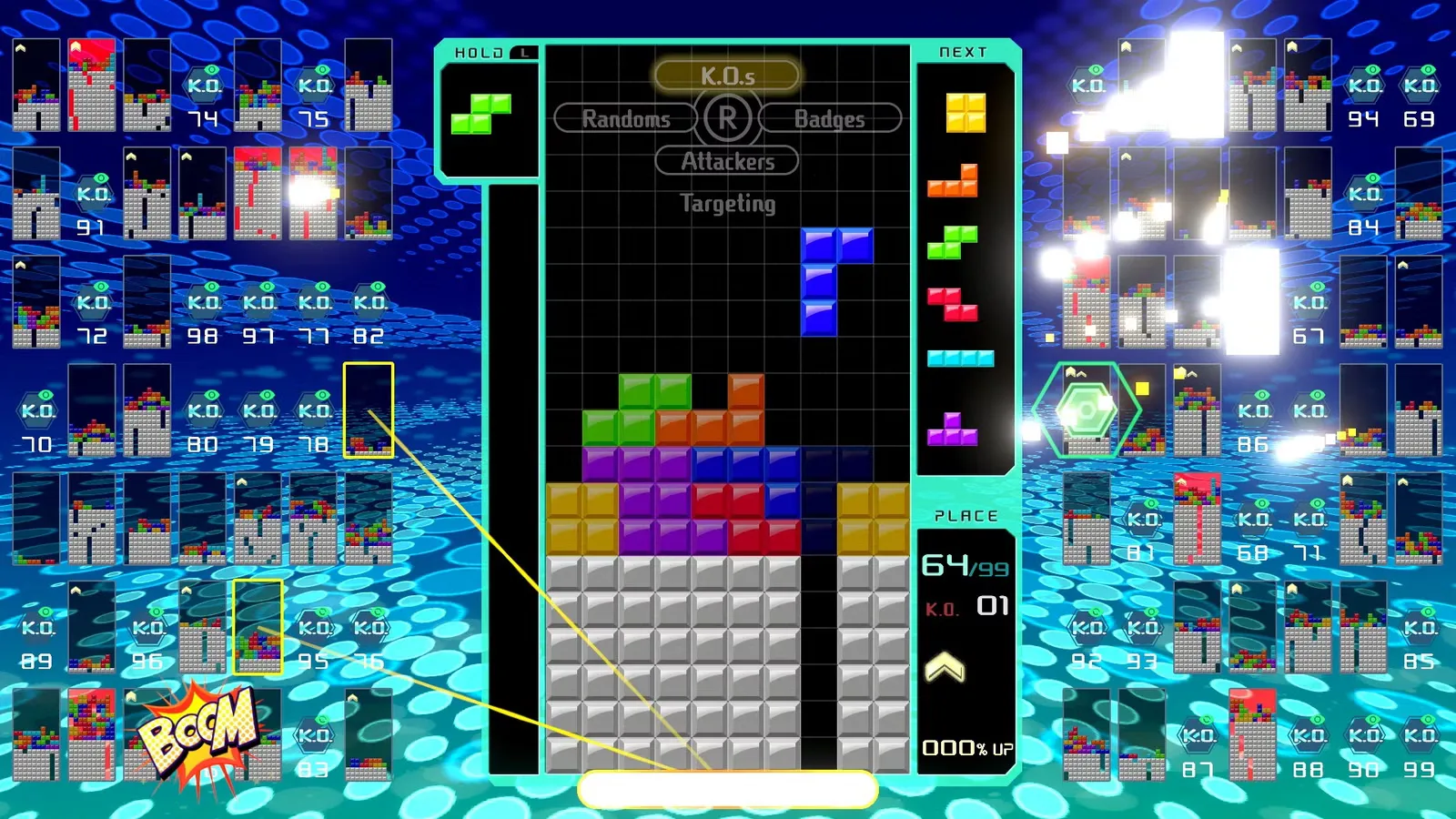
The creative team is specific and their credits are relevant.
Marco Balsamo is the President and CEO of TeamTO as well as the series producer. He is also a veteran of French children's animation with credits across multiple internationally distributed series. He explained the creative thesis for the adaptation in terms that centre on the philosophical rather than the visual.
"What has made Tetris timeless for more than four decades is the universal simplicity of its core idea: working with the pieces you're given and discovering how they can come together. We saw an opportunity to transform that philosophy into an adventurous, optimistic world for a new generation of kids, using storytelling to celebrate ingenuity, collaboration, and the power of building something together."
Tara Sibel Demren is TeamTO's COO and producer, and her framing adds the specific creative novelty that distinguishes this series from a straightforward brand extension.
"With Tetris: World Builders, we have the opportunity to introduce human child characters into the world of Tetris for the very first time, allowing audiences to experience this ever-evolving universe through an emotional and character-driven lens."
Human child characters in the world of Tetris for the first time. That is the creative claim that matters most for the series' potential. Every prior Tetris adaptation — the 2023 Apple TV+ biographical film about the game's legal history, the various arcade and merchandise extensions — has dealt with the game itself or the story around it. World Builders will be the first to build a fictional inhabited world inside the Tetris aesthetic and populate it with characters audiences can care about.
Maya Rogers, President and CEO of The Tetris Company, positioned the announcement within the broader ongoing expansion of one of gaming's most durable IP properties.
"For more than 40 years, Tetris has brought people together through a universal language of logic and play. With Tetris: World Builders, we are expanding the Tetris universe in an entirely new way, transforming one of the most iconic games of all time into a new adventure that inspires creativity, collaboration, and discovery."
Why This Moment — and Why This Makes Sense
The announcement arrives in a cultural moment that has been comprehensively reshaped by the success of gaming IP adaptations over the last three years.
The Super Mario Bros. Movie crossed $1.3 billion globally. A Minecraft Movie crossed $961 million in 2025 and became the highest-grossing film of the year. The Sonic franchise has earned over $1 billion across three films. The Last of Us won Emmy nominations. Fallout became one of Amazon's most-watched series debuts. The pattern across all of these is the same: gaming IP that arrives with built-in audience loyalty, when adapted with genuine creative investment in what makes the source material resonant, produces commercial results that justify the escalating commitment of major studios and streamers to the category.
Tetris is, by the metrics of installed audience base, the most widely played game in this current wave of IP adaptation. Its 40-plus year global penetration means that the parents of the children aged six and above who are the series' target audience almost certainly have a personal Tetris history — a Game Boy, a phone game, a browser version on an afternoon that stretched longer than expected. The series can operate simultaneously as a children's adventure for its primary audience and as a nostalgic IP touchstone for the adults watching alongside them, which is the dual-audience dynamic that the most commercially successful children's animated properties consistently achieve.
The STEAM educational positioning adds a third audience dimension: educational broadcasters and platforms that actively seek content aligned with learning frameworks have a natural home for the series that pure entertainment animation does not always access.
The series is currently in early development, which means no broadcaster or streaming platform has been announced, no air date is set, and the production timeline is not yet public. Chuck Williams' attachment suggests that the distribution strategy will likely target the same global family film and television markets that the Sonic franchise reached — but the specifics will emerge as development progresses.
The Bigger Picture
The Tetris announcement at Annecy 2026 is a small story with large implications for the gaming IP-to-screen pipeline that has been the most consequential trend in entertainment for the last three years.
If a game as mechanically simple and narratively sparse as Tetris can be developed into a compelling children's series by finding the philosophical truth in its core mechanic, it tells you something important about where the creative ceiling actually is in gaming IP adaptation: higher than most of the people doing the work have been reaching. The best adaptations have not been the ones that translate the plot of a game into screen format. They have been the ones that find the human truth inside the game's design — the emotional reality that the mechanic creates in the player — and build outward from there.
Working with the pieces you are given and discovering how they can come together. That is what Tetris has always been. That is what World Builders is trying to be. Whether it delivers on that promise will depend on execution that is, at this stage, still being developed. But the creative thesis is the right one. And the team attached to it has already helped the industry figure out, with Sonic, that the key to a successful gaming adaptation is not the replication of the game. It is the discovery of what the game was always about.