India Buys Nike and Adidas. India's Feet Are Built Differently. Sachin Tendulkar Just Decided to Do Something About That.
There is a piece of biomechanical research published in 2024 that provides the scientific foundation for why Ten X You exists. The study found that Indian feet are generally wider relative to their length than their European and American counterparts. Indian men's feet have an average width-to-length ratio of 65 per cent. For Indian women, the figure is around 60 per cent. These numbers are meaningfully different from the global sizing standards that most major sportswear brands use — standards developed primarily for Western foot shapes, applied globally as a default because the cost of localising the last is high and the commercial incentive to do so for any single market has historically been unclear.
The consequence, for hundreds of millions of Indian athletes and fitness enthusiasts who wear Nike, Adidas, Puma, or any number of global brands, is that the shoes fit — but not quite right. Not the way a shoe built for your specific foot geometry would fit. And in sport, where the relationship between shoe and foot determines comfort, performance, injury risk, and stamina over hundreds of hours of use, not quite right has consequences.
Sachin Tendulkar spent 24 years experiencing those consequences at the highest level of professional sport. He played international cricket for a nation of more than a billion people, representing India on every major cricket ground in the world, in shoes built to global standards that were not designed with the Indian foot in mind. He understood the difference between adequate and precisely right in a way that can only come from decades of professional use.
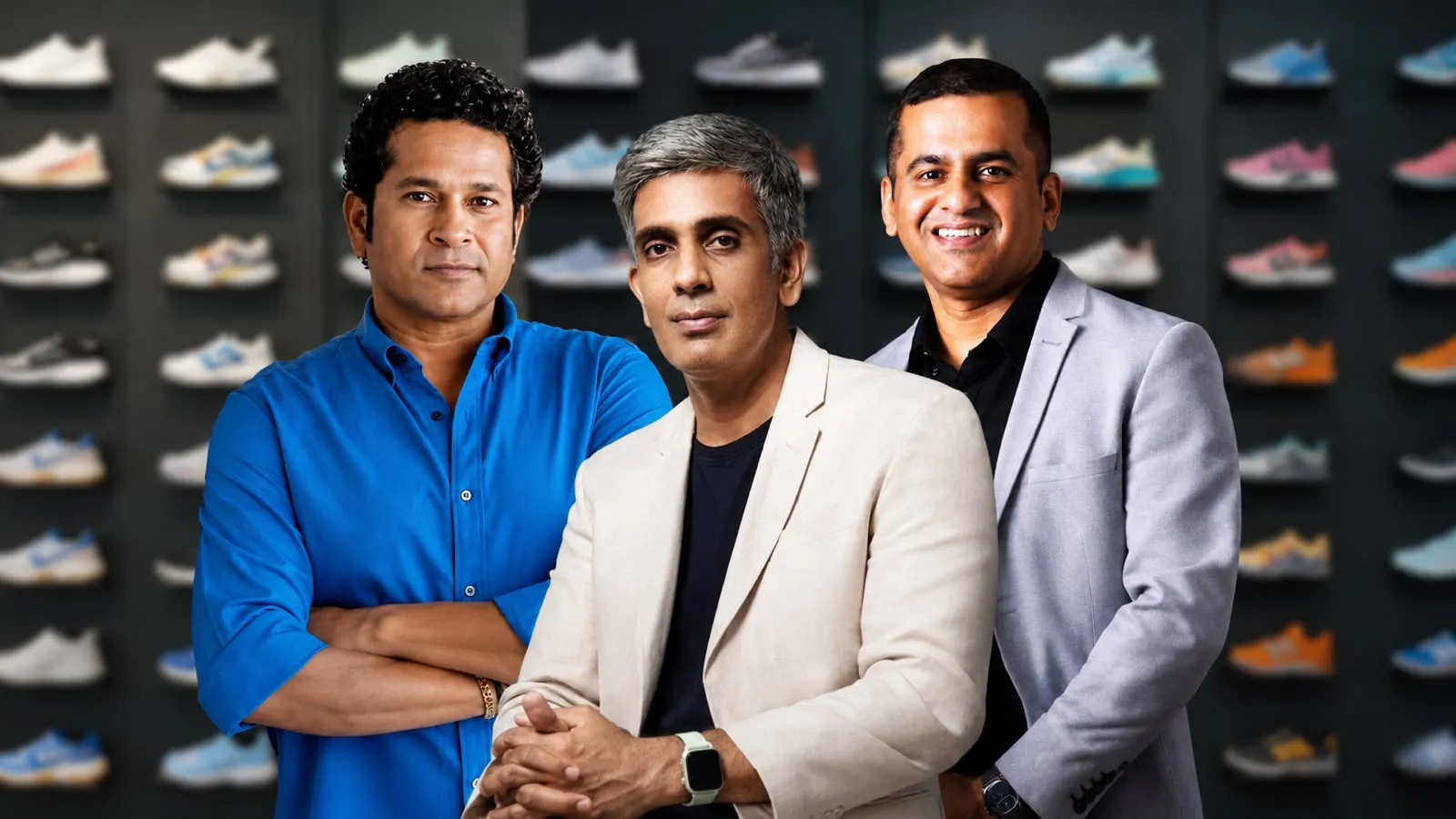
When Karthik Gurumurthy and Karan Arora — both former Swiggy colleagues — came to him with the idea for a sportswear brand built specifically for Indian consumers, he had a specific and deep answer to the most important design question: what does Indian actually mean in a shoe?
The Brand — and the Philosophy Behind Its Name
Ten X You was launched in October 2025 under the company name SRT10 Athleisure Pvt. Ltd. The name carries two layers of meaning that Tendulkar has been direct about.
Ten is his jersey number. The number that defined his international cricket career across 24 years, worn in every match he played for India from his debut as a teenager to his final Test at the Wankhede Stadium in 2013. The number that became, for an entire generation of Indian cricket fans, synonymous with something approaching perfection in sport.
You is the more important word. You is the amateur. The gully cricketer. The weekend runner. The person who has a sport they love and who plays it with whatever equipment they can find, in conditions that are not optimal, for the joy of the game rather than the professional stakes. The brand is not named Ten X Sachin. It is named Ten X You — explicitly positioning Tendulkar's role as the inspiration and the insight, and the Indian athlete's potential as the product's purpose.
Multiply your potential. That is the brand promise. Ten times. In the direction of whoever you want to become.
The company structure reflects the co-founder relationships: Gurumurthy as CEO, Arora as COO, Tendulkar as co-founder and Chief Inspiration Officer. The operational leadership sits with people who have spent years building consumer businesses at scale. The product insight and the cultural credibility sit with someone who has spent decades at the intersection of Indian sport and global performance standards.
The Product Development — Five Iterations and the Extra Spike
The most revealing detail in the Ten X You founding story is not the brand concept or the marketing strategy. It is the number five.
Gurumurthy, speaking to YourStory in a recent interview, described how the cricket shoes were developed. The team worked with designers from Poland and Germany — professionals who understood global footwear engineering at the level of precision that performance sports footwear requires. They worked with factories across Vietnam, which produces a significant share of the world's high-quality athletic footwear. And they developed prototypes.
Tendulkar rejected four of them before approving the fifth.
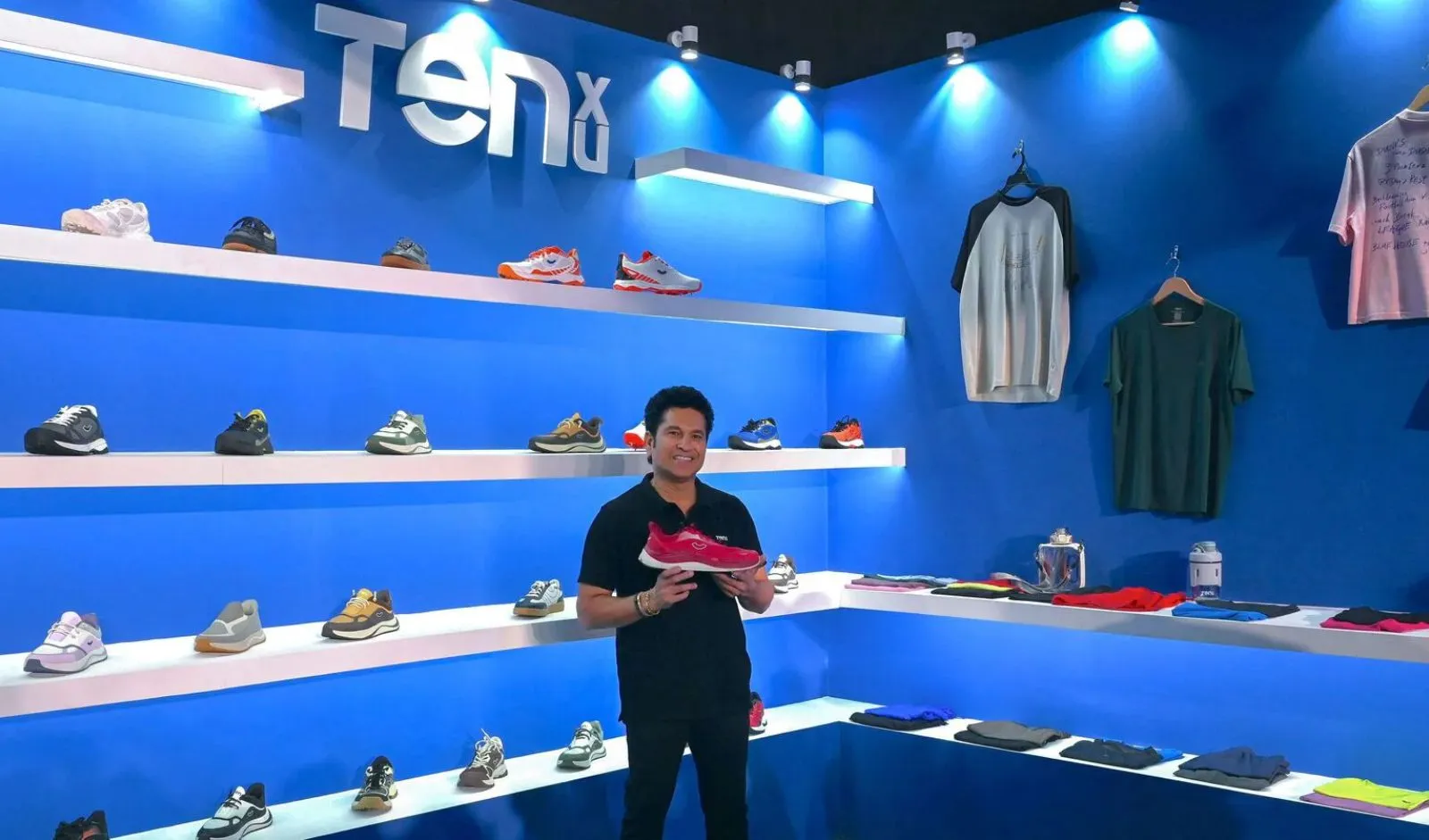
The iterations were not about aesthetics or branding. They were about the functional performance that Tendulkar knew from 24 years of playing cricket at the highest level. The extra spike feature — a specific design element that Tendulkar himself specified and had incorporated into the cricket shoes — is intended to enhance stability and grip on Indian pitches, which have specific surface characteristics that differ from international grounds in their hardness, texture, and behaviour underfoot. An Indian batsman playing on a Wankhede pitch or a DY Patil surface needs different grip dynamics than a player on an English county ground, and that specific knowledge is embodied in the shoe's design.
The process of working through five iterations before reaching what Tendulkar would approve is a statement about what kind of product company Ten X You intends to be. It is easy to put a famous name on a product and launch it with marketing. It is significantly harder to refuse to launch until the product meets the standard that the famous name demands. The five iterations are the proof that the second approach is what this brand is committed to.
The Market They Are Entering — and the Gap They Are Addressing
The India sportswear and athleisure market is one of the most competitive consumer categories in the country. Nike, Adidas, and Puma have deep brand recognition, extensive retail presence, and the marketing infrastructure of global giants. Indian brands like HRX, backed by Hrithik Roshan, and CultSport, backed by Cure.fit, have established digital-first D2C positions. The total market for sportswear in India is growing rapidly, fuelled by post-pandemic lifestyle shifts, growing fitness consciousness, and India's aspiration to become a more active nation — reflected in the government's push for sports and the commercial success of the IPL, Pro Kabaddi, and the Indian Super League.
Ten X You's differentiation is specific: it is not trying to compete on price, and it is not trying to compete on brand history. It is trying to compete on fit — on the product-level claim that its shoes are built for the geometry of Indian feet in a way that global brands, with their globally standardised lasts, are not.
The pricing structure reflects a premium positioning: cricket shoes at ₹9,000, running and walking shoes at ₹5,000 to ₹6,000, apparel at ₹1,200 to ₹1,800. These are not mass-market price points. They are the price points of a brand that is claiming quality and precision as its core value proposition, and pricing accordingly.
Products are sold primarily through the company's own website, with availability on Myntra as well — the D2C-first distribution model that allows brand control over the customer experience while accessing the scale of India's largest fashion marketplace.
Peak XV Partners and Whiteboard Capital are the investors backing the venture. Peak XV — the India-focused fund that was formerly Sequoia Capital India — brings the institutional validation and portfolio network of one of India's most successful venture capital firms. Its involvement signals that the institutional investment community sees the Indian sportswear differentiation thesis as commercially credible, not merely as a celebrity brand opportunity.
From Sport-Loving to Sport-Playing — the Mission That Drives the Brand
The commercial proposition of Ten X You is shoes designed for Indian feet. The mission that Tendulkar has articulated, consistently and in multiple public contexts, goes significantly beyond product differentiation.
India is a cricket-loving country. It is also, statistically, a country with concerning physical activity levels. The prevalence of lifestyle diseases — diabetes, cardiovascular disease, obesity — is rising in the same population that watches cricket with extraordinary passion. The gap between being a spectator of sport and being a participant in sport is, in Tendulkar's framing, one of the most important gaps the country needs to close.
In his words at the brand launch: the idea was to see India move from a sport-loving nation to a sport-playing one. To get everyone, from the gully to the stadium, to play, to train, and feel the joy that he felt every time he stepped out on the field. To start from the grassroots level, where the work of encouraging children to play happens in the everyday infrastructure of sports gear, accessible pricing, and the cultural permission that comes from seeing the greatest Indian cricketer say publicly that playing sport is for everyone — not just professionals, not just the talented, not just those who can afford global brands.
This mission shapes the events and partnerships that Ten X You pursues — an orientation toward amateur participation and community sport rather than toward the professional and aspirational marketing that most sportswear brands default to.
What the Bet Actually Is
Sachin Tendulkar's bet on Ten X You is not primarily a commercial bet, though it is also that. It is a product bet and a cultural bet simultaneously.
The product bet is that Indian consumers will pay a premium for sportswear that has been engineered for their specific foot geometry and physical characteristics — and that the combination of biomechanical specificity and Tendulkar's personal quality standard, expressed through five product iterations, creates a genuine performance and comfort advantage that justifies that premium against global alternatives.
The cultural bet is that India's aspiration to be a sport-playing nation, not just a sport-watching one, is real and growing — and that a brand with Tendulkar's credibility, articulating the mission of grassroots sports participation with the same passion he brought to representing India on the field, can accelerate the shift from spectatorship to participation in ways that no government campaign or mass-market brand can.
Neither of those bets will be settled quickly. Building a sportswear brand takes years of consistent product quality, distribution expansion, and community building. The Indian athleisure market is intensely competitive. And the mission of turning India into a sport-playing nation is generational in its scope.
But the specificity of the founding insight — Indian feet are wider, global brands use global standards, a shoe designed precisely for Indian biomechanics performed better in testing — is the kind of product truth that durable brands are built from. And the five iterations Tendulkar required before he would put his name on the cricket shoe are the evidence that this particular brand intends to be built the right way.
From the gully to the stadium. That is the market. That is the mission. That is the bet.