When Sarita and Vedaant Stood Up, the Whole Country Understood the Moment
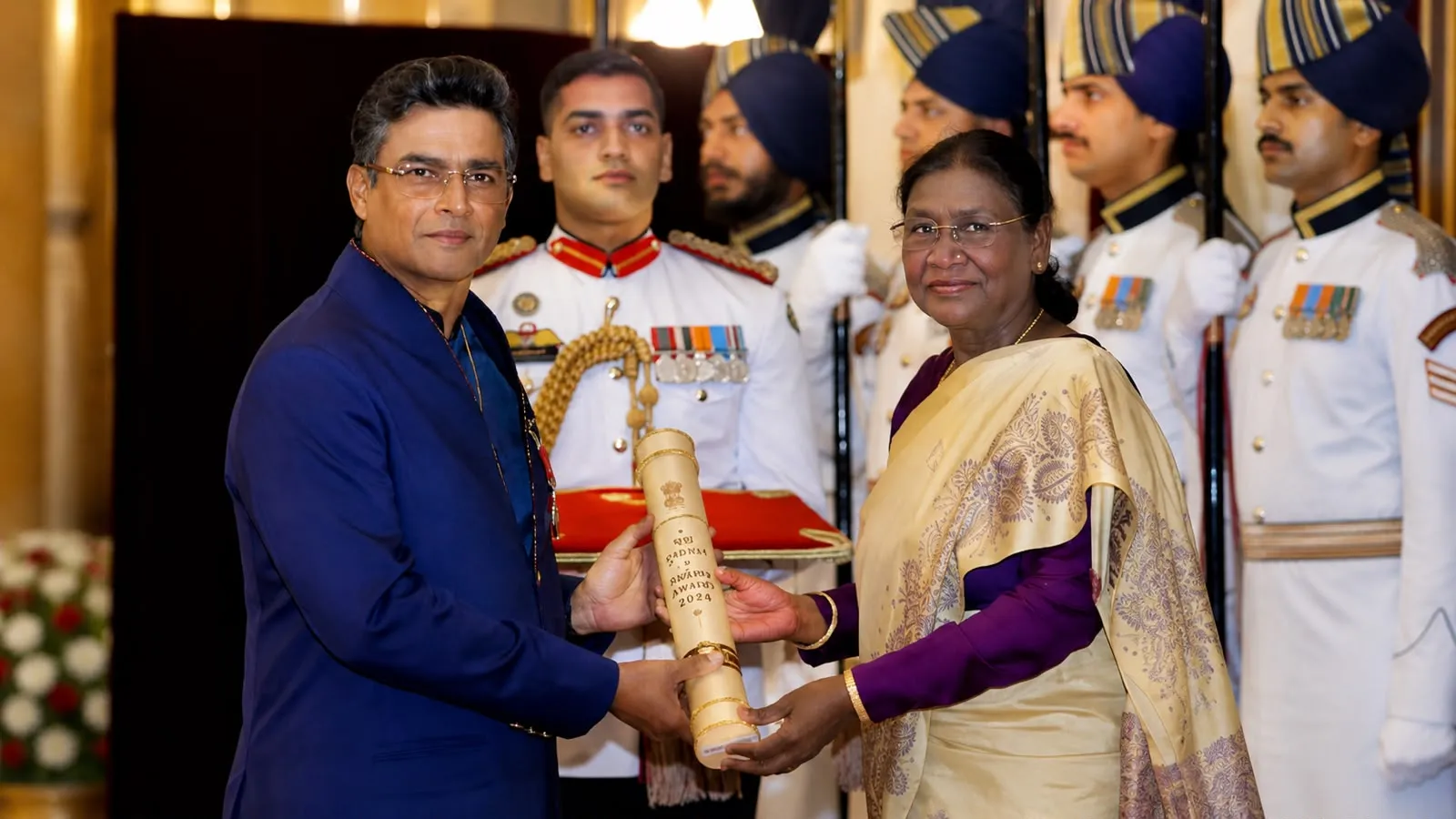
There is a specific image from the Civil Investiture Ceremony at Rashtrapati Bhavan on June 24, 2026 that will stay with everyone who watched it.
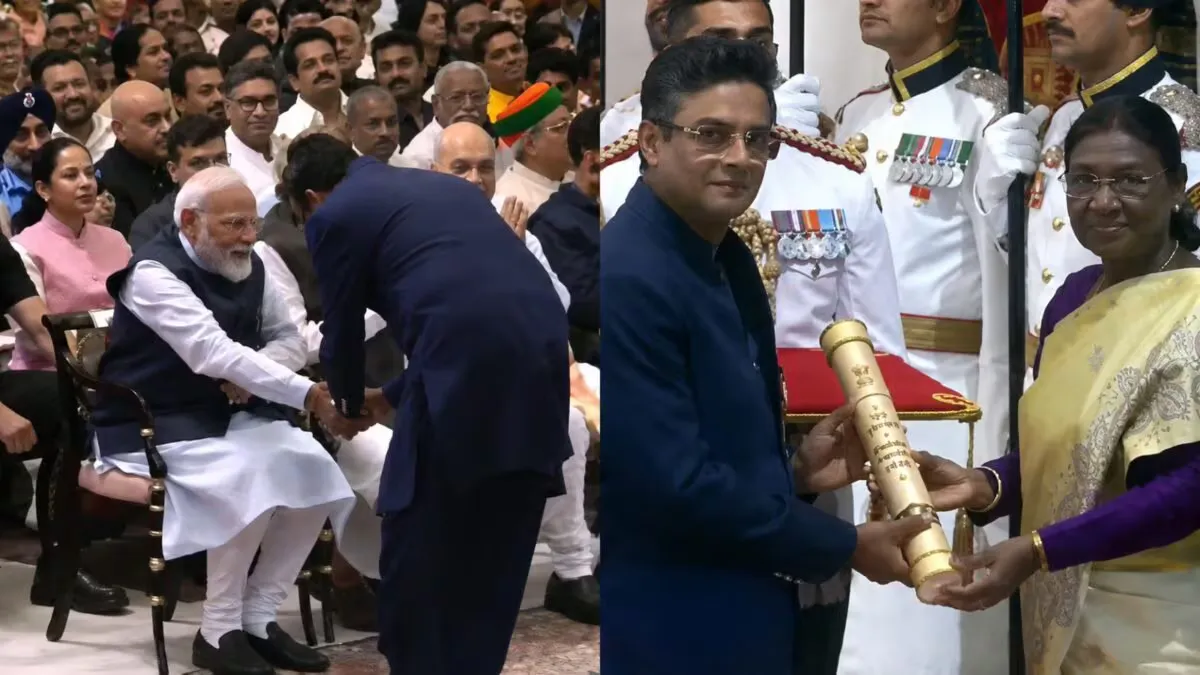
R Madhavan walking toward President Droupadi Murmu to receive the Padma Shri. And in the audience, before he had even reached the stage, his wife Sarita standing up. His son Vedaant standing up. Two people who know exactly what twenty-five years of this career has required — the auditions, the roles that did not come, the risks taken, the films that changed things, the ones that did not, the discipline, the vulnerability, the years away from home — rising to their feet before the President had placed the honour around his neck.
That moment was not staged. It was the involuntary response of two people who understood the weight of what was happening better than anyone else in the room.
The Padma Shri is one of India's four highest civilian honours, awarded by the Republic for distinguished service of a high order in any field. Among its previous recipients in cinema are legends whose names have become synonymous with what Indian film can be. On June 24, 2026, R Madhavan joined them. And in the words he wrote when the recognition was announced in January, in the statement he made to the country when he received it in June, he told India exactly what the honour meant to him and what he intended to do with it.
The Career That Made This Moment Inevitable
To understand why the Padma Shri for R Madhavan lands the way it does, you have to trace the specific shape of a career that defied almost every conventional rule of Indian cinema.
Madhavan was born in Jamshedpur in 1970. His first significant breakthrough came in Tamil cinema in 2000, when Mani Ratnam cast him in Alai Payuthey — a film that became one of the most beloved Tamil romantic dramas of its era and that established Madhavan as something rare in Indian cinema: an actor who could carry romantic weight without relying on either established star power or manufactured persona. He was simply believable, which turned out to be the hardest thing to be on screen.
What followed across the next decade was a career built on the refusal to be categorised. He moved between Tamil and Hindi films, between commercial entertainers and artistically serious work, between leading roles and supporting ones, without treating any of these as a hierarchy. Rang De Basanti placed him in an ensemble that included Aamir Khan, and he held his own. Guru placed him opposite Abhishek Bachchan in Mani Ratnam's portrait of ambition and corruption, and he made his character fully dimensional. Anbe Sivam, Kannathil Muthamittal, Aaytha Ezhuth — Tamil films of considerable emotional and moral seriousness — showed what he could do with material that demanded more than charm.
And then, in 2009, everything changed.
3 Idiots was directed by Rajkumar Hirani, starred Aamir Khan, and became one of the highest-grossing films in Indian cinema history at the time of its release. Madhavan played Farhan Qureshi — the friend who wants to be a wildlife photographer but has been pushed by his family toward engineering, the friend who watches, who loves, who carries the story's conscience. In lesser hands, Farhan would have been the supporting player who exists to make the lead look better. In Madhavan's hands, Farhan became the character that millions of young Indians saw themselves in. The one who had a dream but was afraid to say it out loud. The one who needed permission.
The film did not make Madhavan a star in the conventional sense. He was already one. What it did was introduce him to a generation that had not grown up watching Alai Payuthey, and make him theirs.
Rocketry: The Gamble That Changed Everything Again
If 3 Idiots was the film that made Madhavan known to a new generation, Rocketry: The Nambi Effect was the film that established what he was willing to do with that knowledge.
In 2022, Madhavan wrote, directed, produced, and starred in a biographical film about Nambi Narayanan, the ISRO scientist who was falsely accused of espionage in 1994, spent time in prison, and was eventually exonerated by the Supreme Court of India in 2018. The story is one of wrongful persecution, institutional failure, scientific sacrifice, and the long, expensive work of justice. It is not an easy story to tell, and it was not an easy film to make.
Madhavan spent years developing the project. He learned the science. He underwent a physical transformation to portray Narayanan across different decades of his life. He fought for the film's production and distribution during the pandemic, when the entire entertainment industry was in crisis. He released it in multiple languages simultaneously, with different actors playing the interviewer role in different language versions — including Shah Rukh Khan in Hindi, Suriya in Tamil, and R Madhavan himself in Malayalam and English.
The film won the National Film Award for Best Feature Film in 2023. Not the award for Best Hindi Film. Not the award for Best Biopic. The National Film Award for Best Feature Film — the recognition that says this was the best film made in India that year, across all languages, all genres, all budgets.
For an actor who had spent twenty years building a career on the quiet accumulation of credibility rather than the loud pursuit of awards, it was a validation that confirmed what a generation of viewers had always believed: that Madhavan's seriousness about cinema was not performative. It was structural. It was how he worked.
What He Said When He Received It
The words Madhavan wrote in response to the Padma Shri announcement in January 2026, and repeated in substance at the ceremony in June, are worth sitting with because they are unusually honest for a public acceptance statement.
He described the honour as beyond his wildest dreams. He received it on behalf of his family. He acknowledged his mentors, his well-wishers, the public whose love had made his career possible, and the grace of the Almighty. Standard elements of a grateful acceptance, but delivered with a specificity that made them feel genuinely meant rather than ceremonially required.
And then he said something that turned the statement from gratitude into something more.
He called the Padma Shri not just an award but a responsibility. He promised to carry it with dignity, sincerity, and a deep sense of commitment to the values it represents. He committed to continuing to serve with integrity, humility, and dedication. He said he hoped to contribute meaningfully to the world of cinema that had given him everything.
He also said, in the fuller version of his statement, something that deserves its own paragraph: that to every person who watched his films, embraced his characters, celebrated his successes, forgave his shortcomings, and stood by him through the years, the honour belonged as much to them as it did to him.
Forgave his shortcomings. That phrase is not in a press release drafted by a PR team. That is an actor acknowledging, at the moment of his highest formal recognition, that his career included films that did not work, performances that fell short, choices that in retrospect were wrong. And still asking his audience to accept the shared ownership of the good that came from it all.
That is not humility as performance. That is humility as accurate self-knowledge.
Why This Padma Shri Matters Beyond the Person
The Padma Shri for R Madhavan is significant not only as recognition of a specific actor's body of work. It is significant as a statement about what Indian cinema values and what it is willing to formally celebrate.
Madhavan built his career at the intersection of commercial and serious cinema, of Tamil and Hindi, of romantic entertainer and biographical drama, of actor and filmmaker. He did not choose the easiest path in any of these dimensions. He did not stay in Tamil cinema when Hindi opened up. He did not stay in supporting roles when the opportunity to lead appeared. He did not stay as an actor when the story of Nambi Narayanan compelled him to direct. He followed the work where it led, and trusted that the audience would follow.
They did. Across three decades, across languages, across roles. The same generation that wept at Alai Payuthey watched 3 Idiots and felt it speaking directly to them. The same audience that celebrated the commercial entertainer watched Rocketry and understood they were watching something of genuine national importance — a story about a man the country had wronged, told by an artist who thought it was worth telling even when there was no guarantee anyone would come to see it.
The National Film Award said someone agreed. The Padma Shri says India agrees.
Sarita stood up. Vedaant stood up. And twenty-five years of a career that asked more of itself than the audience ever demanded, and somehow delivered it anyway, received the recognition it had earned.
He called it a responsibility. He meant it. And that, more than anything else about this moment, is why it matters.