She Started Because Someone Asked. She Stayed Because the Story Needed Telling.
In 2002, Palki Sharma was a college student in Jaipur who had not yet decided what she wanted to do with her life. Her father wanted medicine. She was leaning toward something else, though she had not yet named it. Then Doordarshan, India's national broadcaster, approached her with a job offer while she was still finishing her degree.
She took it. What began as an accident of timing became a vocation. Two decades, four major media organisations, and millions of viewers later, the story of how Palki Sharma Upadhyay became the most globally recognised Indian journalist of her generation is also the story of how India learned to tell its own story to the world.
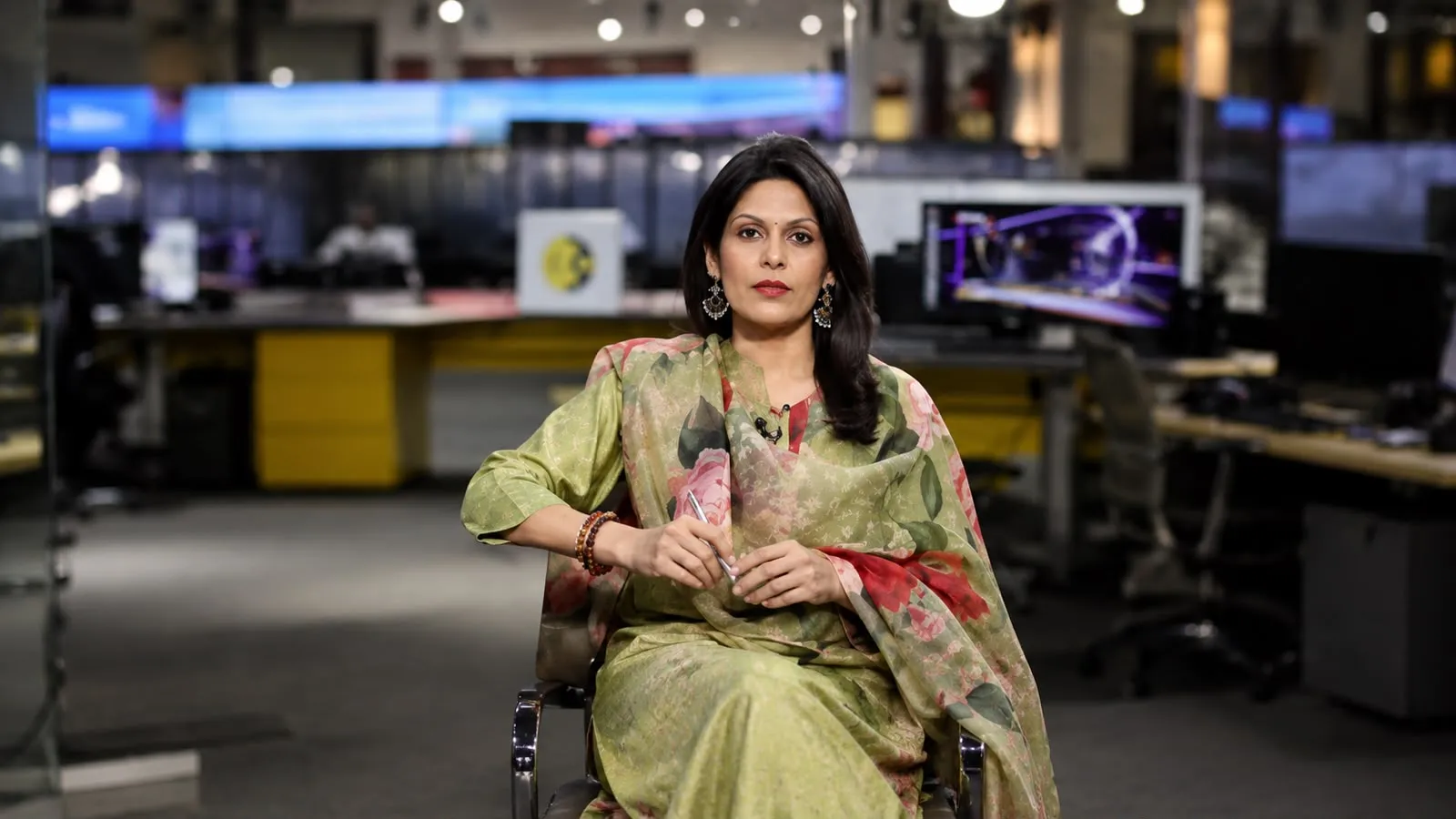
That story began humbly, in the corridors of Doordarshan, built itself through years of television journalism at CNN-IBN, and then exploded into global consciousness through WION's Gravitas, the show she created and anchored and which became one of the most watched English news programmes on YouTube globally. By the time she launched Vantage on Firstpost in early 2023, she had built an audience that followed her not because of the platforms she worked for but because of the way she worked: with clarity, with pace, with an unapologetic insistence that India's perspective on global events was not merely worth hearing but was essential to understanding those events fully.
On January 29, 2026, she stepped down as Managing Editor of Firstpost. On March 31, she walked out the door. On April 11, she teased what comes next: India Global Review, her own independent media venture. The institutional chapter of her career is over. The entrepreneurial one is beginning.
The Career That Built a Global Audience Brick by Brick
Journalism did not find Palki Sharma because she was looking for it. It found her because she was available, and she was willing, and once she began she discovered that the work suited something fundamental in how her mind works.
Her early years at CNN-IBN, which ran from approximately 2005 to 2016, were the foundational period. She was learning the craft of television journalism in one of India's most competitive news environments, developing the analytical rigour and on-camera presence that would later make her famous, but without yet having found the specific subject matter and format that would define her work. The CNN-IBN years are relatively underdiscussed in accounts of her career, but they matter: she spent more than a decade building the technical and intellectual infrastructure for everything that followed.
The WION years were the breakthrough. When she joined World Is One News and launched Gravitas, she found a format that fit her exactly: a daily long-form analysis show focused on international affairs, presented through an unambiguously Indian perspective, that challenged the assumptions and framings of Western legacy media rather than deferring to them. The show was not about India alone. It was about the world, seen from India. And that perspective turned out to be something that an enormous global audience had been waiting for without knowing it.
During the COVID-19 pandemic and then the Russia-Ukraine conflict, Gravitas became a reference point for viewers who wanted analysis that was not shaped by the assumptions of CNN or the BBC. The show's digital numbers reflected this. Under Palki's leadership as Managing Editor, WION became the number one English news channel on YouTube globally, surpassing legacy brands that had decades of institutional advantage and infrastructure behind them. A channel founded in India, with an Indian anchor, presenting Indian analytical frameworks, had beaten the biggest names in global English-language news on the world's most widely watched video platform.
That achievement is significant not as a competitive metric but as a cultural statement. It demonstrated that there was a global audience, including but not limited to the Indian diaspora, that actively preferred news presented from a non-Western perspective. The demand had always existed. The supply had not kept pace with it.
Palki's departure from WION in September 2022 came with the drama that often accompanies the exit of a journalist whose identity had become inseparable from the platform she had built. A legal dispute over her notice period made headlines for weeks. She moved to Firstpost in early 2023, where she launched Vantage, a multiplatform global affairs programme that quickly established itself as the centrepiece of Firstpost's digital strategy. Under her editorial leadership, the channel surpassed 100 million views monthly on YouTube. The audience followed the journalist, not the institution.
The Oxford Union and the Moment That Went Global
In 2023, Palki Sharma Upadhyay delivered a speech at the Oxford Union, one of the world's oldest and most prestigious debating forums, arguing that India is on the right path. The speech lasted approximately fourteen minutes. Within days, it had been viewed by millions of people. Prime Minister Narendra Modi publicly praised it for its facts and logic.
What made the speech significant was not primarily its political content. It was the method. Palki did not argue from statistics alone, and she did not argue from ideology alone. She argued from stories. The stories of people whose lives had changed because of specific, measurable shifts in India's infrastructure, financial inclusion, and digital connectivity. A vegetable vendor who could receive payments on a smartphone because UPI existed. The expansion of airport capacity. The growth of domestic aviation. The way digital identity through Aadhaar had made previously unbanked populations part of the formal economy for the first time.
The Oxford Union speech did something that diplomatic briefings and government press releases consistently fail to do: it made India's transformation legible and emotionally resonant to a global audience. It told the India story the way a journalist tells a story, which is to say it told it through people, not through policy documents.
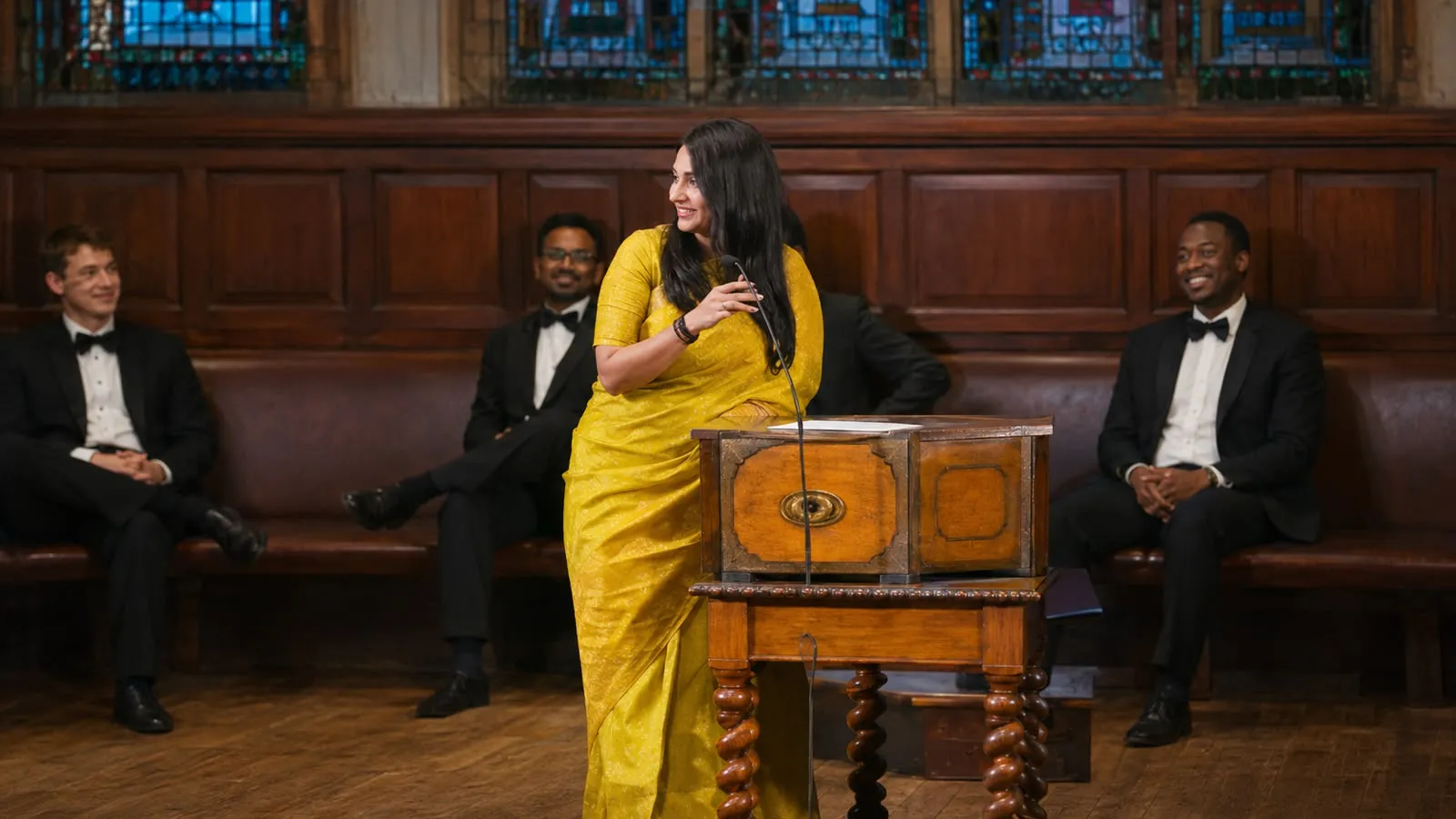
That speech circulated far beyond the audience that watches Indian news. It reached people who had not followed India closely and who found in it a perspective on a major geopolitical power that they had not encountered before. It was, in the precise sense, soft power delivered through journalism.
Operation Sindoor and the Benchmark of Crisis Reporting
Among the defining moments of Palki's recent career was her live reporting during the India-Pakistan diplomatic crisis of 2025 and 2026, in the period surrounding what became known as Operation Sindoor. The reporting has been described as a benchmark in crisis journalism by media observers who watch how Indian news organisations cover security and foreign policy events.
What characterised her approach during that period was the combination of speed, specificity, and contextual depth that distinguishes the best crisis journalism from the reactive coverage that most news organisations default to when events move faster than analysis can follow. She did not shout. She did not speculate beyond what was verifiable. She presented the Indian military and diplomatic perspective with the same rigour she would apply to any complex geopolitical story, and she did it in real time.
The moment also produced what became a widely circulated phrase in Indian media commentary, which referenced a Pakistani military leader by name in a tone that combined factual precision with a particular kind of dry humour that Palki's audience had come to recognise as distinctly hers. The line travelled far beyond its original broadcast, demonstrating again that the most impactful journalism often combines analytical weight with a vernacular that speaks directly to its audience.
The Firstpost Chapter and the Exit That Explained Everything
The three years Palki spent at Firstpost between early 2023 and March 2026 were among the most productive of her career by any measurable standard. Vantage became the flagship show of one of India's major digital news platforms. The monthly YouTube viewership of Firstpost crossed 100 million under her editorial leadership. She built a team and established editorial norms for a digital-first global news operation that would outlast her tenure.
Network18 Chief Content Officer Santosh Menon, in his internal communication to staff on the day the departure was announced, described her contribution in terms that went beyond operational leadership. She had launched the prime-time show, shaped its editorial tone, anchored it with clarity and insight, and established a culture of journalistic excellence that was distinct from what Firstpost had been before she arrived. He noted that beyond her role on air, she had helped build the editorial team itself.
Her departure, when it came, was described by everyone close to the situation as entrepreneurial in motivation rather than conflict-driven. She had done what she set out to do at Firstpost. She had built the platform and the audience. She had established the editorial voice. The institutional chapter was complete. The next chapter would need to be something she owned.
India Global Review and What Comes Next
On April 11, 2026, Palki Sharma Upadhyay posted a teaser on social media for India Global Review, abbreviated as IGR. No further details were disclosed at the time. Industry observers interpreted the branding as consistent with everything she had built throughout her career: a continued focus on India's role in global geopolitics, presented through a perspective that is explicitly Indian rather than filtered through the assumptions of Western media establishments.
The likely structure of IGR as an independent digital-first platform reflects the broader shift in Indian journalism that Palki's career has both reflected and accelerated. The most significant Indian journalism audience is no longer primarily a domestic television audience. It is a global digital audience that spans the Indian diaspora in North America, the United Kingdom, Australia, the Gulf states, Singapore, and New Zealand alongside engaged non-Indian viewers who have discovered that Indian analytical perspectives on global events are substantively different from, and often more illuminating than, the perspectives they have access to through their local media.
That audience follows the journalist. It has done so through WION, through Firstpost, and it will do so to IGR. The institutional label on the content matters less than the signature of the person presenting it. This is both the challenge and the opportunity of the independent venture: complete ownership of the editorial voice, and complete accountability for building a sustainable business model around it.
Alongside the journalism, Palki has maintained her designer saree brand Reyva, which she founded in 2016 and which has gained renewed interest as she has built a public profile that extends beyond the newsroom. The combination of journalist and entrepreneur, of public intellectual and brand builder, is the template for the next generation of media careers, and she is living it in real time.
The Story Behind the Story
There is a version of Palki Sharma Upadhyay's career that is a media industry story: viewership numbers, platform strategies, YouTube rankings, editorial decisions, departures and arrivals. That version is accurate and the numbers are real.
But the more important version is a cultural story. India has, for most of the era of global English-language news media, been narrated to the world by institutions whose headquarters and frames of reference were in London, New York, and Atlanta. The assumptions embedded in that narration, including which events matter, which perspectives are worth airing, which countries are rising powers and which are peripheral players, were not formed with India's interests or India's self-understanding at their centre.
Palki Sharma Upadhyay has spent twenty years building the alternative. Not by shouting at Western media or dismissing its perspectives, but by presenting Indian analytical frameworks with the same confidence and technical quality that Western news organisations apply to their own perspectives. The Oxford Union speech was not an act of defiance. It was an act of journalism. She showed up, told the story, used facts, used people, and let the argument speak for itself.
The audience that followed her from platform to platform and is now waiting for India Global Review to launch is not following a journalist who tells them what they want to hear. It is following a journalist who tells them what they have not heard elsewhere, through a lens they recognise as their own.
That is what she built. That is what she is taking independent. And the world, or at least the part of it that has been watching, is waiting to see what she builds next.