The Stat That Stopped the Football World in Its Tracks
Data analytics company Qoruz, which tracks creator and audience intelligence across Instagram, YouTube, and other social platforms, pulled the FIFA World Cup 2026 audience data in June — and had to look twice. India emerged as the second-largest national audience for FIFA's official Instagram account globally. Not second in South Asia. Not second in Asia. Second in the entire world.
The country ranked above India? Only Brazil — the nation that invented the beautiful game, that has won the World Cup five times, and where football is not merely a sport but a national religion. India, a country whose men's football team last appeared at a World Cup in 1950 and withdrew before playing a single game, is now second only to Brazil in FIFA's global digital footprint. Ahead of Argentina, the reigning world champions led by Lionel Messi. Ahead of the United States, which is co-hosting the 2026 tournament. Ahead of Germany, Spain, France, England — every historic football powerhouse.
The numbers behind the headline are equally staggering. Over 35,000 Indian creators are actively posting FIFA World Cup 2026 content on Instagram, generating an average engagement rate of 3 percent — meaningfully above typical sports content benchmarks. And not a single one of these creators has an Indian player to talk about, an Indian team to support, or an Indian match to react to. They are creating this content purely out of passion, cultural enthusiasm, and audience demand.
This is, by any measure, one of the most extraordinary sports phenomena in the world right now. And it demands to be understood, celebrated, and taken seriously.
100 Million Viewers and Counting: India's World Cup Numbers
The digital story has a broadcast companion equally extraordinary in scale. According to data from broadcaster Zee, India recorded more than 100 million viewers across digital, linear, and social platforms in the opening weekend of FIFA World Cup 2026 alone — a football viewership record for its networks. To put that in context: the entire population of many European football nations is smaller than the first-weekend audience India generated for a tournament in which no Indian team is competing.
This follows the pattern established at the 2022 FIFA World Cup in Qatar, where 745 million people in India engaged with the event across television, digital, and social media platforms — making India the second-largest market after China. Nearly 84 million television viewers watched matches on Indian TV. For FIFA, these are not marginal audience numbers. India is, by the scale of its football fandom alone, one of the most important markets in global sport.
An Ipsos survey conducted ahead of the 2026 tournament found that nearly 6 in 10 Indians — 59 percent — said they intended to watch the World Cup. That represents a potential viewing audience of over 800 million people who have expressed intent to engage with a tournament their country is not participating in. For comparison, the entire population of Europe is approximately 750 million.
Why India Loves Football It Cannot Call Its Own
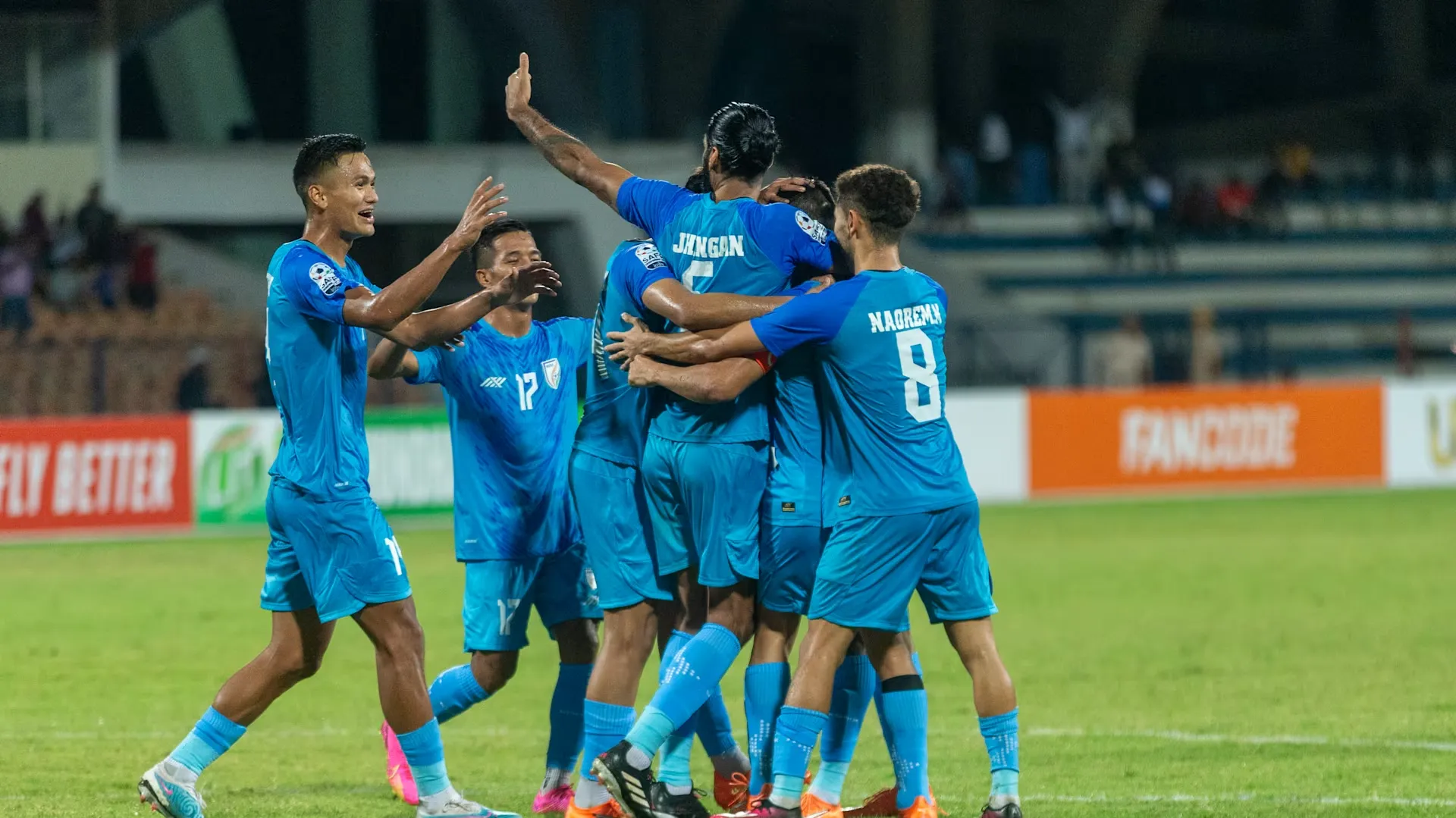
The question that perplexes football purists and sports economists alike is: why? Why does a country that has never qualified for the World Cup — a country where cricket is the undisputed national obsession, where the Indian Premier League attracts more eyeballs and sponsorship money than any other sports league in the world — love football with this intensity?
The answer is layered, fascinating, and deeply human.
Part of the explanation is generational and aspirational. India's rapidly expanding youth population — hundreds of millions of people between 15 and 35 years old — grew up with globalised media, with access to European club football on satellite and streaming platforms, with FIFA video games on their phones and consoles, with social media feeds curated by football-obsessed creators from around the world. For this generation, supporting Argentina or Brazil is not a novelty — it is simply part of their sporting identity, as natural as breathing.
Part of the explanation is geographic and cultural. Football has deep roots in specific regions of India: West Bengal, Kerala, Goa, Manipur, and Mizoram have produced genuine footballing cultures over generations. Kolkata's Durand Cup is one of the world's oldest football tournaments. The ISL (Indian Super League) has invested hundreds of crores in building professional football infrastructure across the country. These regional traditions feed into national enthusiasm that amplifies during the World Cup.
Part of the explanation is the magnetism of the players themselves. Lionel Messi — almost certainly competing in his final World Cup — exercises a hold on the Indian imagination that transcends sport. For hundreds of millions of Indians, Messi is not an Argentine footballer. He is a once-in-civilisation talent who belongs to the world. When Argentina plays, India watches.
And part of the explanation is simply the World Cup itself — the extraordinary power of a global event that unites humanity around a shared spectacle every four years. India's enormous and globally-connected population responds to that shared spectacle with an enthusiasm that its size alone makes phenomenal.
The Indian Diaspora: Football's Global Indian Connector
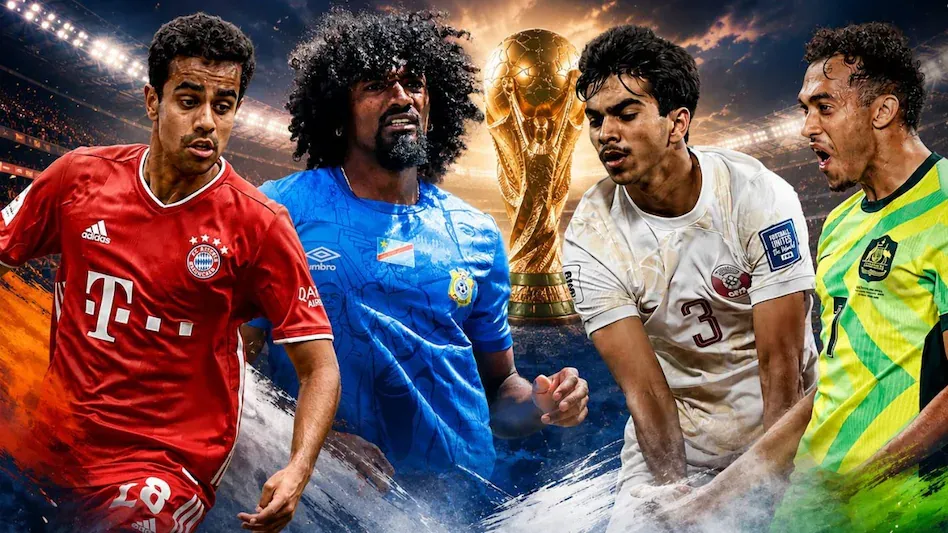
For the Global Indian community, FIFA World Cup 2026 carries a particularly resonant additional dimension. While Team India is absent from the pitch, India has a quiet but meaningful presence through the stories of players of Indian origin representing other nations.
Four players with Indian heritage are competing in 2026, representing New Zealand, Australia, DR Congo, and Qatar. Their stories span continents and generations — from Punjabi families in New Zealand and Keralite migrants in Qatar to descendants of Indian communities in the Caribbean and Australia. Together, they reflect the global reach of the Indian diaspora in world football.
For Global Indians watching the World Cup from living rooms in London, Houston, Dubai, Melbourne, and Toronto, these players represent something moving: the reach of the Indian story, the adaptability of Indian heritage, the capacity of Indian-origin people to excel in the most competitive global arenas even when the structures back home have not yet created the pathways to do so directly.
The Indian diaspora in the United States — the largest Indian community outside India — is experiencing the World Cup from a unique vantage point this year. For the first time, the tournament is being staged on American soil (shared with Canada and Mexico), making the World Cup not just a televised event but a live, local spectacle. Indian-American communities across New York, New Jersey, Texas, California, and beyond are attending matches, flying flags, and bringing their distinctive celebration of football to stadiums across the United States.
The Creator Economy: India's 35,000-Strong Football Content Army
Perhaps the most structurally significant aspect of India's FIFA World Cup 2026 engagement is what is happening in the creator economy. The 35,000-plus Indian creators actively posting football content on Instagram are not just fans expressing enthusiasm. They are entrepreneurs building audiences, brands forming partnerships, and a content ecosystem generating real economic value from India's football fandom.
What is most striking is the breadth of creator categories involved. Sports creators are expected. But fitness creators are posting FIFA content. Travel creators are creating World Cup itineraries and stadium guides. Food creators are building content around the cuisines of qualifying nations. Fashion creators are styling World Cup outfits. The World Cup has, as one industry analyst noted, become a seasonal cultural moment in India's creator economy — comparable to Diwali or the IPL in its capacity to pull every category of creator into its orbit.
For brands, this is an extraordinary opportunity that many are beginning to exploit. Indian brands that have no direct connection to football — from consumer goods to fintech apps — are using World Cup fandom to reach India's enormous youth audience. The advertising ecosystem around India's World Cup viewership is generating billions of rupees in value, flowing to broadcasters, digital platforms, creators, and the brands they partner with.
The economic value of India's football fandom extends well beyond advertising. Sports tourism, merchandise, gaming, and fantasy sports platforms all benefit from the World Cup cycle. Dream11, MPL, and other fantasy sports platforms report World Cup engagement numbers that rival their cricket season peaks. The IPL may be India's cricket festival, but the World Cup is becoming India's football festival — and festivals, in India, always generate economic activity at scale.
ChatGPT, AI, and the Football-Obsessed Indian Fan
One of the most charming and revealing data points from FIFA World Cup 2026 is what Indian fans are doing with AI. According to OpenAI, fans worldwide generated 17 million FIFA World Cup-related prompts on ChatGPT in a single week — and India recorded the sixth-highest volume of these queries globally.
What are Indian fans asking? The queries shared by OpenAI offer a window into the distinctive character of India's football fandom. Indian fans are asking AI to help them create sleep schedules to watch late-night games while still showing up fresh for 9 AM office logins. They are requesting printable factsheets comparing teams, historical performances, and star players. They are asking for post-tournament training plans to undo late-night snacking habits cultivated during a month of midnight matches.
These are the questions of an engaged, tech-savvy, globally-aware fan base that takes its fandom seriously while balancing it against the practical realities of professional life in India's competitive knowledge economy. It is a portrait of the modern Indian fan — and it is enormously appealing.
The Road to the World Cup for India: Dream, Work, Believe
Behind every statistic about India's extraordinary football fandom lies an implicit question that every Indian football lover carries: when will Team India play at the FIFA World Cup? It is not a question being asked cynically. It is asked with the hope and impatience of a nation that knows it has the talent, the passion, and the population to belong on football's greatest stage.
India's men's football team has made genuine progress in recent years, climbing in the FIFA rankings and developing infrastructure through the ISL and grassroots development programmes. The introduction of elite academies, foreign coaching, and systematic talent identification is beginning to build a pipeline that did not exist a generation ago. The passion is already there — the second-biggest FIFA Instagram audience in the world is proof of that. What India needs is the corresponding investment in playing infrastructure, youth development, and competitive exposure to convert passion into performance at the highest level.
The Global Indian community has a role to play in this journey too. Indian-origin football professionals working in clubs, academies, and sports management organisations around the world carry knowledge, networks, and resources that could accelerate India's football development if channelled intentionally back into the ecosystem.
For now, India watches — and watches with a passion, a scale, and a joy that has made the football world sit up and take notice. The day India takes the field at a World Cup will be one of the great sporting moments in human history. Until then, India will cheer louder than almost anyone else for teams it has adopted as its own. And in that cheering, there is something deeply, beautifully Indian: the capacity to celebrate excellence anywhere in the world, to feel genuine joy in the achievements of others, and to dream, persistently and passionately, of the day our own moment arrives.