
The Upgrade That Shocked the Street
In what analysts are calling one of the most dramatic single-note price target revisions of 2026, Morgan Stanley — the Wall Street titan — raised its target price on Adani Power Limited (APL) by nearly 60 per cent to ₹275 per share, up from a previous target of ₹173. The brokerage maintained its 'Overweight' rating and simultaneously initiated coverage on Adani Enterprises with an equally bullish 'Overweight' stance, assigning it a price target of ₹3,638.
Shares of Adani Group companies rallied 3–4 per cent intraday following the dual announcements, which coincided with Chairman Gautam Adani's presentation at the Group's Annual General Meeting. Adani Enterprises settled 3.5% higher at ₹3,068. Adani Power, however, dipped 0.78% on the day to close at ₹229.59, a movement analysts attributed to profit-booking after the stock had already surged 60% over the prior six months.
For global Indian investors tracking the Adani Group's trajectory — from the turbulence of 2023's short-seller report to its remarkable recovery and expansion — the Morgan Stanley upgrade represents a powerful institutional validation of the conglomerate's transformation.
Why Morgan Stanley Is Bullish: The Annuity Revolution
The core thesis behind Morgan Stanley's upgrade is a structural shift in Adani Power's business model. Historically, Adani Power derived significant earnings from merchant power sales — electricity sold at market-determined spot prices, which are inherently volatile and tied to coal costs, monsoon conditions, and demand patterns. This model, while profitable during demand spikes, introduced considerable earnings uncertainty.
Morgan Stanley now sees Adani Power pivoting decisively toward Power Purchase Agreements (PPAs) with annuity-like return characteristics. Under these PPAs, Adani Power sells electricity at contracted, pre-agreed rates to state utilities, with fuel pass-through provisions that allow it to recover fluctuations in coal costs from customers. The result: stable, predictable cash flows that de-risk the earnings model significantly.
The brokerage projects EBITDA of ₹3.5 per kWh on Adani Power's contracted capacity — a robust spread that, multiplied across the 24 GW of capacity currently under construction, generates an enormous and visible earnings base for the coming years.
Morgan Stanley forecasts EBITDA CAGR of 23% for Adani Power over the FY26–FY32 period. To put this in context: a 23% compound annual growth rate means EBITDA roughly triples over six years. In an economy growing at 7–8% annually, this is exceptional outperformance, driven by Adani Power's privileged position as India's largest Independent Power Producer (IPP) and second-largest thermal developer after state-owned NTPC.
The brokerage sees Adani Power's market share in coal generation rising from 8% today to 15% by FY32, underpinned by a 41.9 GW portfolio — 2.5 times its current footprint. The scale of this build-out, supported by pre-placed equipment orders and competitive financing, is why Morgan Stanley believes APL will be one of the primary beneficiaries of India's massive thermal capacity expansion drive.
Adani Enterprises: India's Premier Incubator
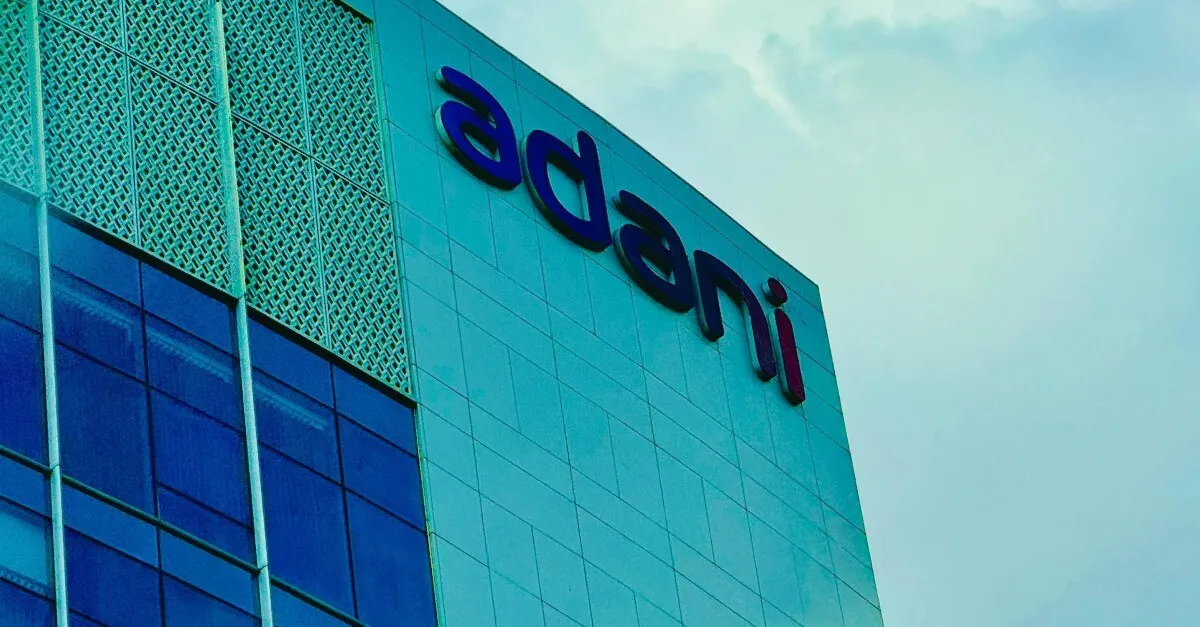
Beyond Adani Power, Morgan Stanley's initiation of coverage on Adani Enterprises (AEL) with a ₹3,638 target opens another window into the Group's ambitious diversification. The brokerage describes AEL as India's 'premier incubator' — a platform with exposure to multi-decade structural themes including transport infrastructure, data centres, the energy transition, and self-reliance across copper, PVC, mining, and defence.
The numbers are compelling. Morgan Stanley expects AEL's revenue and EBITDA to grow at CAGRs of 19% and 32% respectively over FY26–30, with EBITDA tripling from ₹140 billion in FY26 to ₹423 billion by FY30. The airports business alone is projected to deliver 29% EBITDA CAGR, scaling from ₹51.6 billion to ₹141 billion over the same period.
Adani Airport Holdings, which operates India's largest private airport network including eight airports that handled 95.5 million passengers in FY26 — representing 23% of India's total passenger traffic — is entering what Morgan Stanley terms a 'structural earnings inflection.' The commissioning of the Navi Mumbai International Airport and tariff resets across key airports are identified as near-term catalysts.
AEL's data centre joint venture, AdaniConneX — a 50:50 partnership with global player EdgeConneX — is targeting a 2 GW hyperscale data centre portfolio by 2030, scaling from just 55 MW today. With tariffs denominated in US dollars and a customer base of global hyperscalers, this business could deliver EBITDA CAGR of around 160% — the fastest-growing segment in the entire Adani portfolio.
The AGM announcement of a 10 GW nuclear energy capacity target by 2035, along with plans for ₹2 trillion of investment in the power sector over five years, add further dimensions to a growth story that is extraordinary even by Adani standards.
Risks: What Could Go Wrong
Morgan Stanley's bullish case is not without caveats. The brokerage flagged several key risks including weaker-than-expected demand growth, lower merchant power volumes in FY27–28, commissioning delays, capex inflation, and a potential build-up of receivables from state electricity distribution companies (discoms). The bank also noted that its estimates do not include contributions from the JPVL acquisition or Bhutan hydro projects — both potential upside catalysts if they progress as planned.
Adani Power's stock has already delivered 60% returns over the prior six months, meaning much of the near-term optimism is priced in. Investors entering now do so with the expectation that the company's massive under-construction pipeline will commission on schedule and that India's power demand — driven by urbanisation, industrialisation, data centres, and EV adoption — will grow at the rates assumed in Morgan Stanley's models.
These are reasonable assumptions for a country growing at 7%+ annually, but they are assumptions nonetheless. The power sector has a history of regulatory surprises and discom payment delays, both of which could disrupt even the best-laid plans.
The Bigger Picture: India's Power Demand Supercycle
The Morgan Stanley upgrade must be viewed against the backdrop of India's accelerating electricity demand. The Central Electricity Authority (CEA) aims to expand India's thermal power capacity by 80–90 GW by FY32. Data centres — the fuel of the AI revolution — are expected to consume enormous quantities of power, with India projected to have one of the fastest-growing data centre markets globally. EV adoption and residential air conditioning penetration will further stress the grid.
In this context, India's largest private power producer sitting on a 41.9 GW development pipeline is not merely a corporate success story — it is a strategic national asset. Adani Power's trajectory is inseparable from India's trajectory, and that is precisely why global capital, represented here by Morgan Stanley's seal of approval, is paying close attention.
For the readers of TheImpactfulGlobalIndian.com — Indians around the world who follow their homeland's business and economic evolution with passion — today's Morgan Stanley upgrade on Adani Power and Adani Enterprises is a landmark data point in what is becoming one of the most consequential corporate stories of our generation.