
The Decision That Steadied India's Financial Markets
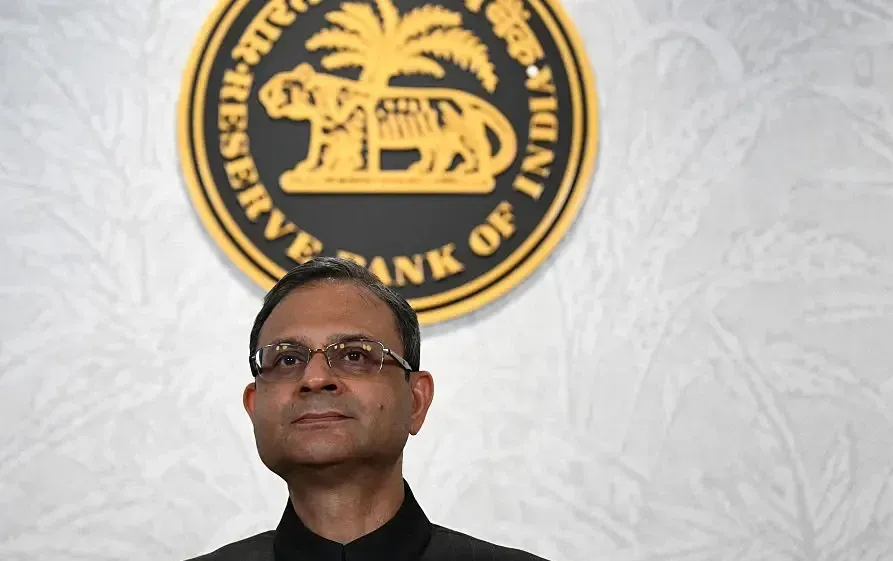
On a day when global markets were jittery and geopolitical uncertainty swirled across West Asia, India's Monetary Policy Committee delivered exactly what financial markets needed: certainty. The Reserve Bank of India's six-member MPC voted unanimously to keep the repo rate unchanged at 5.25 percent, maintaining a neutral policy stance and resisting pressure to either hike rates aggressively or cut them prematurely.
The decision was, in many ways, a display of institutional confidence. The RBI had already cut rates by a cumulative 100 basis points during FY25-26 — a bold series of reductions that provided significant support to the Indian economy as global conditions deteriorated. Now, with inflation beginning to tick upward and global uncertainty elevated, the MPC chose to pause and observe. It is the monetary equivalent of a chess grandmaster choosing not to move — recognising that sometimes the most powerful decision is disciplined stillness.
RBI Governor Sanjay Malhotra explained the decision with characteristic precision. The global economic environment, he said, had become more challenging in recent months. Geopolitical tensions, financial market volatility, and weakening business sentiment had increased uncertainty globally. The ongoing conflict in West Asia and rising energy prices remained key concerns. Safe-haven demand was rising, creating pressure on global currency markets. Several major central banks were leaning toward tighter monetary policies. In this environment, India would hold steady and watch.
Reading Between the Lines: What the RBI's Forecasts Actually Tell Us
While the headline repo rate decision attracted the most immediate attention, it was the RBI's revised economic forecasts that told the more nuanced — and ultimately more hopeful — story of where India's economy stands and where it is headed.
The RBI lowered its GDP growth forecast for FY2026-27 to 6.6 percent, down from its earlier estimate of 6.9 percent. This is a genuine and honest downward revision, reflecting the real headwinds that India's economy faces from higher energy prices, supply disruptions, and rising input costs in the wake of the Iran-US conflict. Manufacturing and services continue to expand, but some high-frequency indicators have shown signs of moderation.
However, 6.6 percent GDP growth in FY2027 would still make India the fastest-growing major economy in the world. China, struggling with property sector challenges, demographic pressures, and geopolitical isolation, is projected to grow significantly slower. The United States, the Eurozone, Japan, and the United Kingdom are all growing at a fraction of India's pace. Even in a downgraded scenario, India remains the growth engine of the global economy.
On inflation, the RBI raised its FY27 forecast to 5.1 percent, up from 4.6 percent, with core inflation projected at 4.7 percent. Food inflation was identified as a key watch item. The government's mandate for the RBI is to maintain inflation at 4 percent, within a tolerance band of 2 to 6 percent. At 5.1 percent projected inflation, India is within that band — elevated relative to target but manageable and well within the bounds of what responsible monetary policy can accommodate without crisis intervention.
Governor Malhotra's most reassuring statement came at the end of his assessment: India remains well-positioned to withstand external shocks, supported by resilient domestic demand and stable financial conditions. That is not diplomatic boilerplate. It is a factual assessment grounded in data — and it matters enormously for investor confidence.
Sitharaman's Promise: The First Step of Many
If the RBI's steady hand provided stability, it was Finance Minister Nirmala Sitharaman who brought the ambition. Speaking at the Mindmine Summit 2026, Sitharaman delivered a statement that sent a clear signal to global capital markets: the measures announced so far are only the beginning.
Her framing was precise and deliberate. India's bond market, she said, can be a very good magnet for foreign capital. The government and the RBI had taken a calibrated approach to reduce compliance burdens for foreign investors in government securities, expanding the Fully Accessible Route to include new issuances across 15-year, 30-year, and 40-year government bond tenors. All of these bonds are now part of three major global indices — a reform that makes Indian government bonds accessible to billions of dollars in index-tracking international capital.
The government has also exempted foreign institutional investors and the Bank for International Settlements from capital gains tax on Indian investments from April 1, 2026. This is a bold and investor-friendly reform that directly reduces the cost of investing in India for international money managers. Combined with the RBI bearing the full hedging costs on fresh 3-5 year Foreign Currency Non-Resident deposits until September 2026, the package of measures represents one of the most comprehensive openings of India's capital markets to foreign investment in the country's history.
The forex swap facility — offering concessional terms to incentivise external commercial borrowings by the public sector until September 30, 2026 — further sweetens the deal for international lenders who want exposure to India's creditworthy public sector without bearing the full cost of currency hedging.
Sitharaman was equally candid about the challenges India faces. She acknowledged that the Indian economy is under severe strain from the import of key raw materials, including crude oil and fertilisers. With global fertiliser prices surging — the fertiliser ministry has reportedly sought a 100 percent increase in subsidy for the current fiscal — the government's budget management challenge is real. The honesty with which Sitharaman acknowledged the pressure, combined with the specificity of the measures being deployed, speaks to a finance ministry that is in full command of the situation.
The Forex Reserves Buffer: India's Financial Fortress
One of the most reassuring facts in India's current financial picture is the state of its foreign exchange reserves. As of early June 2026, India's foreign exchange reserves stood at $681.6 billion — a figure that places India among the world's largest holders of foreign currency reserves and provides an enormous buffer against external financial shocks.
To put this in perspective: India's forex reserves represent approximately 12 months of import cover — meaning that even if all export revenues and capital inflows stopped completely, India could continue to pay for its imports for a full year from reserves alone. This is the kind of financial resilience that gives the RBI the confidence to hold rates steady rather than panicking in the face of external pressures.
The reserves had declined by $711 million in the week ended June 5 — a relatively modest movement given the extraordinary global turbulence of the period — demonstrating the RBI's measured approach to managing currency volatility without burning through reserves unnecessarily.
India's massive forex buffer is the product of years of prudent policy — building reserves during periods of capital inflows, avoiding excessive currency intervention during volatility, and maintaining a current account deficit within manageable bounds. It is financial prudence in the most literal sense, and it is paying dividends precisely when the world is most uncertain.
What It Means for NRIs and Global Indian Investors
For Non-Resident Indians and the broader Global Indian community, the RBI's policy stance and Sitharaman's capital market reforms carry several important practical implications.
The removal of concentration limits and short-term investment restrictions for foreign investors in government bonds, combined with the expansion of the Fully Accessible Route, makes Indian government securities more accessible to NRI investors than ever before. For Global Indians looking for a combination of sovereign-grade safety, currency diversification, and exposure to India's growth story, Indian government bonds have become a significantly more attractive option.
The NRI-specific measure — removing limits on investments by Non-Resident Indians and Overseas Citizens of India in government securities — is a direct policy invitation to the 30-million-strong Global Indian diaspora to participate in India's capital markets. This community remits approximately $100 billion to India annually. The government is now asking them to also invest — not just send money home, but become owners of India's sovereign debt and, by extension, active stakeholders in India's fiscal story.
For those with home loans and business loans in India linked to floating rates, the repo rate pause provides relief in the immediate term. EMIs will not rise. Banks will not be forced to increase lending rates in response to a policy tightening. For India's tens of millions of home loan borrowers — many of them the family members of Global Indians — this is welcome news that directly affects monthly household budgets.
The Bigger Picture: India's Economic Resilience as a Global Asset
Zoom out from the quarterly policy meeting and the interest rate arithmetic, and what emerges is a picture of extraordinary significance for the global economy. India, in the middle of one of the most turbulent global periods since the COVID-19 pandemic, is maintaining GDP growth above 6.5 percent, holding inflation within its mandated tolerance band, sitting on nearly $700 billion in forex reserves, and actively reforming its capital markets to attract global investment.
This is not the story of a country struggling. This is the story of a country navigating global chaos with institutional competence, policy clarity, and long-term strategic vision. The RBI under Governor Malhotra and the Finance Ministry under Sitharaman have, in the span of a few weeks, demonstrated that India's economic institutions have matured to a level that commands genuine global respect.
For Global Indians who carry India in their hearts wherever they live and work, this is a story of pride and possibility. India's economy is not just surviving the storms of 2026 — it is positioning itself to emerge from them stronger, more globally integrated, and more attractive to the international capital that will fund its next decade of growth.
The calibrated confidence of the RBI's pause and Sitharaman's forward promise is not merely monetary policy communication. It is the articulation of a vision: India as the world's most dynamic and investor-friendly major economy, steadily, relentlessly building the future it deserves.