Most 14-Year-Olds Are Waiting for Permission. He Decided He Did Not Need It.
There is a particular kind of permission that society extends to young people, conditionally and slowly, over the course of many years. You can speak when spoken to. You can lead when you have experience. You can build when you have credentials. You can matter when someone older decides that you are ready.
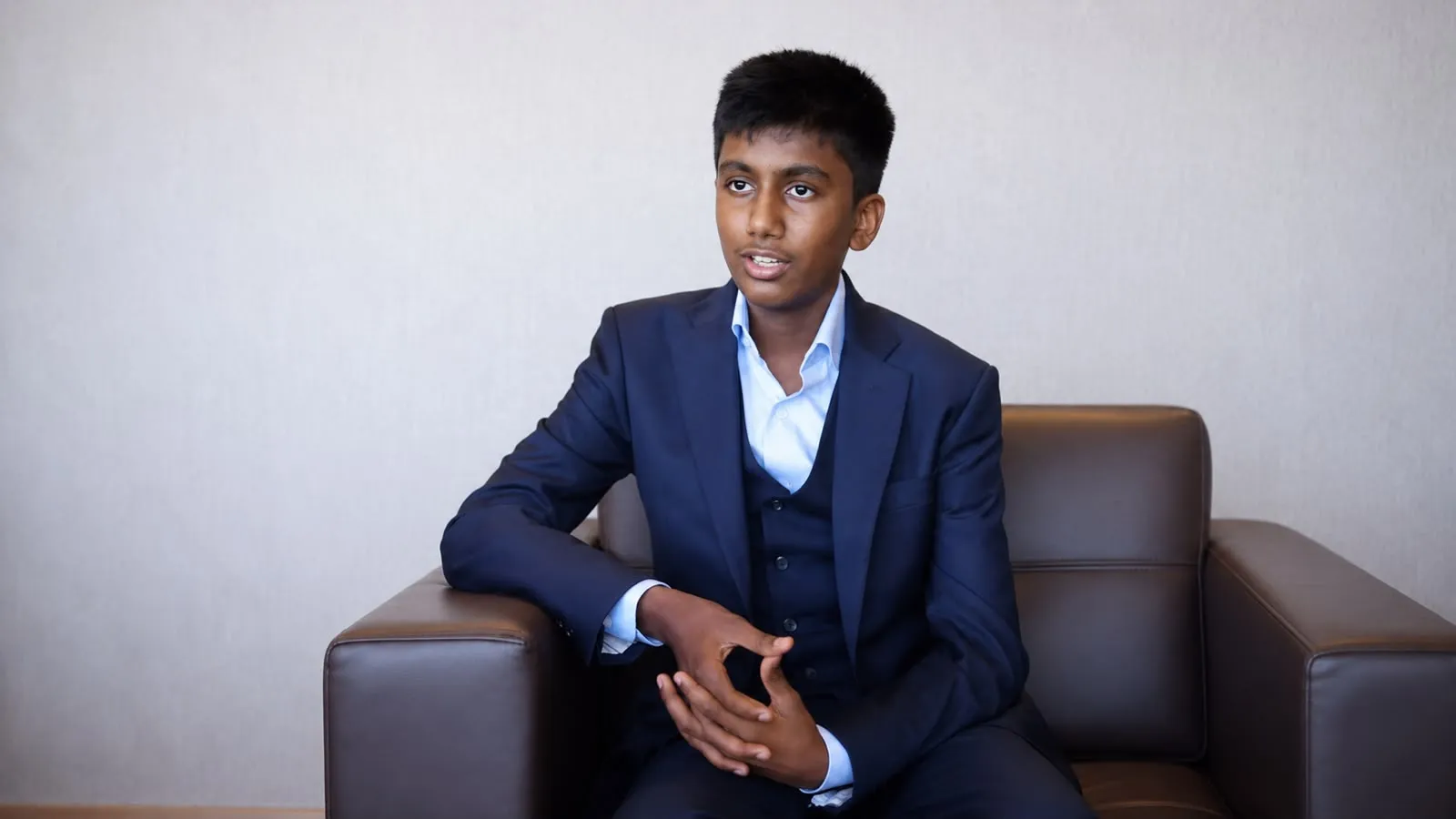
Jainam Jain, 14 years old, Dubai resident, AI startup founder, has been ignoring that permission structure since he was seven years old.
That was the year he and his younger sister Jivika launched a YouTube channel. Not as a hobby in the usual sense, not as something to fill school holidays, but as a genuine experiment in communication and audience-building. JJ Fun Time started with toy unboxing videos and evolved into science experiments and educational content. Within months, the channel crossed 100,000 subscribers. That audience led to invitations from schools and educational institutions, where the siblings began conducting science demonstrations. But Jainam noticed something quickly. Students were not particularly interested in the science experiments. They had seen those experiments online before. What connected with them was hearing that two young children had decided to do something different and had actually done it.
That observation shaped everything that followed.
Born in Pune and raised in Dubai from the age of five, Jainam grew up in a family that treated experimentation as normal and failure as information. His parents encouraged curiosity without requiring it to produce conventional outcomes. The result was a childhood that looked less like a standard educational progression and more like a series of progressively more ambitious challenges, each one building on what the previous one had taught.
The Challenges That Built the Person Before the Founder
The challenge structure that Jainam and Jivika adopted would sound extreme to most families. One summer, they challenged themselves to attend 50 networking events in 50 days. Another year, they challenged themselves to read 50 self-development books in 50 days. These were not school projects or parent-directed activities. They were self-imposed targets that the siblings set and then held each other accountable to.
The motivational tour of 2022 was the largest and most demanding of these challenges. Jainam was 12 at the time. He and Jivika set themselves a goal: 100 motivational sessions in 50 days, reaching 50,000 people. They travelled across Maharashtra, speaking at schools, colleges, NGOs, and community organisations about entrepreneurship, public speaking, and personal development.
They exceeded every target.
In 50 days, they completed 120 sessions, travelled more than 6,000 kilometres, and reached over 75,000 people. The pace was punishing. They got sick several times. They were constantly on the move. But the experience delivered something that no classroom could have provided: the lived understanding of what it feels like to commit to something impossible and then do it anyway.
The National Young Achievers Award, the Jain Baal Ratna Award, and the Change Your Life: Super Hero Award presented by Bollywood actor Sonu Sood all came from a body of work that was already substantial before Jainam had finished secondary school.
IGCSE at 13 — and the Decision That Followed
Jainam completed his Grade 10 equivalent IGCSE examinations at 13 years old, approximately three years ahead of the standard timeline. This is not a minor academic achievement. IGCSE examinations are externally assessed, internationally recognised qualifications that require sustained preparation across multiple subjects. Completing them at 13, at the standard required for meaningful results, represents both intellectual capability and the kind of self-directed discipline that most educational systems do not expect to encounter in someone that age.
The decision that followed the IGCSE completion was the one that defined the current chapter. Rather than immediately continuing into A-levels or an equivalent higher secondary programme, Jainam stepped away from formal schooling. He describes the period that followed as a gap year of sorts, though the phrase understates what actually happened during it. His focus shifted entirely to entrepreneurship and to the AI platform he had been thinking about building.
Dubai made this choice easier than it might have been elsewhere. The city's business environment is structured around questions of substance rather than questions of credential. Networking events, founder communities, potential client conversations — all of these were accessible to Jainam in Dubai in ways that would have been significantly harder in most other cities in the world. He found that when he walked into a room in Dubai, people wanted to know what he was building, not how old he was.
Mengo — What He Is Actually Building

The AI startup that emerged from Jainam's gap year is called Mengo. It is an AI-powered business platform designed to automate marketing, content creation, customer engagement, and sales workflows for businesses that do not have large teams or large budgets to manage those functions manually.
The product is currently in beta. Approximately 100 businesses have joined the waiting list. The operation is lean by design. Because of age-related legal requirements in Dubai, Jainam's father serves as co-founder on the official registration, though Jainam describes the startup as effectively his operation in terms of product and day-to-day work. He focuses on both the product development and the operations.
What makes the Mengo story particularly interesting is what Jainam is not. He has never completed a formal AI course. His understanding of artificial intelligence and how to build with it came from a different source entirely: years of following software and technology closely, experimenting with products as they emerged, and staying curious about what the tools could actually do rather than what the specifications said they could do. Most of it came from YouTube and from trying things and seeing what happened. He became the family's de facto technology authority not by studying AI formally but by living inside the technology landscape with enough attention and enough willingness to experiment that understanding accumulated naturally.
This is an unusual foundation for a startup founder. It is also, in important ways, exactly the right foundation for building an AI automation product for businesses that are themselves figuring out how to integrate AI tools they did not formally study for.
1XL Universe and the Larger Vision
Alongside Mengo, Jainam co-founded 1XL Universe, a broader platform for growth, learning, and innovation that encompasses courses, SaaS tools, events, coaching, and social impact programmes. The 1XL name reflects an aspiration toward exponential impact: not 1X growth but 1XL, a multiplier on what any individual or organisation is currently achieving.
The 1XL Universe registered address is Floor 141 of the Burj Khalifa. Like many startups and small companies in Dubai, the address functions as a prestigious registered location that provides a professional credibility anchor for the brand in the international marketplace. The Burj Khalifa has become a symbol not only of Dubai's physical ambition but of its commercial accessibility: the building hosts hundreds of companies at various stages, and the address carries meaning that extends far beyond the square footage involved.
For a 14-year-old building an international-facing brand, the address is a deliberate choice about how the company presents itself to the world. It is consistent with the Dubai mindset that Jainam has absorbed: the city does not ask how old you are. It asks whether you are serious.
What Dubai Actually Gave Him
Jainam has been direct about the role that Dubai played in making his path possible. The city's ecosystem for young entrepreneurs is not a formal programme or a government initiative. It is a cultural disposition that shows up in practical ways.
Networking events in Dubai are accessible to him in a way they would not be in most cities. He walks in, people see that he is young, and their first question is what he does rather than why he is there. That question is the one that opens conversations, builds relationships, and creates the kind of opportunity pipeline that a 14-year-old with serious ambitions cannot build in environments that filter by age before they filter by substance.
The TEDx stage he has spoken on, the awards he has received, the 250-plus events he has participated in or organised — all of these have been enabled partly by individual effort and partly by a city that structures its professional community around substance rather than seniority.
What He Is Building Toward
Jainam's stated conviction is that success is not primarily about companies. The turning point in his understanding of what he wanted to do came not from building Mengo but from watching students in Maharashtra respond to the realisation that ordinary young people had decided to do something different and had actually done it.
The AI startup is real and the ambition behind it is genuine. But the throughline from the YouTube channel at seven to the Maharashtra tour at twelve to Mengo at fourteen is not primarily a technology story. It is a story about what happens when a young person is given the permission — or refuses to wait for the permission — to take their own curiosity seriously as a professional instrument.
Dubai did not create that curiosity. His parents did not create it. The 50 days across Maharashtra did not create it. They recognised it, provided conditions for it to grow, and gave it a stage. The curiosity itself arrived earlier, in a child who looked at what was available to him and decided that waiting until he was older was the least interesting option he had.
He is 14 years old. He has touched 75,000 lives. He is building an AI company. He finished secondary school at 13. He is wondering, every day, what else is possible.
So far, the answer keeps coming back: more than you think.