The ₹300 Crore Rejection
In June 2026, Virat Kohli made a decision that sent shockwaves through the sports marketing world.
He had been with Puma since 2017, a partnership that had become one of the most iconic athlete-brand relationships in Indian sports history. The German sportswear giant reportedly offered him an eight-year lifetime deal worth approximately ₹300 crore. It was the kind of offer that most athletes would sign without a second thought – guaranteed money, global visibility, zero risk.
But Kohli said no.
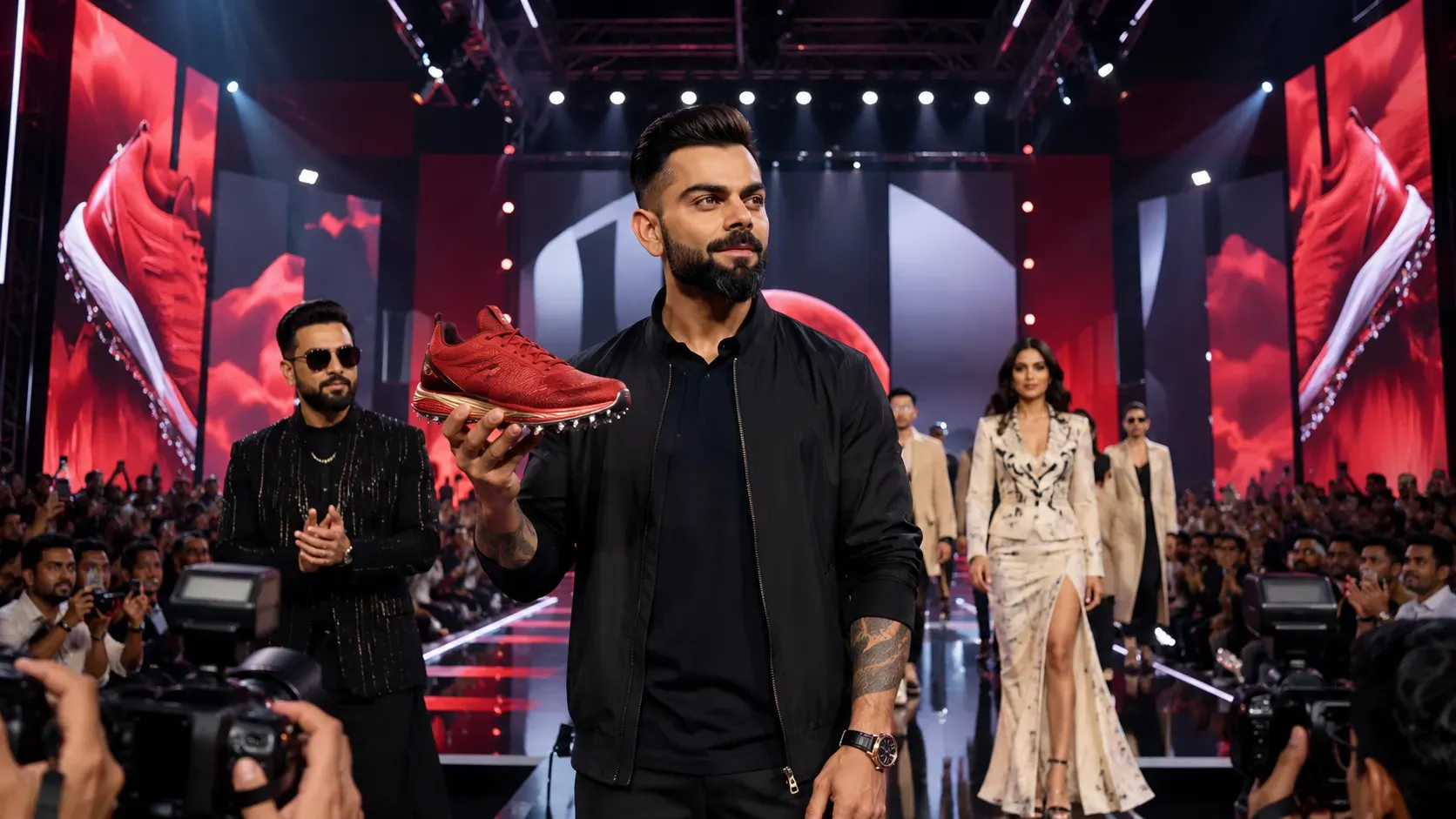
Instead, he invested ₹40 crore of his own money into Agilitas Sports, a homegrown sports manufacturing platform, and moved his One8 brand into the company. He didn't just leave a sponsorship deal – he built his own supply chain. One8 shoes are now manufactured in Noida, giving them a structural cost advantage over imported brands.
This is not just a brand endorsement. This is a industrial bet.
Chapter 1: The New Math – ₹7,000 Crore and Counting
Let's start with the numbers that define India's cricketing economy.
The Board of Control for Cricket in India (BCCI) is the richest cricket board in the world. The Indian Premier League (IPL) is the most valuable cricket property on the planet. And the players? They are among the highest-paid athletes in global sports.
Metric | Value |
|---|---|
BCCI Net Worth (2026) | ₹15,000 crore (approx.) |
IPL Media Rights Value | ₹48,390 crore (2023-2027 cycle) |
Highest Paid IPL Player (2026) | Vaibhav Suryavanshi – ₹11 crore (retained) |
Top Player Endorsement Deals | ₹5-15 crore per deal |
Influencer Marketing Market (IPL 2026) | ₹7,000 crore (16-18% of digital ad spend) |
But the real story isn't just about how much cricketers earn. It's about how they earn it – and what they do with it.
Chapter 2: The Vaibhav Suryavanshi Phenomenon – When a 15-Year-Old Became a Marketing Goldmine
If there is one case study that perfectly captures the new economics of cricket marketing, it's Vaibhav Suryavanshi.
Before IPL 2026, he was a 15-year-old retained by Rajasthan Royals for ₹11 crore. By the end of the season, he had scored 776 runs, won the Orange Cap, smashed 72 sixes, and posted a strike rate of 237.30. He was the Most Valuable Player, the Emerging Player, the Super Striker, and the Super Sixer. His 72 sixes broke the IPL season record.
The business world responded instantly.
Marketing agency Marketing Growmatics revealed that Suryavanshi is set to sign a bat endorsement deal worth ₹12 crore annually. His event appearance fee has reportedly shot up to ₹15-20 lakh per appearance. At least six top brands – including sports drinks, cricket equipment, nutrition, and performance footwear brands – are queuing up to sign him.
His endorsement value doubled overnight – from ₹5 lakh to ₹10 lakh per deal.
"Brands today don't just buy a cricketer. They buy attention. And Vaibhav Suryavanshi has more attention than any cricketer in the country right now," said a sports marketing executive.
Chapter 3: Virat Kohli's Factory Bet – How One Man is Reshaping Indian Sports Manufacturing
But the most audacious business move of 2026 came from Virat Kohli.
In 2023, Kohli invested ₹40 crore in Agilitas Sports, a vertically integrated sports manufacturing platform with factories in Noida, Dehradun, and Rishikesh. The company acquired Mochiko Shoes – India's largest sports shoe contract manufacturer, which produced shoes for Adidas, Puma, New Balance, and Skechers. Mochiko's revenue in FY23 was ₹642 crore. By FY26, Agilitas projects it will grow to ₹1,350 crore.
On June 21, 2026, Kohli's One8 brand launched its first independent footwear line at a concert venue in Delhi, with a Punjabi pop star on stage and fans pre-ordering through a food delivery app. It was an unconventional launch – and it sold out.
The strategy is simple but brutal: government quality control orders now impose heavy tariffs on imported footwear. One8 shoes made in Noida have a structural cost advantage over any imported brand.
Kohli walked away from ₹300 crore in guaranteed money to bet on Indian manufacturing. As Abhishek Ganguly, co-founder of Agilitas and former Puma India CEO, put it: "Kohli wanted to build something that could compete globally – not just as a face, but as a product" .
Chapter 4: MS Dhoni – The Portfolio Investor
If Kohli represents the manufacturing bet, MS Dhoni represents portfolio diversification.
Dhoni's investment portfolio spans over a dozen startups across technology, food, fitness, gaming, and clean energy:
Company | Sector | Role |
|---|---|---|
LightFury Games | Gaming | Investor |
Kuku | AI-powered storytelling | Investor & Brand Ambassador |
Garuda Aerospace | Drones | Investor |
Khatabook | Fintech | Investor |
EMotorad | Electric Bicycles | Investor |
Cars24 | Used Cars | Investor |
Shaka Harry | Plant-based Protein | Investor |
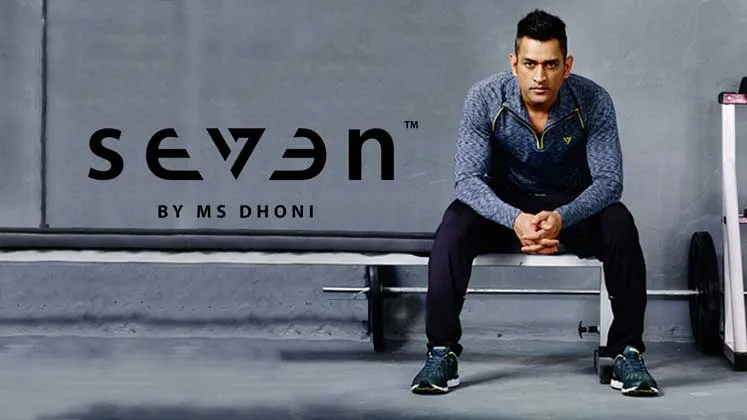
Seven | Lifestyle Brand | Owner |
Chennaiyin FC | Football | Co-owner |
In gaming, LightFury Games raised $11 million from investors including Dhoni, Jasprit Bumrah, and Hardik Pandya. The company is building eCricket, a mobile AAA cricket game built on Unreal Engine 5. Dhoni said: "When LightFury showed me what they are building, I felt they were trying to bridge the gap" .
In AI-driven storytelling, Kuku is preparing for a ₹350 crore IPO. Dhoni serves as both investor and brand ambassador for Kuku TV. He said he backed the company because it is "a differentiated entertainment platform with strong growth potential and a multi-language approach" .
Dhoni's investment philosophy? Risk appetite. As one profile put it: "Dhoni's portfolio reflects his risk-taking mindset, backing new-age startups in electric vehicles, fintech, drones, and alternative proteins" .
Chapter 5: Rohit Sharma – From Brand Ambassador to Equity Partner
Rohit Sharma's business journey shows a different evolution: from brand ambassador to equity partner.
In 2024, Rohit became the first brand ambassador for FITTR, a fitness and wellness platform offering digital coaching, nutrition guidance, and community support. By June 2026, he had deepened his relationship, becoming an investor and equity partner in the company.
Rohit said his deep understanding of the business and its long-term vision drove him to expand his partnership. FITTR's founder and CEO Jitendra Chouksey said Rohit found his "personal values aligned strongly with the company's strategic vision" , making the transition from ambassador to investor a "natural evolution" .
This shift – from "selling a face" to "betting on the business" – reflects a fundamental change in how athletes think about their commercial value. They are no longer just a face that brands can use. They are partners who can help shape business value.
Chapter 6: The IPL Advertising Economy – When Attention Becomes the Most Scarce Asset
Behind all these individual stories is a broader economic reality: the IPL has become a real-time cultural moment and a digital phenomenon.
"During IPL, you see a 25-40% premium because attention becomes the most scarce asset in Indian media," said Monika Chettri, VP of Customer Success and Influencer Marketing at Social Beat.
Nearly half of creator interactions happen after the live match ends, highlighting how IPL content extends the value of the tournament beyond broadcast. Some advertisers now allocate up to 25% of their IPL budget to creators, with short-term campaigns being replaced by season-long creator partnerships.
Brands are also adopting more sophisticated strategies. Birla Opus Paints launched an IPL 2026 campaign featuring ten cricketers across three films in four languages. The strategy centered on high-volume assets, multi-language execution, and celebrity aggregation to drive memorability and engagement.
At the franchise level, Kolkata Knight Riders launched an integrated brand campaign with massive outdoor advertising in Kolkata and multi-language team bus branding in away cities. KKR's CMO said: "We wanted to go beyond visibility and create real cultural connection moments for our fans" .
Chapter 7: The New Rules of Sports Marketing
So what are the lessons from all of this?
Rule 1: Trust is the New Currency. Consumers are increasingly resistant to traditional advertising, but cricketer recommendations still carry weight. Brands are buying not just a face, but trust and a content engine.
Rule 2: Attention is the Most Scarce Asset. IPL commands a 25-40% premium because attention during the tournament is more valuable than at any other time of the year.
Rule 3: VC-Style Marketing is the Future. Brands want to lock in athletes before they become superstars – not after.
Rule 4: Athletes are No Longer Just Faces. They are founders, investors, and co-creators of brands. Kohli didn't just endorse a shoe. He built a factory that makes shoes.
The Final Verdict: The Cricketer as Business Architect
June 23, 2026, finds Indian cricketers at the forefront of a dramatic transformation in sports business.
From Kohli's manufacturing bet to Dhoni's portfolio, from Rohit's equity partnership to Suryavanshi's overnight valuation jump, the story is the same: Indian cricketers are no longer just brand ambassadors. They are brand architects.
They are proving that an athlete's value is not just what they do on the field – but what they build off it.
As Kohli proved: sometimes the smartest business decision is rejecting the safest contract.
"Brands today don't just buy a cricketer. They buy attention and trust."
"When LightFury showed me what they are building, I felt they were trying to bridge the gap." – MS Dhoni, on investing in LightFury Games
"India has long been a gaming market, but now it is starting to build. We want to show that India can create world-class gaming IP for global audiences." – Karan Shroff, Co-founder, LightFury Games
KEY DATA SNAPSHOT
Cricketer | Net Worth (2026) | Key Business Moves |
|---|---|---|
Virat Kohli | ~₹1,115 crore | Rejected ₹300 crore Puma deal; invested ₹40 crore in Agilitas Sports; owns One8, Blue Tribe, Rage Coffee, Chisel Fitness |
MS Dhoni | ~₹1,000 crore | Investor in LightFury Games, Kuku, Garuda Aerospace, Khatabook, EMotorad; owns Seven brand, Chennaiyin FC |
Rohit Sharma | Undisclosed | FITTR brand ambassador → equity partner |
Vaibhav Suryavanshi | Rising | IPL 2026 Orange Cap winner; ₹12 crore/year bat deal incoming |