The CEO Has Landed: Why This Visit Matters
The arrival of Andy Jassy, Chief Executive Officer of Amazon.com Inc., in India on June 25, 2026 is one of the most closely watched corporate events of the year. Jassy — who succeeded Jeff Bezos as Amazon's CEO in 2021 and has since navigated the company through a period of significant restructuring, cloud growth, and AI investment — has chosen India as the destination for a high-profile engagement at a pivotal moment for Amazon's India strategy.
Amazon has committed $15 billion in cumulative investments to India since 2013, and recently pledged an additional $35 billion through 2030 — one of the largest foreign direct investment commitments ever made by a single company to India. Yet despite this financial firepower, Amazon finds itself in a complicated position in the world's fastest-growing major economy: thriving in cloud computing through Amazon Web Services (AWS), but facing intensifying competitive pressure in its core e-commerce business from Reliance's JioMart, the Tata Group's portfolio, and above all, the explosive rise of Indian quick-commerce players.
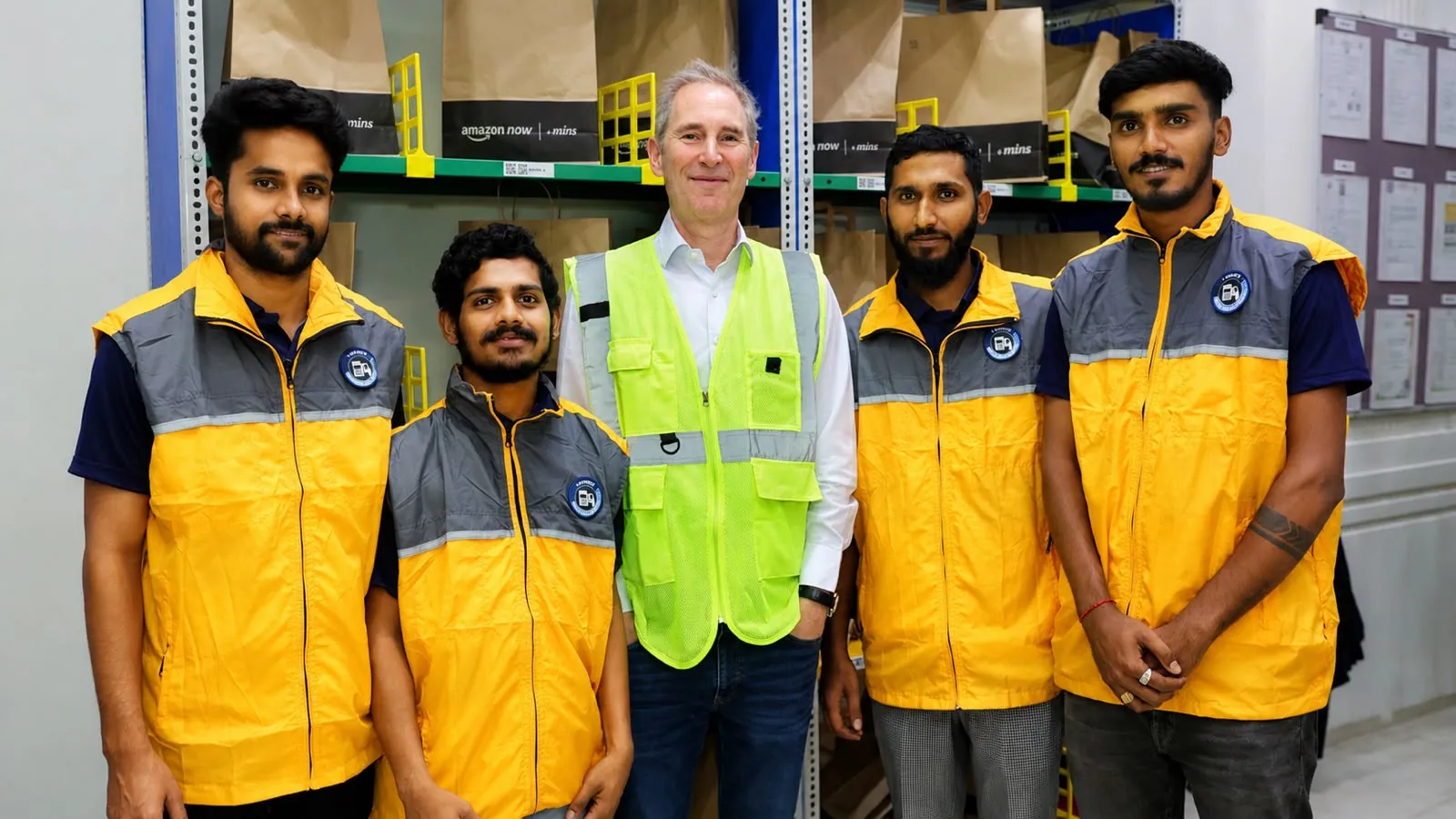
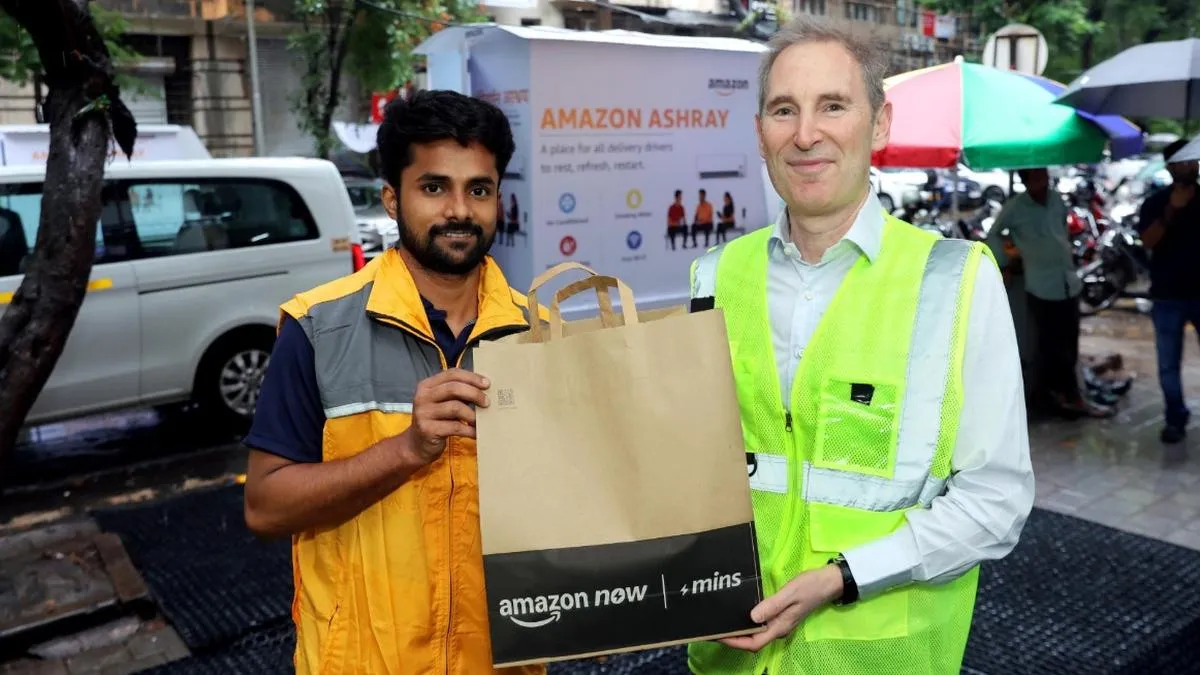
The quick-commerce sector — ultra-fast grocery and essential goods delivery, typically within 10–30 minutes — has emerged as the defining battleground of Indian retail in 2025–26. Blinkit (backed by Zomato/Eternal), Zepto, and Swiggy Instamart have built enormous dark-store networks, invested heavily in logistics technology, and captured the imagination of India's urban middle class. Amazon, which has been building its own quick-commerce capability through Amazon Fresh, finds itself playing catch-up in a market moving at extraordinary speed.
The Quick-Commerce Battlefield
To understand the urgency of Jassy's India visit, one must first understand the stakes of the quick-commerce war. India's quick-commerce market, estimated at $3–4 billion in 2025, is projected to grow to $30–40 billion by 2030. This is not a niche segment — it is becoming the primary mode through which urban Indians shop for groceries, personal care products, electronics, and daily essentials.
Blinkit, now rebranded as part of the Eternal (formerly Zomato) ecosystem, has built India's largest dark-store network and processed tens of millions of orders monthly. Zepto, backed by global investors and valued at multi-billion dollar levels, has expanded aggressively from its home base of Mumbai to over 20 Indian cities. Swiggy Instamart, the grocery arm of the food delivery giant, has leveraged Swiggy's existing delivery infrastructure and consumer brand to compete across the spectrum.
Amazon's Amazon Fresh service has scale and supply chain advantages but has been slower to deploy the hyper-local dark-store model that defines successful quick-commerce. Jassy's visit is widely expected to include announcements that signal Amazon's intent to dramatically increase its quick-commerce investment — whether through infrastructure spending, partnerships, acquisitions, or a combination of all three.
The Indian government will also be watching Jassy's visit carefully. Amazon's $35 billion investment pledge is a significant component of India's foreign investment narrative. Smooth regulatory relations, predictable e-commerce policy, and fair treatment of Amazon's seller ecosystem are all topics that will feature in Jassy's meetings with government officials and ministry representatives.
AWS India: The Quiet Giant
While the quick-commerce narrative dominates today's headlines, Jassy's visit also reinforces Amazon's dominant position in India's cloud computing market through AWS. AWS India has invested heavily in data centre capacity across Mumbai, Hyderabad, and the upcoming Delhi-NCR region. Its customer base spans India's largest enterprises, unicorn start-ups, and government entities including UIDAI (the Aadhaar authority) and various state governments.
The AI era has accelerated AWS India's growth trajectory. Indian start-ups building generative AI applications, large enterprises deploying AI-powered automation, and government agencies exploring AI in public services are all increasingly reliant on AWS infrastructure. The launch of AWS's dedicated AI and machine learning instance types, and its partnerships with Indian AI research institutions, have deepened the company's technical relationships with India's innovation ecosystem.
For Andy Jassy — whose personal commitment to Amazon's cloud business defined his leadership of AWS before he became CEO — the Indian cloud opportunity is both personal and strategic. India is not just Amazon's fastest-growing major market for cloud; it is increasingly a source of engineering talent, technical innovation, and strategic partnerships that benefit Amazon's global operations.
What Indian Businesses and the Diaspora Should Watch
For Indian businesses that sell on Amazon's marketplace — and there are hundreds of thousands of them, from small artisan producers to large consumer goods brands — Jassy's visit is a moment to assess what the next chapter of Amazon India looks like. Will Amazon double down on its marketplace model, investing in seller support and logistics? Will it pivot more aggressively toward its own private labels? Will it make a strategic acquisition in the quick-commerce space?
For the NRI community in North America and globally, the visit raises questions about Amazon's role in connecting the Indian diaspora to Indian goods, services, and culture. Amazon's international shipping services, India-specific storefronts, and the ability to gift products to family members in India are services that millions of NRIs use regularly. Any expansion of Amazon's India footprint could enhance these diaspora-specific offerings.
Jassy's India visit is, at its core, a statement that India matters — not as a developing market to be served from afar, but as a priority destination for Amazon's capital, leadership attention, and long-term strategic commitment. In an era of increasing global competition for investment, talent, and market position, that statement is itself significant news.