Introduction: The Making of a Digital Nation Builder
There is a moment in every dynasty when the weight of the past and the urgency of the future converge in a single person. For the Ambani family — India's most storied business empire — that moment belongs to Akash Ambani. Born into a legacy that his grandfather Dhirubhai Ambani built from scratch and his father Mukesh Ambani multiplied into a global force, Akash had every reason to be defined by the name he carries. Instead, he chose to be defined by what he builds.
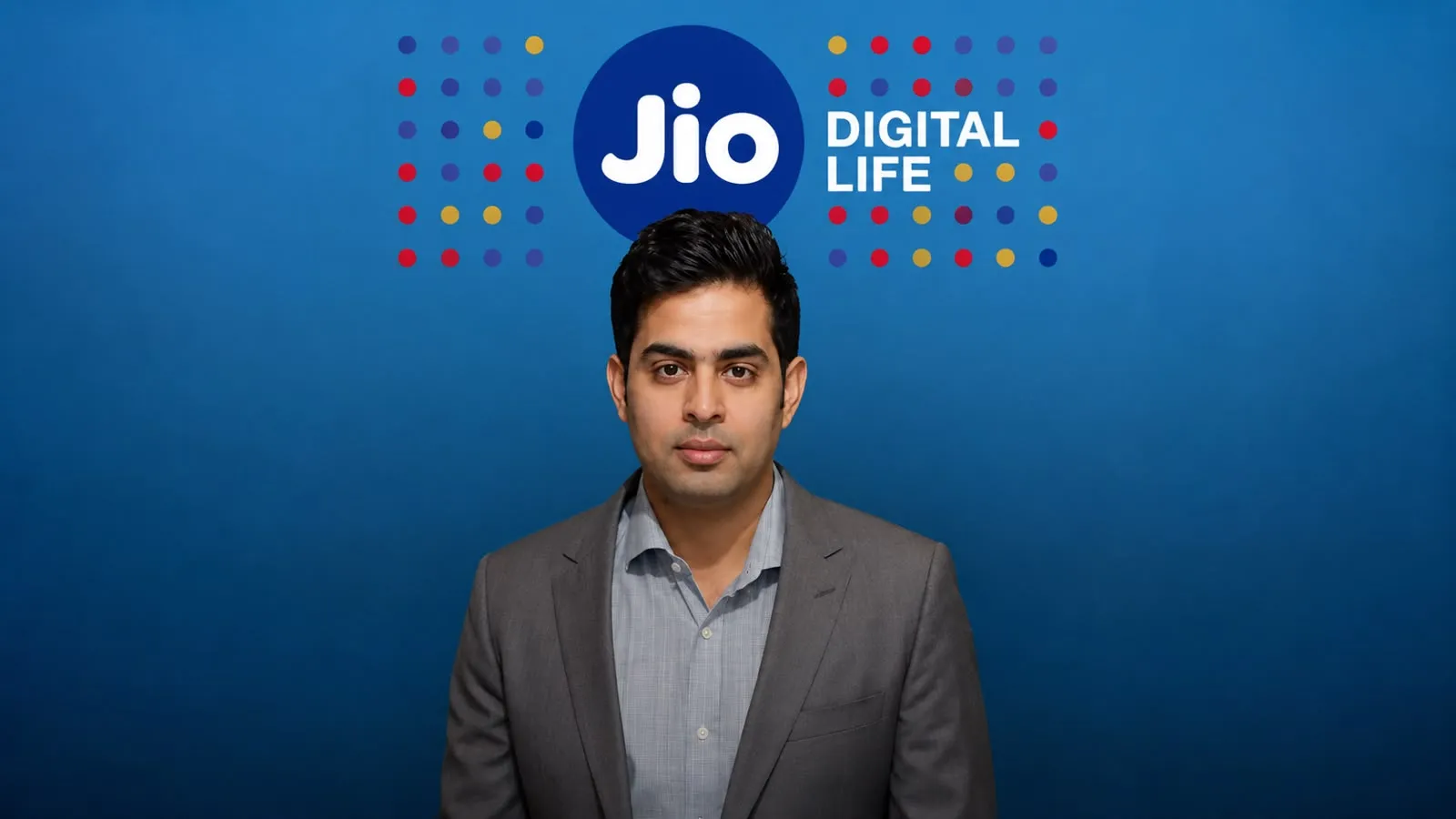
As the Chairman of Reliance Jio Infocomm Limited (RJIL) and Managing Director of Jio Platforms Limited (JPL), Akash Ambani today oversees a digital empire serving over 524 million subscribers — a number that makes Jio not just India's largest telecom operator, but one of the largest digital platforms on the planet. At just 34 years old, he presides over a company that has fundamentally changed how a billion Indians work, learn, communicate, and dream.
But numbers, however staggering, do not capture the full measure of this man. To understand Akash Ambani, one must trace the arc from a boy in Mumbai who grew up watching his father build something extraordinary, to a young economist at Brown University who absorbed global perspectives, to the architect of India's 4G revolution, and now, the conductor of a 5G and AI symphony that may well be India's defining technological moment.
Early Life: Growing Up Ambani
Akash Mukesh Ambani was born on October 23, 1991, in Mumbai, Maharashtra — a twin, alongside his sister Isha Ambani, in a family that was already one of the most powerful in Asia. His father, Mukesh Ambani, was in the midst of building Reliance Industries into a trillion-dollar conglomerate. His mother, Nita Ambani, the founder of the Reliance Foundation, was shaping one of India's most consequential philanthropic organisations. And his grandfather, the late Dhirubhai Ambani, though he would pass away in 2002 when Akash was just ten, cast an enormous shadow — part legend, part guiding star.
Dhirubhai Ambani's story is the stuff of Indian mythology. Born in 1932 in a small village in Gujarat, he began his working life as a petrol pump attendant in Aden, Yemen, before returning to India with Rs 50,000 and an audacious dream. He built Reliance Industries from nothing — from a yarn trading operation in the 1960s to a Fortune 500 company by the early 2000s. His philosophy was bracingly simple and permanently galvanising: Think big. Think differently. Think faster than the competition. Dare to dream.
Akash grew up in the Antilia home in Mumbai — one of the world's most architecturally distinctive private residences — but those who know him describe a household that, despite its grandeur, was grounded in discipline, values, and a profound sense of purpose. Mukesh and Nita Ambani were deeply hands-on parents who believed in giving their children both freedom and responsibility. For Akash, one of his earliest lessons in business was also one of his most personal: his mother, Nita Ambani, put him in charge of tasks related to the family's IPL franchise, Mumbai Indians, even as a young boy — teaching him to think through decisions carefully rather than act impulsively.
The twin bond between Akash and Isha has been a constant thread in his story. Isha, who now leads Reliance Retail, is his closest confidante and professional counterpart — together, they represent the most powerful sibling leadership combination in Indian corporate history. Younger brother Anant Ambani completes the trio, focused on green energy and conservation. This is a family succession that was not handed over — it was deliberately, rigorously constructed, year by year, role by role.
Education: From Bandra Kurla to Providence, Rhode Island
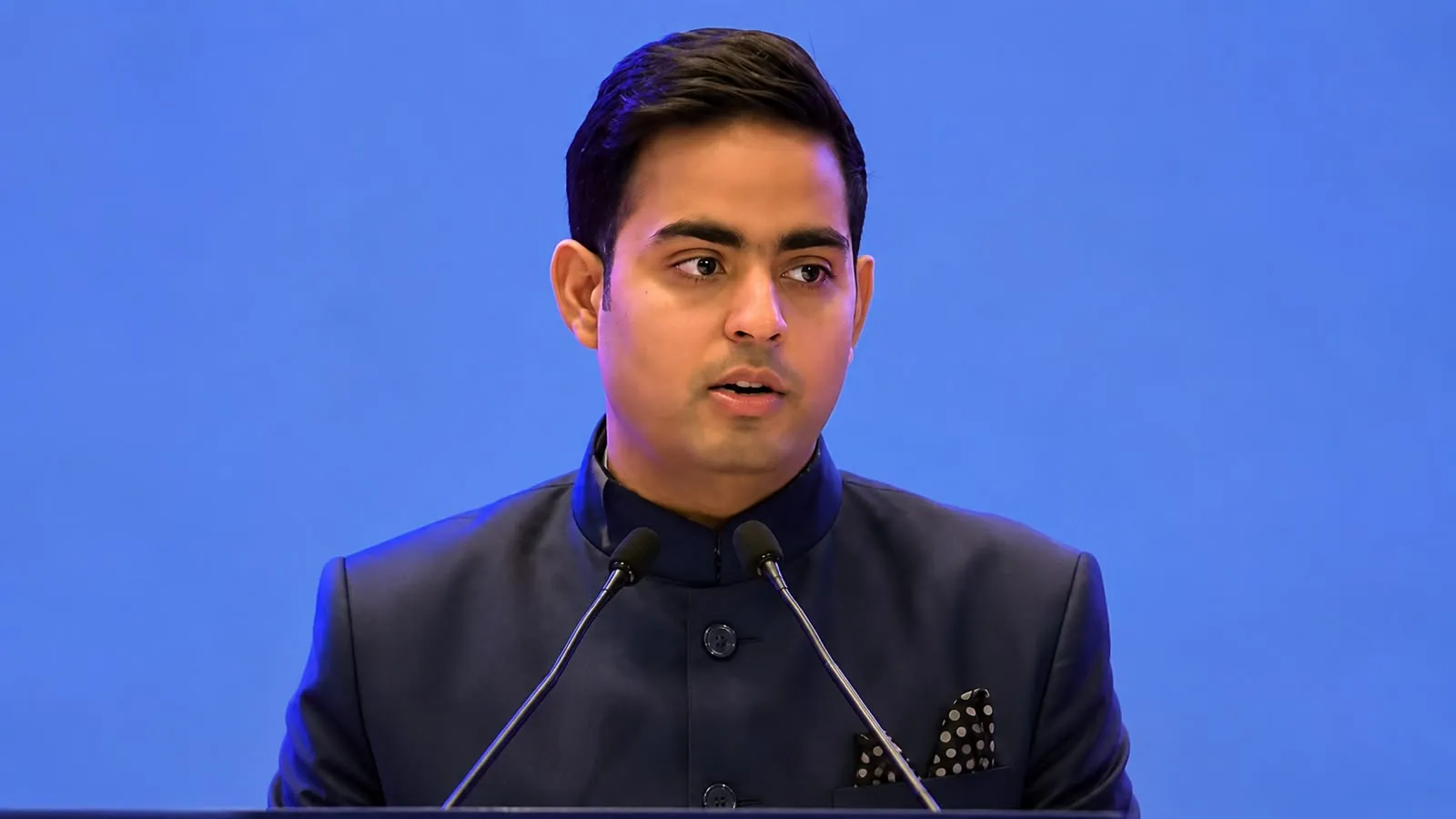
Akash completed his schooling at the Dhirubhai Ambani International School (DAIS) in Mumbai's Bandra Kurla Complex — the same school his grandfather's name adorns, a detail that carries both symbolism and weight. DAIS, one of India's premier international schools following the International Baccalaureate curriculum, gave Akash a rigorous, globally oriented education alongside his twin sister Isha and childhood friend and future wife Shloka Mehta. This environment — intellectually demanding, culturally diverse, and deeply rooted in values — shaped a young man who was equally comfortable in India's commercial heartland and in the wider world.
For his undergraduate studies, Akash crossed the Atlantic to attend Brown University in Providence, Rhode Island — one of America's elite Ivy League institutions, celebrated for its open curriculum, its cultivation of independent thinking, and its culture of intellectual risk-taking. At Brown, he earned a Bachelor's degree in Economics, building analytical rigour, strategic thinking, and an understanding of global financial systems that would prove foundational in every role to come.
Brown was not merely an academic experience for Akash — it was an immersion in a different world. He encountered technology entrepreneurs, social innovators, economists, and public servants from across the globe. He developed a deep fascination with the intersection of technology and economics — with how digital platforms were reshaping commerce, communication, and society at a speed unprecedented in human history. This exposure would inform his most consequential decisions at Jio.
Today, Akash sits on the President's Leadership Council of Brown University — a role that reflects both his gratitude for the institution and his commitment to giving back to the educational community that helped shape him. He returned to Brown not as an alumnus seeking recognition, but as a leader who understands, deeply, that the investment in knowledge is the highest-return investment of all.
Early Career: Learning the Craft from the Inside Out
Akash Ambani did not parachute into the chairmanship of Jio. His path was built through years of genuine engagement, early responsibility, and a willingness to learn from the ground up. He formally joined the Reliance Industries ecosystem in 2014, initially serving as a non-executive Director on the RJIL board from October 2014 — a period that coincided with Jio being in its most critical pre-launch phase of infrastructure buildout and strategic planning.
These were years of extraordinary complexity. Jio was not simply building a telecom network; it was constructing the most sophisticated and ambitious digital infrastructure project independent India had ever attempted. Mukesh Ambani had committed to investing over Rs 1.5 lakh crore to build a pan-India 4G LTE network from scratch — without inheriting any legacy 2G or 3G infrastructure. The scale of this undertaking required thousands of engineering decisions, millions of fibre kilometres, and a product vision that went far beyond just making phone calls.
Akash was at the centre of this effort. He threw himself into the product development side of Jio's business — working closely on the design of consumer-facing products, interfaces, and applications. He was closely involved in the development of MyJio, the app that became the digital command centre for Jio's subscribers, and in the design philosophy of the JioPhone — the affordable 4G feature phone that would bring hundreds of millions of Indians online for the first time.
His work on the product leadership group, his engagement with the development of JioTV, JioCinema, JioSaavn, and the broader ecosystem of applications that made Jio more than just a connectivity provider — these were formative years that gave him a granular understanding of both the technology and the consumer psychology that Jio's business was built upon. When Jio launched commercially in September 2016, Akash Ambani had already been living and breathing the company for two years.
The Jio Revolution: Architect of India's Data Democracy
September 5, 2016 is a date that belongs in the history books of digital civilisation. On that day, Reliance Jio launched commercially in India — offering free unlimited voice calls for life and free high-speed 4G data for the first three months. What followed was a disruption of such velocity and scale that it left the entire Indian telecom industry gasping.
Within 170 days of launch, Jio crossed 100 million subscribers — a world record. Competitors who had taken decades to build their user bases watched in disbelief as the market inverted overnight. Data prices, which had been among the highest in the world, collapsed to become among the lowest. Millions of Indians who had never experienced mobile internet were suddenly streaming, shopping, learning, and banking from smartphones and JioPhones. A data revolution — the kind that economists had theorised about for years — happened in real time.
Akash was not just a spectator to this revolution; he was one of its principal architects. His focus on product, user experience, and digital services meant that Jio launched not merely as a connectivity provider but as a fully formed digital platform — with entertainment, news, music, payments, and commerce bundled together in an ecosystem that gave users compelling reasons to stay and engage deeply. Under his product leadership, Jio became the most downloaded app in the country. Under his strategic direction, it attracted over USD 20 billion from marquee global investors including Meta (Facebook), Google, KKR, Silver Lake, and others — one of the largest fundraising rounds ever completed outside of a public market.
The JioPhone deserves special mention as an emblem of Akash's vision for inclusive connectivity. Launched in 2017 and followed by JioPhone Next (co-developed with Google in 2021) and the budget Jio Bharat phone in 2023, this line of affordable devices was specifically designed to bring 2G phone users into the 4G internet era. The JioPhone enabled more than 100 million Indians to experience the internet for the first time. This was not charity — it was visionary product strategy that created new markets while fulfilling a national imperative.
The Chairman's Seat: Leading Jio Into the 5G and AI Era
On June 27, 2022, Mukesh Ambani stepped down from the board of Reliance Jio, handing over the chairmanship formally to his son Akash. It was a moment that spoke volumes — not a retirement announcement, but a declaration of readiness. The father who had staked his legacy on Jio was passing the baton to the son who had helped build it, confident that the next chapter was in capable hands.
As Chairman, Akash has moved with strategic boldness across multiple fronts. The most visible achievement of his tenure so far has been the nationwide rollout of Jio's 5G network — a feat completed ahead of schedule in August 2023, making India one of the fastest countries globally to build out a nationwide 5G infrastructure. Jio's 5G architecture is uniquely ambitious: it was built on a pure 5G Standalone (SA) architecture using an in-house, end-to-end 5G technology stack — meaning India did not simply buy a foreign telecom company's platform but developed its own. This homegrown capability positions Jio not only as a domestic operator but as a potential technology exporter to international carriers.
As of June 2026, Jio serves over 524 million subscribers, including 268 million 5G users. JioAirFiber — the fixed wireless broadband service launched in September 2023 — is adding up to 60,000 new home broadband connections every single day, with over 90 per cent of installations completed within 24 hours. Jio's vision of high-speed home broadband reaching every corner of India — not just urban centres — is rapidly becoming reality.
Under Akash's chairmanship, the scope of Jio's ambition has expanded dramatically. At the June 2026 Reliance Industries AGM, Akash unveiled the company's next five strategic priorities: expanding JioTrue5G as the backbone of India's digital infrastructure; scaling JioAirFiber to every home in India; digitising the 60 million small businesses that form India's economic backbone; making artificial intelligence accessible to every Indian; and taking India's homegrown technology stack to global markets.
The AI announcement at the 2026 AGM was particularly significant. Akash announced the formation of Reliance Intelligence — a wholly-owned subsidiary building gigawatt-scale, AI-ready data centres in Jamnagar, powered entirely by Reliance's own solar energy. The first 120 MW of compute infrastructure is expected to be commissioned by end-2026, with capacity equivalent to over two lakh H100-equivalent GPUs — among the largest AI compute deployments in Asia. He also revealed Jio's commitment to build AI natively in Indian languages, breaking from the English-first convention of global AI development. His words at the AGM were precise and powerful: 'What we are building is AI for India. AI by India.'
The Bloodline of Vision: Inspired by Dhirubhai and Mukesh
Ask anyone who has worked closely with Akash Ambani what drives him, and the answer inevitably returns to family. Not in the sense of obligation, but in the deepest sense of inspiration — the kind that becomes part of how you see the world.
His grandfather Dhirubhai Ambani, who passed away in 2002 when Akash was barely ten, left behind something more durable than wealth: a philosophy. Dhirubhai believed that the size of your dream must always exceed the current capacity of your resources. He used to say that India could be, must be, a nation where ordinary people accomplished extraordinary things — and he meant it literally. From a petrol pump attendant to the builder of India's largest private sector enterprise, his life was the proof. Akash has spoken of how his father Mukesh often shared stories of Dhirubhai's methodology — his willingness to back his vision with total commitment, his disdain for incrementalism, his belief that India's potential was boundless.
Mukesh Ambani himself has been Akash's most profound influence. Mukesh dropped out of Stanford at his father's call to help build Reliance — a sacrifice that proved generational. He in turn built the world's largest grassroots petroleum refinery at Jamnagar, led Reliance's petrochemical expansion, and then — in what many consider his most consequential decision — staked the company's future on digital connectivity. When Mukesh decided to build Jio, he was not making a strategic pivot; he was making a philosophical bet that India's greatest untapped resource was its people's potential, and that the internet was the key to unlocking it.
Akash absorbed this philosophy not through lectures but through lived experience. He watched his father take bold bets. He saw how a willingness to invest ahead of demand — rather than chasing it — could create entire new markets. He understood that Jio was not just a telecom company; it was an act of national faith. It is this inheritance of conviction — not just commercial acumen — that makes Akash Ambani's leadership distinctive. He does not operate as a custodian of what exists. He operates as a builder of what should exist.
Recognition: A Global Leader Acknowledged
The world has not failed to notice. Akash Ambani has been recognised by some of the most prestigious institutions in global business and media:
Award / Recognition | Year | Awarding Body |
TIME100 Next — Rising Stars | 2022 | TIME Magazine |
Fortune 40 Under-40 — Global Young Business Leaders | 2022 | Fortune Magazine |
Member, President's Leadership Council | Ongoing | Brown University |
Board Member, Reliance Industries Limited | 2023–present | RIL |
Managing Director, Jio Platforms Limited | 2025–present | Jio Platforms |
Beyond the Boardroom: The Man Behind the Chairman
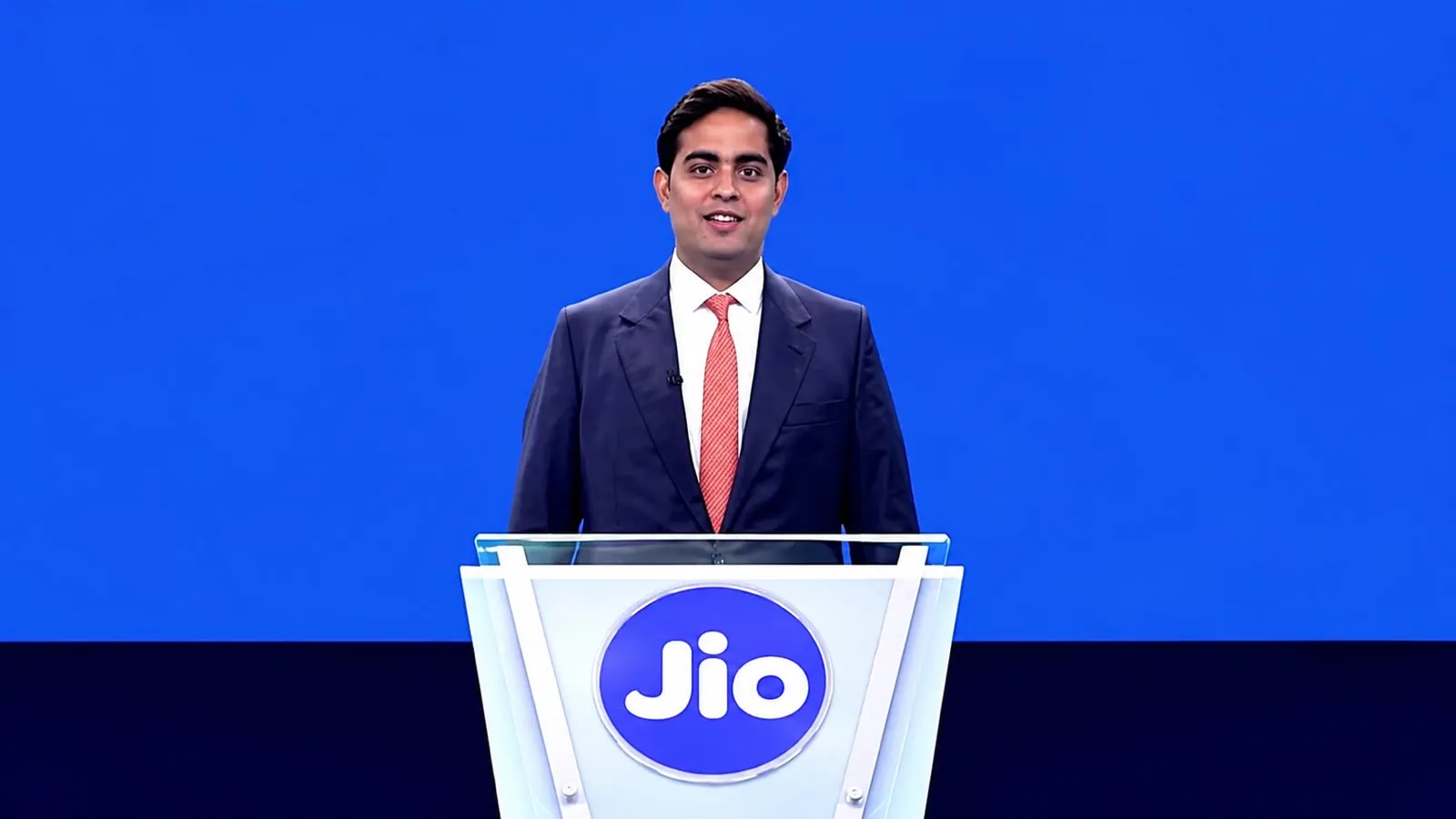
In a world of social media performativity and corporate spectacle, Akash Ambani is a deliberate anomaly. He maintains a low public profile relative to the scale of his responsibilities — preferring, by most accounts, to let the work speak. Those who observe him closely describe a leader who is analytical and collaborative, deeply interested in user behaviour and data science, and genuinely passionate about the social impact of technology, not merely its commercial potential.
His personal life is anchored by a story as charming as it is grounded. Akash married Shloka Mehta on March 9, 2019, in a celebration at the Jio World Centre in Mumbai that was attended by global celebrities, diplomats, and business leaders. Shloka, daughter of diamond magnate Russell Mehta, is also an accomplished person in her own right — a Princeton University anthropology graduate and LSE Master's in Law holder who co-founded ConnectFor, an NGO focused on social welfare. They have two children: son Prithvi Akash Ambani, born in December 2020, and daughter Veda Ambani, born in May 2023. By all accounts, Akash is a deeply hands-on father — the kind who enrolls his son in a modest Mumbai nursery school rather than a celebrity institution, and who is photographed picking up Prithvi in his arms at Wankhede Stadium after a Mumbai Indians victory.
Sports is Akash's great passion and his emotional release. As co-owner of the Mumbai Indians IPL franchise, he is not a figurehead but an active participant in the team's strategic direction and culture. He participates in player auctions, attends matches, and cares deeply about the team's identity and performance. He is also a devoted football supporter of Arsenal FC — a passion that traces back to watching Patrick Vieira score the decisive penalty in the 2005 FA Cup Final — and collects rare sports memorabilia, including a Sunil Gavaskar bat from the 1983 World Cup Final.
He is also a board member of Reliance Retail Ventures Limited, connecting India's largest digital platform to its largest physical retail network — a convergence that is becoming one of the defining features of Reliance's next growth phase. As Jio's digital services connect more deeply with Reliance Retail's physical footprint through JioMart and related platforms, the synergies Akash has helped engineer are becoming increasingly visible.
The Way Forward: Jio's Next Frontier
The most consequential chapter of Akash Ambani's story may be the one currently being written. At the Reliance AGM in June 2026, a series of announcements defined Jio's near-term future with remarkable clarity and ambition.
5G to 6G: Owning the Infrastructure of Tomorrow
Jio's target is to migrate all of its 524 million subscribers to 5G by 2030, while simultaneously contributing to the development of global 6G standards. India, under Jio's stewardship, is no longer a technology consumer in this domain — it is becoming a technology contributor, with its homegrown 5G stack already attracting interest from international carriers seeking alternatives to traditional Western or Chinese telecom vendors.
Satellite Connectivity: Connecting India from the Skies
In what may be his most audacious announcement yet, Akash revealed at the 2026 AGM that Jio is evaluating the development of a sovereign low-earth-orbit (LEO) satellite constellation for India. 'Jio connected India on the ground. Now, we must connect India from the skies,' he said. Remote villages, island communities, and border outposts that remain beyond the reach of terrestrial infrastructure are the next frontier of digital inclusion. Jio Satellite Communications has already secured its GMPCS licence and IN-SPACe authorisation, with commercial satellite broadband anticipated to follow.
Reliance Intelligence: India's Sovereign AI
Reliance Intelligence — Akash's boldest venture yet — is designed to ensure that India's AI future is not dependent on foreign infrastructure or foreign language models. The gigawatt-scale data centres in Jamnagar, powered by renewable solar energy, will build compute capacity that rivals the largest AI infrastructure deployments anywhere in Asia. The partnership with Google for a dedicated Jamnagar cloud region and the joint venture with Meta to deploy open-source Llama models round out an AI strategy that is comprehensive, indigenous, and — above all — designed for India's linguistic and cultural diversity.
The Historic IPO
Perhaps the most market-moving development of 2026 is the formal filing of Jio Platforms' Draft Red Herring Prospectus (DRHP) with SEBI for what is expected to be India's largest-ever IPO — estimated at around Rs 37,700 crore or $4 billion. Mukesh Ambani has confirmed that Akash, Isha, and Anant are leading the IPO process. When Jio lists, it will not merely be a financial event; it will be the crystallisation of a two-decade national project — proof that India can build a world-class technology platform from scratch and offer it to the world.
Conclusion: A Signal Worth Following
There is a phrase that Jio's founding era made famous: data is the new oil. If that is true, then the man controlling the pipeline through which a billion Indians access that resource carries a responsibility that goes far beyond corporate governance. Akash Ambani understands this. You can hear it in the language he chooses — not market share, but digital inclusion; not revenue per user, but lives improved; not platform growth, but a country empowered.
He carries three legacies in his hands. From his grandfather Dhirubhai: the courage to dream at a scale that defies convention, the conviction that India's potential is inexhaustible, and the knowledge that nothing worth building is built without risk. From his father Mukesh: the discipline of execution, the patience to invest ahead of demand, and the understanding that transformative technology must be democratised to be truly valuable. And from himself: a generation's belief that Digital India is not a government slogan but a lived reality — one subscriber, one village, one data connection at a time.
Akash Ambani is 34 years old. He leads a company with half a billion customers. He is building India's sovereign AI infrastructure. He is connecting its villages from orbit. He is about to take the country's greatest digital platform to the public markets. And he is just getting started. For the readers of TheImpactfulGlobalIndian.com, the message is unmistakable: watch this signal. It is one that will shape India — and perhaps the world — for decades to come.